




A 2,000-acre kelp farm is the first aquaculture operation to be approved for operations within a federally designated Aquaculture Opportunity Area (AOA), according to NOAA Fisheries.
“This marks an important step in NOAA’s efforts to promote sustainable domestic aquaculture development, which supports the economies of America’s coastal communities,” NOAA Fisheries Assistant Administrator Eugenio Piñeiro Soler said in a release. “Building our domestic aquaculture industry is an important component of the President's Executive order on Restoring American Seafood Competitiveness.”
U.S. President Donald Trump directed NOAA Fisheries to identify AOAs – areas predetermined to be a suitable location for commercial aquaculture operations – during his first term. Since then, NOAA Fisheries has identified three AOAs in the Gulf of Mexico and another 10 off the coast of California.
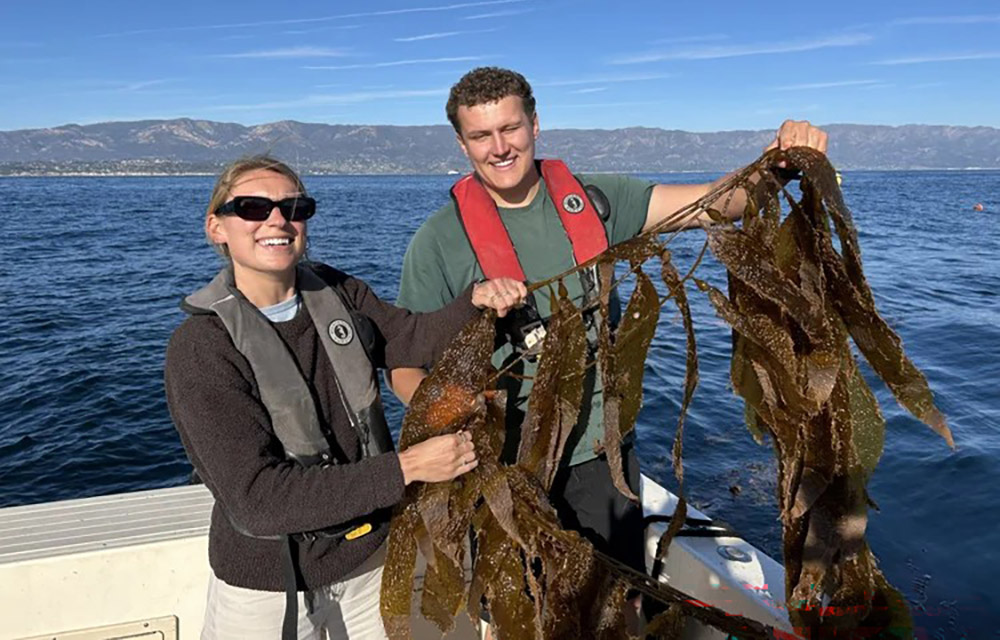
Goleta, California, U.S.A.-based Ocean Rainforest is a vertically integrated company that harvests and develops commercial seaweed products. The company has operations in the Faroe Islands and Mexico and previously ran an 86-acre demonstration farm off the coast of Santa Barbara, California. The company has now secured the regulatory approvals to build a 2,000-acre giant kelp farm 4 miles off the coast of Ventura County, California.
In September, Ocean Rainforest secured the final regulatory approval needed from the state of California when the California Coastal Commission approved a consistency certification operation. In a statement, Ocean Rainforest credited the AOA process for helping enable the approval.
"The true value of NOAA's AOAs is seeing the science and planning translate into real-world projects like Ocean Rainforest's. Our permitting milestone demonstrates how thorough marine spatial planning can help move responsible aquaculture from concept to implementation,” said Kaira Wallace, the regulatory and engagement lead at Ocean Rainforest.
While reiterating that the AOA process does not pre-permit aquaculture operations, NOAA Fisheries claims the AOA process provides scientific and spatial planning data that helps aquaculture companies select sites and secure a permit from the U.S. Army Corps of Engineers.
"NOAA’s Programmatic Environmental Impact Statement augmented the project-level review by providing baseline environmental data, a strong site-selection and alternatives framework, and regional cumulative-effects context, allowing the U.S. Army Corps of Engineers to focus on project-specific issues such as Endangered Species Act consultations, moorings, navigation safety, and operational protocols,” U.S. Army Corps of Engineers representative Aaron Allen said in a statement shared by NOAA Fisheries.
The agency is currently identifying AOAs off the coast of Alaska, having selected 77 potential sites in February. NOAA Fisheries is also looking for public feedback on which areas it should next look to identify AOAs within.
“We looked for areas appropriate for aquaculture to grow. By appropriate, that means areas that are appropriate socially – so staying out of traditional fishing routes and shipping lanes. You’re not going to put a farm on top of an oil rig,” NOAA Office of Aquaculture Director Danielle Blacklock said of AOAs in February. “In addition, we looked at areas appropriate environmentally and technologically – so not in essential fish habitat or where endangered species are breeding – and then also appropriate economically.”
