



The National Aquaculture Association (NAA) criticized the U.S. government's recently released America First Seafood Strategy, claiming that it doesn’t focus enough on aquaculture producers.
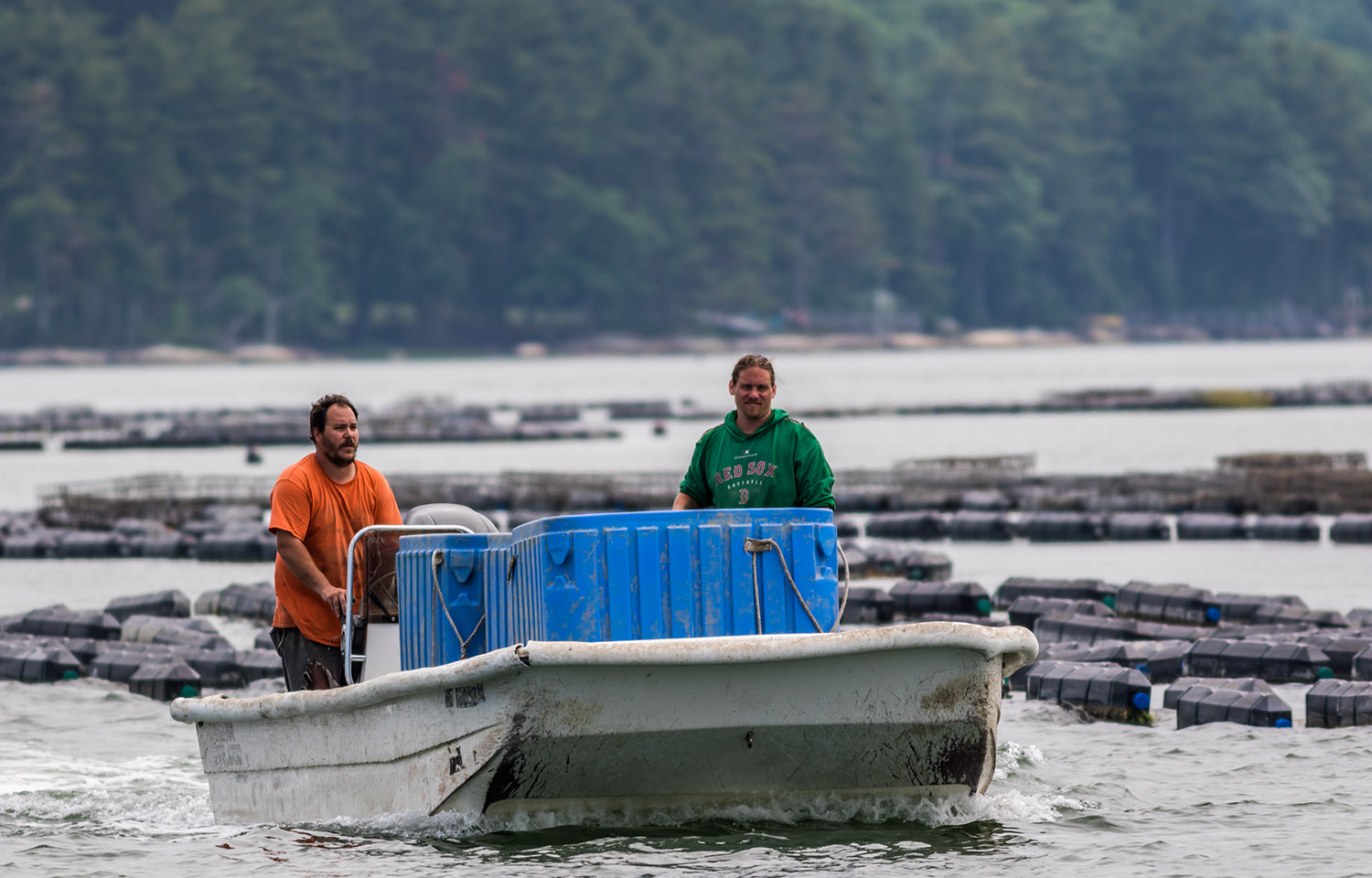
“We are deeply concerned that the recently released America First Seafood Strategy places overwhelming emphasis on commercial fishing while relegating aquaculture to a secondary, complementary role,” NAA Executive Director Caitlyn Czajkowski said in a 6 November release. “This approach fails to recognize the critical role aquaculture already plays in seafood production and its enormous potential to strengthen America's domestic seafood supply and grow rural economies.”
U.S. President Donald Trump unveiled the new strategy in October, outlining his administration’s policy goals for supporting the nation’s seafood, aquaculture, and commercial fishing industries. The strategy outlines several actions the federal government plans to take, including introducing a voluntary “U.S.-Caught Seafood label,” rolling out a nationwide “Eat American Seafood” campaign, and increasing seafood infrastructure and capacity.
Aquaculture is not a major focus within the strategy, with the only aquaculture-focused goal outlined in the document being the establishment of clearer aquaculture permitting standards; however, the strategy does not lay out any course for making that happen.
“Increasing aquaculture production strategically to complement wild harvest is critical to disrupt our foreign seafood dependence,” the strategy said. “The U.S. marine aquaculture industry has been held back by an overcomplicated, unpredictable permitting system. Additional specific actions related to aquaculture will be identified in the near term.”
In a 6 November letter to the U.S. Department of Agriculture (USDA) Office of Seafood, NAA called on the federal government to revise the strategy to adequately address the aquaculture sector’s concerns.
“[Aquaculture] is not merely a complement to the commercial fishing sector," NAA President Sebastian Belle said in the letter. "It is its own unique production method, sharing considerable overlap with many of the challenges faced by commercial fishing but also differing from it in major ways. Aquaculture should receive equal focus in any U.S. seafood strategy, particularly from the Office of Seafood and USDA.”
Belle went on to state that the strategy’s analysis of the aquaculture industry is “surface level,” noting that permitting is just one of several issues facing the sector and that permitting issues vary between production methods and species. He added that the strategy only exacerbates the divide between the farmed and wild-caught communities, instead of uniting the seafood sector.
“The recent AFSS, which centers commercial fishing with little mention of aquaculture, has continued to contribute to this divide,” Belle said. “NAA wants to move beyond it and end the ‘wild versus farmed’ dichotomy; we want ‘wild and farmed’ to become the new way of describing U.S. seafood.”
Belle offered to host listening sessions between aquaculture stakeholders and the Office of Seafood to help federal staff understand the industry’s concerns and expand the America First Seafood Strategy to incorporate them.
“NAA strongly supports a thriving U.S. commercial fishing industry, but supporting commercial fishing and growing aquaculture are not competing objectives. Both sectors deserve meaningful recognition, equitable federal support, and policies that address their distinct challenges and opportunities,” Czajkowski said. “NAA is urging USDA and the Office of Seafood to better engage directly with American aquaculture producers, establish tangible goals for industry growth, and work with NOAA to bring the wild-caught and farm-raised seafood sectors together around a shared vision for the future.”
