


Lerøy Seafood Group (LSG) reported a substantial improvement in earnings for the third quarter of 2026, supported by solid performance in its Norwegian farming operations and a strong contribution from its Market Operations business segment.
The Bergen, Norway-headquartered group’s operational EBIT reached NOK 459 million (USD 48.6 million, EUR 43.3 million) in the three-month period, compared to NOK 15 million (USD 1.6 million, EUR 1.4 million) for the corresponding period of last year. The company also reported strong cash generation, with net interest-bearing debt falling by NOK 676 million (USD 71.6 million, EUR 63.8 million) to NOK 7.73 billion (USD 818.4 million, EUR 729.1 million).
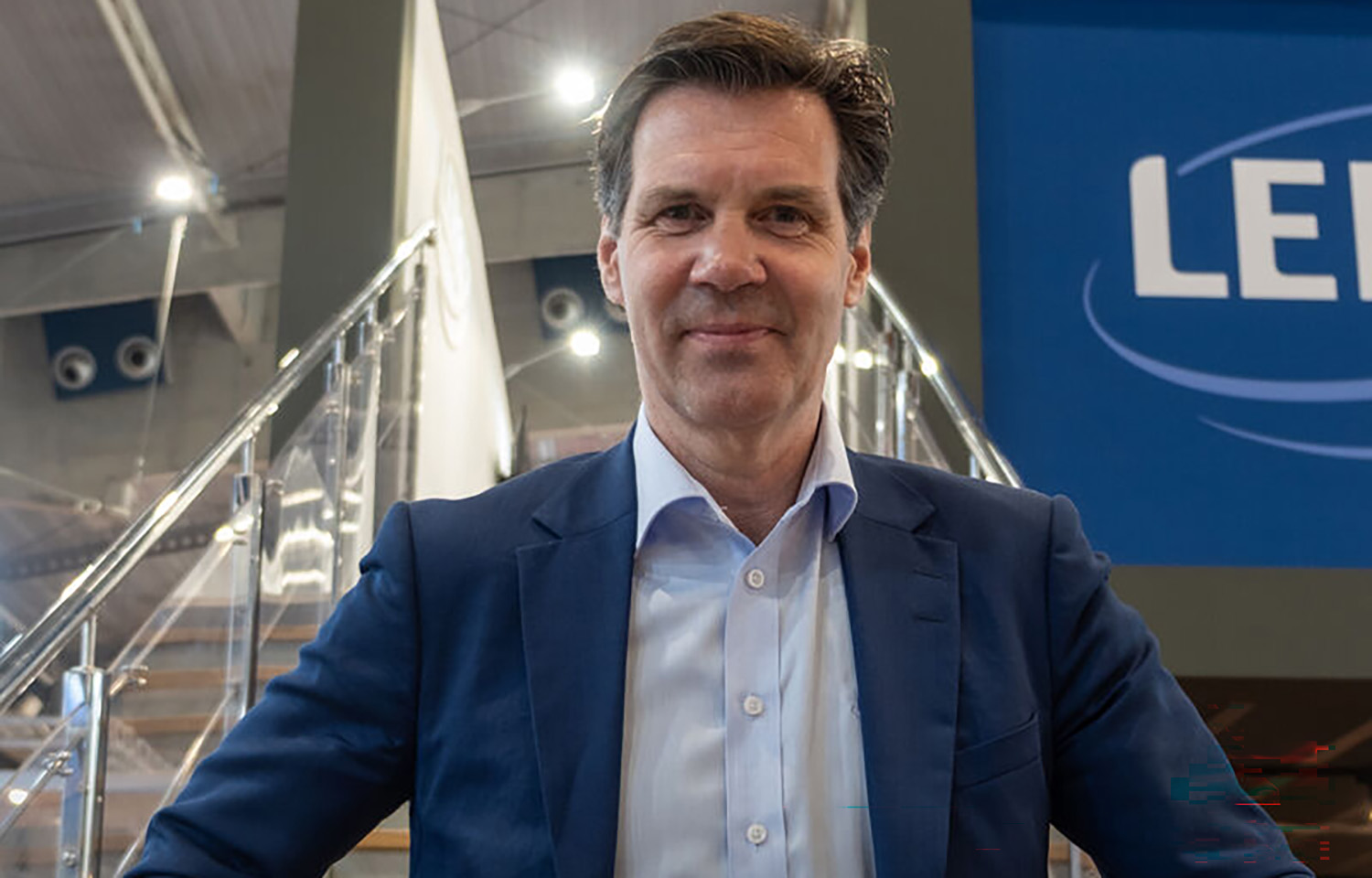
Delivering the Q3 results, Lerøy CEO Henning Beltestad acknowledged it had been a good quarter for salmon production in Norway, with strong biology, very low mortality, improved fish health, and lower costs compared to the corresponding period in 2025.
“It’s been a quarter with strong salmon demand and slowing growth – pointing to a tighter market,” he said. “There’s good demand in all the major markets, and we believe that will continue into next year. We believe in a positive price development for salmon going into 2027.”
LSG’s Farming segment generated operational EBIT of NOK 113 million (USD 12 million, EUR 10.7 million) in Q3, recovering from a loss of NOK 306 million (USD 32.4 million, EUR 28.9 million) in Q3 2025. The improvement came despite an 8 percent year-over-year reduction in salmon and trout harvest volumes, which amounted to 54,680 gutted weight tons (GWT).
The group reported high standing biomass at the end of the quarter, which Beltestad said provides a good basis for production in the coming months and next year.
Lerøy is maintaining its Norwegian harvest guidance at 195,000 GWT for 2026, with the same volume expected in 2027.
Including its 50 percent share of Scottish Sea Farms, the group’s total harvest is forecast at approximately 215,000 GWT this year and 217,500 GWT in 2027.
With operations in 18 countries, the firm’s Market Operations division recorded operational EBIT of NOK 446 million (USD 47.2 million, EUR 42.1 million) in Q3, up from NOK 410 million (USD 43.4 million, EUR 38.7 million) in Q3 2025. Its EBIT margin increased to 5.4 percent, compared to 4.9 percent a year earlier.
The improvement was primarily driven by higher earnings in primary processing, with Beltestad describing the result as “a great performance” and consistent with the company's previous expectations for significantly stronger performance in the second half of 2026.
While Farming and Market Operations turned in positive results, LSG’s Wild Catch business had a “challenging quarter,” with lower cod and haddock prices and higher fuel costs taking their toll, Beltestad confirmed .
Lerøy’s Wild Catch division recorded an operational EBIT loss of NOK 20 million (USD 2.1 million, EUR 1.9 million), compared to a positive result of NOK 3 million (USD 317,770, EUR 283,131) in the same quarter last year.
Catch volumes fell 24 percent to 10,216 metric tons (MT), with higher prices insufficient to offset the impact of lower volumes and increased fuel costs.
As a result of the segment’s ongoing difficulties, the company has consequently reduced its full-year 2026 operational EBIT forecast for Wild Catch to between NOK 315 million and NOK 350 million (USD 33.4 million and USD 37.1 million, EUR 29.7 million and EUR 33 million) from its previous estimate of somewhere between NOK 400 million and NOK 450 million (USD 42.4 million and USD 47.7 million, EUR 37.8 million and EUR 42.5 million).
Elsewhere in the quarter, Lerøy reported further progress on its NOK 1 billion (USD 106 million, EUR 94.5 million) cost-reduction program. By the end of Q3, the firm realized NOK 701 million (USD 74.3 million, EUR 66.2 million) in savings through the program, with measures representing a further NOK 262 million (USD 27.8 million, EUR 24.8 million) identified and under implementation.
“The cost reduction program is progressing as planned,” Beltestad said. “This will significantly reduce the impact of higher feed prices in 2027. The cost focus will also be implemented into 2027 and going forward.”
