
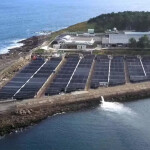
Busan, South Korea-based BluGen is working on a recirculating aquaculture system (RAS) project to produce olive flounder, which it said will be the first system of its type in the country.
The farming project in Goheung aims to use BluGen’s eighth-generation broodstockto produce 1,000 metric tons (MT) of olive flounder annually. Additionally, a hatchery within the project will be able to provide 80 million precision-bred olive flounder seedlings per year once operational, the company said in a release.
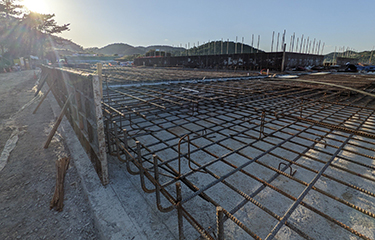
Construction work at the facility began in 2021, and was 60 percent complete as of November 2022. BluGen expects to begin farming fish at the facility in Q4 2023.
Demand for olive flounder has risen sharply over the past two decades, especially in East Asia, and particularly in China, Japan and South Korea. Traditional farming methods in South Korea have high disease rates, resulting in seasonal mortality rates between 40 and 70 percent. With its RAS farm, BluGen said it will be in an advantageous position to compete in a market where is no large-scale aquaculture player.
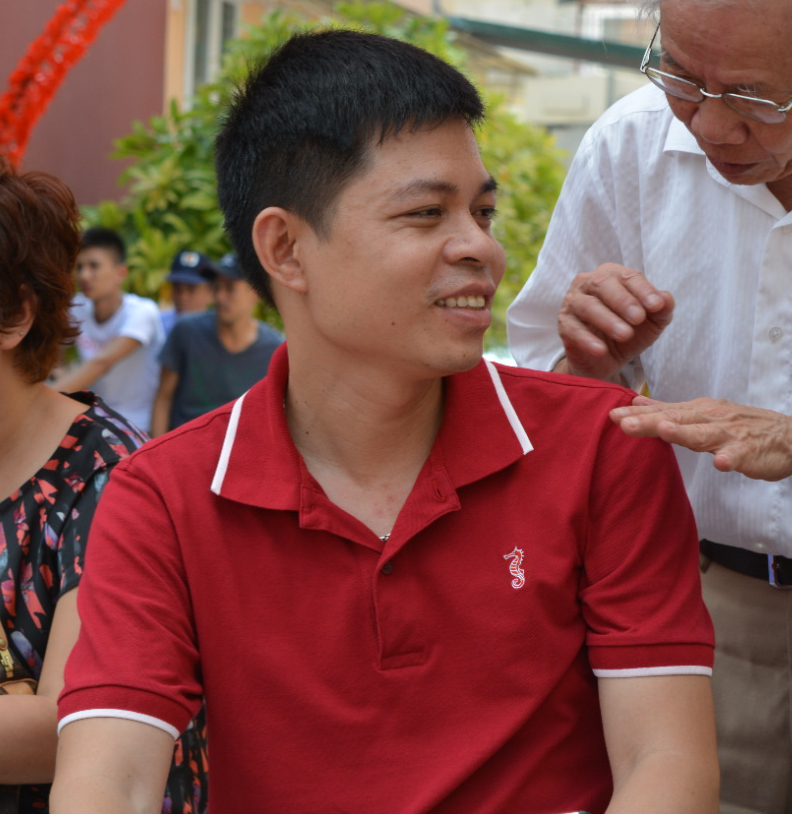
“It is obvious that RAS is a key technique for this new trend of aquaculture, but it is also very important to know that RAS itself does not guarantee the success in the fish-farming business,” BluGen CEO and Founder Woo-Jai Lee said in a press release. “Success in aquaculture is achieved from the combination of new techniques (RAS and state-of-the-art breeding), the correct choice of species, and the market size.”
BluGen-bred olive flounder will be a non-genetically modified organism (non-GMO) product, with no antibiotics, hormones, or chemicals used during farming. The fish can grow at a feed conversion ratio of 1.1, and has strong dissease-resistancy. The grow-out cost will be around USD 3.30 (EUR 3.20) per kilogram, which is equivalent to that of salmon, and its farm-gate prices are expected at between USD 20.00 and USD 24.00 (EUR 19.30 and EUR 23.10) per kilogram, according to Lee.
The company said the expected output of 1,000 MT will be sold to local e-commerce distributor Yam Table, and that many grow-out farms in the country have already agreed to buy a total of 41 million seedlings from the project annually.
BluGen has received USD 9 million (EUR 8.7 million) in funding from investors so far, including a grant of USD 3.2 million (EUR 3.1 million) from the South Korean government for the construction of the RAS facility. It is seeking more funding to pay for the full cost of the project.
Prior to founding BlueGen, Lee worked for 20 years in genomics in Norway, served as a director of research and development at GenoMar, and was in charge of breeding programs for Mowi and SalMar. Lee founded BluGen in 2013, with the aim of appling advanced genomics and precision-breeding technologies and his knowledge of RAS systems to redevelop “an antiquated Korean aquaculture industry.”
Photo courtesy of BlueGen
