




Ecuador’s National Chamber of Aquaculture (CNA) has expressed concern over surging operating costs and falling international prices in the country’s shrimp sector that have “reached alarming levels.”
Given the situation, the sector has seen a USD 0.98 (EUR 0.90) decrease in liquidity for each pound of shrimp produced, equivalent to a year-to-date economic impact exceeding USD 1 billion (EUR 917 million), the chamber stated in a release.
The export price for shrimp has decreased USD 0.70 (EUR 0.64) per pound over the last 15 months, significantly harming the industry's revenues.
The fall in international prices, mainly due to lower consumption in China and other markets, is seriously affecting the sector’s production chain, resulting in an organizational inability to cover production costs. Prices recorded currently are even lower than those registered during the pandemic in 2020, CNA said, “which presents an unprecedented problem.”
Throughout the last decade, Ecuador has become China's top shrimp purveyor. In 2022, China imported 900,000 metric tons (MT) of shrimp, of which 70 percent came from Ecuador; its closest competitor was India, which was responsible for about 19 percent. In 2022, Ecuador sold about 60 percent of its shrimp production to China, compared to around 49 percent in 2021.
However, in response to China's zero-Covid import limitations, Ecuador pivoted toward serving U.S. and European markets, upping its peeled and value-added product-making capacity as a result. While that shift has allowed Ecuadorian exporters to diversify their buyer portfolio, the transition has not prevented them from getting hit hard by a global glut of shrimp that has resulted in slack demand and lower prices paid to producers.
In February 2023, CNA President José Antonio Camposano predicted some of the woes Ecuador’s shrimp sector is now experiencing, calling 2022 “a year of contradictions." Ecuador produced 26 percent more shrimp by volume, but that helped to exacerbate stockpiling in the U.S.
Meanwhile, in the last year, CNA said that industry costs have increased by USD 0.28 (EUR 0.26) per pound due to increases in operating costs, such as diesel fuel, labor, and security, with the prices of raw materials including soybean meal, wheat, and fishmeal also shooting up.
According to Camposano, 80 percent of the cost structure of export shrimp comprises raw material, and of that, 60 percent is feed, which increased fourfold in price in 2022 due mostly to the conflict between Russia and Ukraine. In turn, higher wheat prices have affected the price of other commodities, such as soybeans, excerbated by drought conditions in major soy-producing countries such as Argentina.
Furthermore, climate change has affected fish biomass globally, which is essential in fishmeal production, and the cancelation of the latest anchovy fishing season in Peru, representing 20 percent of global supply of raw materials used in fishmeal production, it's likely fishmeal prices will continue to climb.
The CNA has also been critical of the Ecuadorian government’s December 2022 decision to end the shrimp industry's diesel subsidies. Considering the increased costs and the slump in pricing the industry faces, Camposano called it “the worst time to make such a decision." He said the diesel subsidiary was compensation for the costs the shrimp industry assumes for services the government cannot guarantee, including public safety.
“We have always said that the diesel subsidy is a type of compensation for the costs that we have to assume other industries do not take on. We have to pay more than USD 80 million [EUR 73 million] annually in security, technology, and other areas to guarantee the security of the value chain and of balanced shrimp feed due to the instability that exists in Ecuador,” he said. “If you tell me that I don’t have to put a guard in every shrimp truck to guard our people and our products, perfect, but the government cannot guarantee our safety."
However, Camposano said he remained positive about the long-term future of Ecuador's shrimp industry.
“In these challenging times, our value chain will continue to work together to find solutions and ensure the future of the Ecuadorian shrimp industry, which is an economic pillar and a vital generator of employment in our country,” the CNA said in its release.
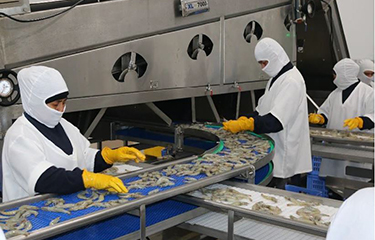
Photo courtesy of Ecuador's National Chamber of Aquaculture
