




Amid an already strained atmosphere, Ariel Espinoza, Chile’s acting undersecretary of the environment, may have ratcheted up tension between salmon industry players and contrasting politicians after the latest official communication from Espinoza’s office at the Chilean Environment Ministry.
One of the main points in the official letter, signed by Espinoza, states that “concessions may not be granted when a protected area, independent of its protection category, lacks a valid management plan, and the processing of such [a] procedure must be suspended … until the respective management plan is approved to evaluate its compatibility as required by the article in question.”
The letter complicates a situation in which the salmon industry and environmental activists are at loggerheads regarding existing farming operations.
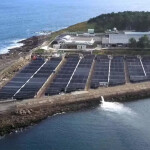
Several salmon farms were legally established years ago in areas that subsequently became national parks or other protected zones, and since then, environmental authorities have forced these companies to limit operations or relocate. As for the latter option, the government has not issued a relocation permit in the past 12 years: Of about 500 applications, the government has rejected close to 200, and the rest are still undergoing processing – meaning that no relocations have occurred.
To the relief of the salmon industry, a joint congressional committee rejected a proposed modification to the country’s Biodiversity and Protected Areas Service (SBAP) law in June that would have prohibited new or renewed aquaculture concessions in protected areas.
The modification proposed barring the introduction of exotic hydrobiological species, including salmon, from such areas. The proposal brought immediate backlash from the salmon industry and workers relying on salmon farms operating in the areas. Chile’s salmon sector is responsible for the creation of some 70,000 jobs – many in rural areas – and supports more than 4,000 small- and medium-sized businesses, accounting for the equivalent of 18 percent of GDP in some rural areas.
Soon after the proposal thousands of salmon industry supporters took to the streets in protest – and lawmakers voted the measure down in response.
Tensions, meanwhile, have risen once again with the new letter from the environmental ministry.
Loreto Seguel, executive director of the Salmon Council, said that her group is analyzing the official letter and its impacts on aquaculture concessions in Chile’s southern regions of Los Lagos, Aysén, and Magallanes.
“It is important to remember that in Chile, there are guiding principles which must be maintained, beyond the analysis we are doing,” Seguel said in a statement to SeafoodSource. “Any legal interpretation and administrative action used by the Executive, in this case, the Ministry of the Environment, must always respect the sovereign and autonomous decision of another state body, as [demonstrated] by Congress during the processing of the law creating the SBAP. That is not only fundamental for us but also for the correct functioning of the institutions in our country.”
One such example of legal salmon farming becoming affected by the future establishment of a protected area occurred in the Magallanes region – home to marine reserves Kawésqar and Guaitecas. The industry and government defined and agreed upon aquaculture-suitable areas (known as AAAs in Spanish) in the region in 2011, according to Magallanes Salmon Farmers Association President Carlos Odebret.
“However, in 2017 four Kawésqar [Indigenous] communities requested two ECMPOs [original people’s marine coastal space] of 600,000 hectares, stopping more than 60 [salmon operation] applications through this act,” he told local publication SalmonExpert. The following year, an agreement between the central government and the environmental NGO Tompkins Foundation created the Kawésqar National Reserve of 2.6 million hectares, he said.
“Without concessions, there is no salmon farming, and without new concessions, there is no investment, even though [the concessions’] surface area is 0.025 percent of the Kawésqar reserve. The Undersecretariat of the Environment’s official letter sets a new barrier and increases uncertainty,” Odebret said. Government management plans for these reserves are years overdue, he noted, but because of this inaction, authorities could now freeze concession applications.
Environmental groups opposed to salmon industry development in Chile immediately took issue with Odebret’s comments.
On social media platform X (formerly Twitter), the group @SinSalmoneras – responsible for the “Protected Areas without Salmon Farms” campaign that includes various communities and organizations from Southern Patagonia – insisted that the Kawésqar community has legitimate ancestral rights, while the AAA areas are illegitimate since there were no environmental impact studies or scientific baseline studies performed to know whether they were actually suitable.
The group questioned the salmon industry’s controversial track record, with evidence surfacing over the past couple of years of significant overproduction that may have led to environmental degradation.
“What's happening is that you got used to doing whatever you want with political and economic lobbying. Now it bothers you when a government tries to correct historical errors, demanding only minimum [repayments], given the disasters that your industry has caused,” the group said in a long thread of posts addressed directly to Odebret. “It is not a ‘matter of ideological interest’ to correct the error of having polluting industries in areas designated for conservation. It is the right path at a time of triple emergency – climate, biodiversity loss, and pollution.”
Trying to calm tempers down, Environment Minister Maisa Rojas came to the defense of her undersecretary. The publication was an official letter, not a decree, she said, so the document sought to explain an existing law.
“We know that it has caused some alarm; we have read it in the newspapers, and I would like to tell you that there is nothing new here. It is simply intended to provide information,” she told the Chilean Senate’s Maritime Interests, Fisheries, and Aquaculture Committee.
She stated that currently there are 426 concessions within protected areas, of which 13 are in protected coastal marine multiple-use areas, 28 in national parks, and 385 in reserves.
“My role as environment minister is not to put restrictions or … stop an industry,“ she said. “This is an industry that is very important, and I am convinced that it can continue to develop in the country and grow in a way that is compatible with the environment.”
Detractors such as Fidel Espinoza, a senator from the Los Lagos region, disagreed with Rojas, and with his Socialist Party forming part of the ruling government coalition, it made for a significant dissent.
“The government talks about economic growth, reactivation, decentralization, and employment, but on the other hand, through this official letter, they’re trying to suffocate salmon farming activity,” he said in response to the minister, adding that the impacts could be “brutal.”
The sector brought in USD 6.6 billion (EUR 6.1 billion) in 2022 but has struggled to balance operational growth with environmental demands. Chilean President Gabriel Boric has made reform of the country's fisheries law a priority since he took office in March 2022, and over the past year, his government has ramped up its regulation of the aquaculture sector. In response to the discovery of numerous regulatory violations, Chile's regulatory authorities have limited the industry's operational expansion.
Photo courtesy of the Chilean Salmon Council
