

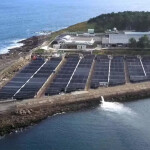
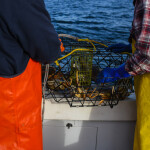



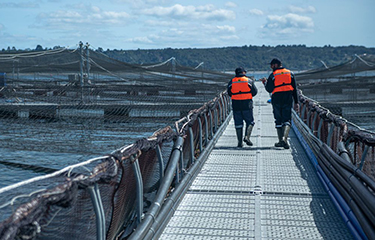
Chile’s more than 6,000 kilometers of coastline provides an environment ideal for highly productive fishing and aquaculture activities that directly contribute to national and global food security.
The two activities, however, vary radically in their operational needs and have different regulations, leading the Chilean government to plan an update to its existing national fisheries law that currently lumps the two sectors together. The government expects to converse with different stakeholders throughout September, with the ultimate goal of presenting a bill during the fourth quarter of 2023.
The country’s salmon-farming sector brought in USD 6.6 billion (EUR 6.1 billion) in 2022 but has struggled to balance operational growth with environmental demands. Chilean President Gabriel Boric has made reform of the country's fisheries law a priority since he took office in March 2022, and over the past year, his government has ramped up its regulation of the aquaculture sector. In response to the discovery of numerous regulatory violations, Chile's regulatory authorities have limited the industry's operational expansion.
Over the past decade, aquaculture production has grown about 3 percent annually in Chile, but with the new restrictions, the sector is reaching production limits. Without room to expand, operators have a hard time justifying major investments, according to Adolfo Alvial, an aquaculture industry consultant and founder of consultancy ORBE XXI and Chile’s Aquaculture Innovation Club, which was created to support the country's aquaculture industry.
“It's great that the government has announced that it’s considering a new fishing law and a separate law for aquaculture," Alvial told SeafoodSource. "This forced union between fishing and aquaculture under the existing law has led to very complex legislation that was created in 1992, but has had a number of adjustments, and the law is difficult to read. When it’s so complex, compliance with the law is also complex."
Although Alvial is optimistic, he said he still believes work needs to be done to implement “a new institutionality with proper resources to make [compliance of the law] a feasible reality.”
“Having an institutional separation, with one subsecretary of fishing and another for aquaculture, along with supporting state organizations for each sector, doesn’t necessarily mean more resources but optimized resources of that which exists, divided between the two,” he said.
Besides the current fisheries law, other governmental bodies – from the national fishing service Sernapesca, to the environmental watchdog SMA, to the Undersecretary of Armed Forces – all regulate the industry.
Alvial said besides the regulatory overlap, Chile's aquaculture sector is also finding it difficult to increase production due to a lack of innovation. That is a position shared by Chile Undersecretary of Fisheries and Aquaculture Julio Salas.
“With the current regulation levels and the degree of saturation of the available spaces in the fjords [where aquaculture practices take place in the south of Chile], we are reaching a ceiling for this activity," Salas told Chilean newspaper El Mercurio. "Part of the public-private conversation of a general aquaculture law has to be able to imagine new technologies, new spaces, and new consensus in the territories where the activity is carried out, [such as] exploring aquaculture on the high seas,”
The upcoming law must create new space for aquaculture to relocate and expand, Chilean Salmon Council Executive Director Loreto Seguel said. Several salmon farms in areas subsequently designated as national parks or other protected zones have been forced to limit operations or been told to relocate, but the government has not issued a relocation permit in the past 12 years.
“Of approximately 500 applications, close to 200 have been rejected, and the rest are in process. Zero relocations have materialized,” she said.
Additionally, environmental organizations have been active in campaigning against salmon farming in Chile, with a recent focus on shutting down their work in protected areas where they were initially permitted to operate.
Chile’s salmon sector is responsible for the creation of some 70,000 jobs, many in rural areas, and supports more than 4,000 small and medium businesses, accounting for the equivalent of 18 percent of GDP in some rural areas.
Since Boric won the presidency, Chile's aquaculture industry has been forced to confront its own operational shortcomings. Many of Chile's salmon farming companies have received penalties within the past two years for a range of violations, from wastewater mismanagement, fish escapes, and particularly overproduction, which generates an increased contribution of organic and inorganic matter and also raises the risk of fish escapes and the spread of fish diseases and prophylactic drugs into the marine environment, according to the SMA.
The fact that several individual companies have ignored the legal limits of their permits has been detrimental to the entire industry, Alvial said.
“I’ve been saying for years that priority was needed but not given when it comes to the handling capacity in Chile – not just in terms of environmental impact, which in and of itself is very relevant, but also in terms of impact on the industry itself. Not knowing or not respecting the handling capacity in the different bodies of water is like shooting yourself in the foot,” he said.
Alvial said in the past, production limits have been calculated on an individual farm-site basis. But he called for government regulators to adopt a wider approach.
"Addressing the handling capacity cannot consider just one center. This has to be done considering the whole body of water, not the individual operations of each center. That body of water is capable of handling a certain amount of biomass without that body of water suffering environmental deterioration,” Alvial said.
Drawing clearer legal divides between aquaculture and fishing in the country’s updated aquaculture law should help create clearer rules for the industry to follow. A simplification of the rules governing salmon farming will also help
“[Regulators] still need to find practical tools of handling capacity indicators that anticipate and prevent these problems,” he said.
For that to happen, there needs to be reliable industry data that feeds into technological instruments such as artificial intelligence, according to Alvial.
“With the solutions we have today in artificial intelligence applied to the model, this goal is perfectly achievable, but you need good data, which is also an issue in the industry," he said. "Lots of information doesn’t necessarily mean that it’s good data. Lots of the data that exists today was taken with inadequate instruments, with lots of variability and outliers. The industry – on the company level [and as a whole] – needs to take on that work seriously to create a trustworthy data lake so that these analytical tools can operate with that data.”
Chile’s Aquaculture Innovation Club has expressed a willingness to assist with the reform effort through its contribution of scientific knowledge and technological know-how.
“We are not a trade association; We’re part of an industry that is interested in the sustainable continuation of the industry. So we feel we’re a good channel to support the authorities with what we do,” Alvial said.
Seguel also confirmed the Chilean Salmon Council’s willingness to contribute to modernizing the legal framework in a way that strengthens the environmental, social, and economic sustainability of the industry while also making the country's industry more competitive.
"Whoever does not advance falls behind. We have the responsibility to project the sustainable development of Chilean salmon farming – an activity that is crucial for the southern macro-zone of Chile,” she said.
Photo courtesy of the Chilean Salmon Council
