






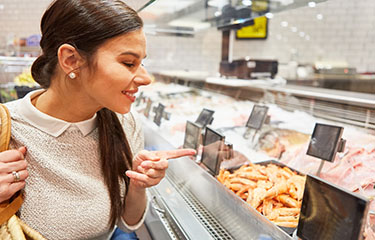
Researchers at Virginia Tech are researching consumer market data to aid the survival of aquaculture businesses in the wake of the economic impacts of the Covid-19 pandemic.
The study, based on surveys completed in 2022, is examining a wide array of consumer data to analyze the "abrupt changes" in the food supply chain, and how that impacted consumer purchasing of food. In turn, the researchers said they hope to provide information to guide aquaculture businesses in marketing efforts to respond to the changes.
“This project seeks to answer critical questions that are essential for U.S. aquaculture producers to survive by adapting marketing and distribution systems to successfully navigate the uncertainties of the coming months and years,” Virginia Seafood Agricultural Research and Extension Center Assistant Director Jonathan van Senten said. “It is quite likely that market conditions will continue to change rapidly, and previous research shows that not all consumer groups react in the same way to such changes. Thus, it was vital to measure changes in consumer behavior and preferences in various geographic markets.”
The team is working to compile data across all its periodic surveys to find more long-term needs for the aquaculture industry, through consumer behavior and preferences. The team said it will then inform industry members and associations upon its findings to guide in informed decision making, and product development.
The project surveyed consumers across 21 cities across the U.S. in the aftermath of the pandemic. They analyzed food delivery, packaging, and advertising and how they vary over geographic regions over time. Some changes indicated by the data were expected, like the shit fo more meals consumed at home. However, the study also found that changes in behavior differed greatly by age, edducation, income, and gender – but not by ethnic group.
“We also learned that although frequency of shopping reduced over the course of the pandemic, the expenditure per shopping trip did not, resulting in less overall spending for groceries. Seafood was also purchased less frequently for takeout or for home delivery than other meals because of concerns over quality, freshness, and safety,” van Senten said.
Economic "shocks" and the impacts on consumer behavior, the researchers said, has generally not been studied, and the research will discover some of those impacts and offer suggestions to aquaculture businesses moving forward.
“The combined effect of business closures and reduced discretionary spending of consumers had severe negative economic effects,” van Senten said. “Economic relief and stimulus packages likely ameliorated such effects to some degree, but how long of a recovery period would ensue was unknown."
Photo courtesy of Robert Kneschke/Shutterstock
