



The U.S. state of Washington has banned commercial finfish net-pen aquaculture.
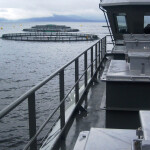
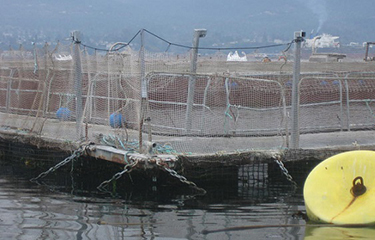
An executive order issued by the Washington Department of Natural Resources (DNR) on 18 November, 2022, will prohibit any net-pen aquaculture on state-owned aquatic lands. The move came in response to the 2017 collapse of a net-pen farm operated by Saint John, New Brunswick, Canada-based Cooke Aquaculture that led to the escape of hundreds of thousands of Atlantic salmon. It does not apply to hatcheries that have an environmental restoration mission or that boost native stocks.
“As we’ve seen too clearly here in Washington, there is no way to safely farm finfish in open sea net pens without jeopardizing our struggling native salmon. Today, I’m announcing an end to the practice. We, as a state, are going to do better by our salmon, by our fishermen, and by our tribes,” Washington Commissioner of Public Lands Hilary Franz said at an event announcing the decision. “Commercial finfish farming is detrimental to salmon, orcas, and marine habitat. I’m proud to stand with the rest of the West Coast today by saying our waters are far too important to risk for fish-farming profits.”
The executive order directs DNR staff to develop necessary changes to agency rules, policies, and procedures to prohibit commercial finfish aquaculture on state-owned aquatic lands. The move will effectively end commercial finfish farming in the state after more than 40 years of continuous net-pen operations in Puget Sound. Net-pen aquaculture is already banned in Alaska, California, and Oregon – the other states along the U.S. West Coast – and is being restricted in the Canadian province of British Columbia.
In a press release, the Jamestown S’Klallam Tribe, which formed the Salish Fish joint venture with Cooke Aquaculture to develop a net-pen farm to raise native steelhead in Puget Sound, decried the decision.
“This action is an irresponsible denial of what science has proven: marine net-pen aquaculture is safe for the environment and the most sustainable, climate friendly way to feed the world,” the tribe said. “Salish Fish, the Jamestown S’Klallam’s marine aquaculture business, would provide fresh, local seafood and restore tribal fisheries on the Olympic Peninsula, a critical need for tribal economic self-sufficiency. Food sovereignty, the ability to grow and provide one’s own food sources, builds self-reliance, independence, and confidence in our youth and community. The project, which would bring critical jobs to rural Washington and the working waterfront of Port Angeles, is now in jeopardy due to the DNR executive order effectively ending all marine net pen aquaculture in Puget Sound.”
The tribe called on Franz to reverse the executive order, calling it “highly undemocratic” since it nullifies a 2018 law passed by Washington’s legislature allowing commercial farming of native species in state waters.
“[The] DNR announcement was political; crafted to placate ill-informed activist groups who refuse to admit the vast array of scientific studies show us that well-regulated aquaculture is not a threat to the environment, or wild salmon,” the tribe said, citing a NMFS biological opinion released in March 2022 finding net-pen aquaculture has little to no negative impact on native species in Puget Sound.
In its own statement, Cooke Aquaculture Pacific said it was disappointed in the DNR decision.
“The order is short-sighted, and the commissioner’s position neglects extensive scientific analysis and judicial rulings, which found that there are no significant adverse environmental impacts arising from marine fish farming,” it said. “Since the unfortunate collapse of a steel cage system on one fish farm at Cypress Island in 2017, Cooke has worked collaboratively and transparently with regulatory agencies to identify areas of improvement and implement regulatory and monitoring processes to ensure that our operations meet and exceed the highest standards. The agencies have worked with Cooke to rework its permits, increase transparency into Cooke’s operations, and implement third-party oversight in the form of independent engineering reviews of our facilities. We are proud of the relationships we’ve built with agency staff and the progress that’s been made over the last five years to improve operations. The scientific analysis has shown that finfish aquaculture in Puget Sound is compatible with wild fish, and we believe it is a needed form of local food production and job creation. It is disheartening that these opportunities have been cast aside by DNR.”
Cooke also denied a statement made by Franz that the DNR had been in discussions with the company about the potential for developing commercial land-based farms in Washington.
“We have not met with the commissioner on this matter. Cooke Aquaculture Pacific was focused on our steelhead trout farms and Salish Fish, our joint venture with the Jamestown Tribe,” it said. “At this time, Cooke remains focused on our exceptional, hard-working employees in Washington state and how best to support them in light of this abrupt decision.”
The executive order came four days after the DNR canceled leases for Cooke’s last two net-pen farms in Puget Sound. Previously, Cooke had lost leases for several of the farming sites it had operated since its acquisitions of Icicle Seafoods in 2016. Cooke has challenged the termination of several of its leases and the litigation is still pending.
Photo courtesy of Washington Department of Natural Resources
