

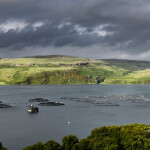
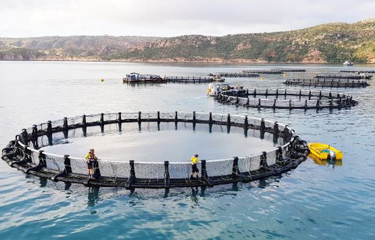
Singapore-based Barramundi Group is considering options to divest from its operations in Australia.
The company, which bills itself as the world’s largest farmer of barramundi, said talks are under way to find a strategic partner for its Australian operations, but that the company is also evaluating the possibility of completely divesting from the country, following discussions with potential investors.
In April 2022, Barramundi sought approval for 13 new farming licenses to expand its Australian operations, with the long-term target of producing 30,000 metric tons (MT) per annum, up from its current annual production total in Australia of 1,600 MT.
The company said in May it hoped to raise up to AUD 350 million (USD 251.3 million, EUR 233.3 million at the time) for its barramundi-farming expansion project in Australia in the third quarter of 2022. It estimated the first phase alone of the 10-year project, located off Australia’s West Kimberley Coast, would cost AUD 110 million (USD 74.8 million, EUR 75.3 million), which the company said it could not finance on its own.
“Therefore, we have begun dialogues with potential partners and co-investors in Australia. While the discussions are ongoing, we are working on a plan for profitability, and we have recently hired an industry veteran as our new general manager for the Australian operations,” the Barramundi Group said.
The Australian government will do its own environmental assessment for the project, following an earlier assessment done by Western Australia state authorities, which Barramundi worried “may extend the project’s cost and timeline.”
The divestment plan has been proposed, as its current operating business in Australia is currently “not profitable,” the company said.
“The grow-out operations in Australia are experiencing significant increases in feed, energy, and transportation costs, which have not yet been translated into price increases. Management is actively engaging customers on a price review exercise,” the company said.
Its net sales in Australia in the first half dropped 19 percent year-on-year to AUD 6.72 million (USD 4.57 million, EUR 4.59 million) and its harvest tonnage contracted 10.1 percent to 729 MT, while its net-selling price fell 6 percent.
In Singapore, the outbreak of the scale drop disease virus (SDDV), which began in the fourth quarter of 2021, has continued to affect Barramundi Group’s farms in the first quarter of 2022. In response, the company has harvested the remaining output of its Semakau and Senang sea sites to avoid further losses and has fallowed the sites. Barramundi Group said the SDDV outbreak did not affect its operations in Australia or Brunei.
“The vaccine trial with a leading multinational pharmaceutical company has just commenced at our new site off St. John’s Island, and we are cautiously optimistic that in the field trial the high efficacy the vaccine demonstrated in clinical trials will be matched,” Barramundi CEO Andreas von Scholten said. “The commercial viability of intensive ocean aquaculture of barramundi in Singapore waters will depend on the final results of the field trial.”
The company’s sales in the first six months edged down slightly from SGD 17.1 million (USD 12.18 million, EUR 12.25 million) to SGD 16.9 million (USD 12 million, EUR 12.1 million), and it recorded a net loss of SGD 12 million (USD 8.55 million, EUR 8.6 million).
Barramundi Group completed an initial public offering in August 2021. The company was founded in 2008 by ex-Marine Harvest executives Hans den Bieman and Joep Kleine Staarman. The company's CEO, Andreas von Scholten, said the company sees great promise in barramundi farming in the area between Singapore and Australia.
Photo courtesy of Barramundi Group
