






Guolian Aquatic is expecting a return to big profitability in its initial earnings projections for 2022.
The Guangdong, China-based seafood firm said it is expecting to bank a profit of CNY 27 million to CNY 40 million (USD 4.1 million to USD 6 million, EUR 3.8 million to EUR 5.6 million) for 2022 once its accounting is finalized. The result provides justification for the company’s exit from the aquaculture business and its shift to a focus on processed meals and precooked products for China’s convenience dining sector.
Guolian’s aquaculture arm lost CNY 50 million (USD 7.35 million, EUR 7.05 million) in 2021, and had been loss-making for some time. Overall, the company posted a loss of CNY 13.8 million (USD 2.1 million, EUR 1.9 million) in 2019, but recorded a CNY 269 million (USD 40.3 million, EUR 37.6 million) profit in 2020, and a CNY 464 million (USD 69.6 million, EUR 64.9 million) profit in 2021. Guolian lifted its gross-profit margin from 11.5 percent in 2020 to 15.3 percent in 2021.
Guolian’s overall income rose 19.6 percent to CNY 3.94 billion (USD 575 million, EUR 538.8 million) in 2022, with processed meals accounting for CNY 560 million (USD 81.7 million, EUR 76.6 million), up 36 percent year-on-year. As a percentage of overall income, Guolian’s sales of processed meals have risen from 12.9 percent in 2019 to 16.2 percent in 2020 and hit 18.8 percent in 2021. And Guolian’s processed-meal sales rose 36.1 percent in the first half of 2022, accounting for 23.1 percent of its total revenue.
Guolian did not respond to a SeafoodSource request for comment on its results or its market shift.
Looking forward, Guolian stands to benefit from an expansion and consolidation of China’s casual dining scene, according to a research paper published by Chinese brokerage Guohai Securities. Chinese fast-food chains prefer to source pre-cooked products from third parties rather than investing in their own kitchen systems, according to Guohai analysts Xue Bao Hu and Liu Guo Ming. They’re projecting Guolian will post 15 percent annual growth (to 2026) in sales premade or prefabricated meals in the combined foodservice and retail sectors, with meal sales in retail outlets set to grow by 25 percent a year through 2026.
Translated directly as “prefabricated” from Mandarin, China’s processed-meal sector has blossomed as it has been encouraged with subsidies and tax breaks by regional governments, which have invested heavily in this segment of the food sector. Guolian’s key competitor in the sector is the Fujian-based firm Fujian Anjoy Foods, the biggest seller of processed frozen meals in China.
“Guolian has an advantage in the (low) price of its products,” Guohai said, while noting Anjoy spends twice as much as Guolian on research and development.
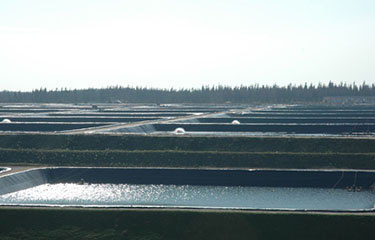
Guolian’s move to divest itself of its aquaculture business is motivated by a wish to boost its stock price, according to several Chinese aquaculture executives interviewed by SeafoodSource.
“Guolian can still get 70 or 80 percent of its supply through contracted farms, while getting a much better financial report to show to investors,” explained a Chinese aquaculture expert and service provider familiar with Guolian. “The entry into aquaculture of major feed companies like Tongwei and Haid has made it much more competitive for Guolian at farm level.”
Another aquaculture practitioner in southern China expressed his doubt that Guolian has actually fully exited the aquaculture business.
“Instead, I wonder if Guolian sold the loss-making aquaculture unit to an unlisted company or a company which is not required to be in Guolian's consolidated financial reports,” the executive said. “This would improve profitability and help the company stock price while Guolian's bosses still have control.”
However, that move could be financially costly in the long-term, as imported shrimp is even more price-competitive than domestic product, according to the aforementioned aquaculture specialist, who like the other executives interviewed by SeafoodSource, requested anonymity to allow himself the freedom to speak candidly.
“It’s a bloodbath for Guolian on the farm side,” he said. “Guolian decided to compromise, to give up on having full control of the supply chain in order to get its accounts looking better at the listed company.”
Others see trade-related reasons for Guolian’s switch to international suppliers. While getting out of the production business potentially exposes Guolian to more risk, “it also opens up other sourcing from non-contract farmers and international suppliers,” said Kevin Fitzimmons, an aquaculture expert at the University of Arizona with considerable experience in Asia. The possibility the U.S. might extend its 25 percent tariffs on Chinese seafood could have spurred the move, according to Fitzimmons.
“So Guolian may be looking at offshore sourcing to supply the U.S.,” Fitzimmons said.
Shrimp farming in China has gotten more expensive as contract farmers, pressured by Covid and inflation, have been quitting the industry, while others have sold land rights to construction companies for urban development. Additionally, stricter enforcement of China’s environmental laws has forced a reckoning in the sector that has pushed many firms toward premiumization. Fitzimmons sees these trends – and demographic pressures which has seen an exodus from rural China – prompting a reappraisal by Chinese companies of the aquaculture business writ large.
“Few young people want to take over from their parents,” he said. “Some of the companies are now also looking at company-owned farms with more professionally-trained staff operating larger-scale farm operations.”
In contrast to Guolian, other major Asian aquaculture giants like CP, Minh Phu, Grobest, and Avanti have been shifting to deeper reliance on company-controlled shrimp farming rather than relying on independent contractors, according to Fitzimmons.
“I would say most are edging more to the company-owned or company-managed, where the company has a management team that operates or advises a farm that is leased from the owner or some other type of arrangement,” he said. “This more-professional management allows for more control and planning on the part of the company.”
Sun Shan Shan, an analyst at China Fortune Securities, wrote in a recent research note on the firm that Guolian, which has a large sourcing operation buying shrimp in Latin America and Saudi Arabia, as well as Antarctic krill and mussels from New Zealand, is also hoping its shift will help it become less reliant on exports to the U.S. Guolian, which recently increased its prices on exported goods, aims to get 70 percent of its revenues from domestic sales in 2025, Sun noted.
Guolian’s decision to rely on imported raw materials wouldn’t be unusual in China, where many companies have begun substituting cheaper imports for some crops and meats formerly produced domestically. However, the company’s exit from aquaculture is hardly a vote of confidence in the sector. Despite growing demand for seafood across the continent, professional investors in Asia are still wary of investing in the sector. A Singapore-based investment banker seeking out opportunities in the Chinese seafood sector told SeafoodSource aquaculture remains a comparatively unpopular investment due to the relative lack of recognizable brands in the sector.
“The upstream food business in general is pretty unsexy for the public,” the investor said. “While we are interested in aquaculture, we think that an integrated business where trash fish can be economically turned into feed meal for aquaculture would make both sides of the business profitable.”
The investor, who is in talks with fishing companies in Southeast Asia supplying Chinese demand for wild-caught seafood, said he remains unconvinced by high-profile aquaculture projects in Asia.
“A lot of people with relatively short track records are raising huge sums to promote for example RAS [recirculating aquaculture systems] for salmon in locales that don’t make too much sense,” the investor said. “Chinese offshore farms producing, for example, yellow croaker bear a lot of promise. But the margins will be eaten up by the downstream distributors.”
Photo courtesy of Guolian
