





The fish division of food processing equipment manufacturing company Marel generated revenues of EUR 41 million (USD 48.1 million) in the second-quarter of this year, attributing the 16.5 percent year-on-year increase to higher volumes. Its earnings before interest and taxes (EBIT) for the same period totaled EUR 3.9 million (USD 4.6 million million), up from EUR 800,000 (USD 938,423) a year previously.
Posting its Q2 results, Marel said that with the acquisition of Icelandic processing equipment firm Curio in the fourth quarter of last year, its product offering had been strengthened, and also that it had moved “a step closer” to becoming a full-line provider to the global whitefish industry.
In the last quarter, Curio secured an order to cover the primary processing equipment for the renewed Brim whitefish processing plant in Iceland.
“Fish processors have responded to the increased sales of ready-to-cook products, as sales have shifted from foodservice to retail and online. This results in a need to update and advance customers factories to increase bone-free and consumer ready products. Management continues to target medium- and long-term EBIT margin expansion for Marel Fish, although there can be fluctuations between quarters,” Marel said.
Marel Fish predominantly sells equipment into the salmon, wild whitefish, and farmed whitefish processing sectors. The division accounted for 13 percent of the company’s total revenues, while Marel Poultry and Marel Meat contributed 53 percent and 32 percent, respectively.
Overall, the company’s revenues for the second-quarter amounted to EUR 305.7 million (USD 358.6 million), down from EUR 459.4 million (USD 538.9 million) in the corresponding period of last year. The EBIT fell EUR 4.6 million (USD 5.4 million) to EUR 45 million (USD 52.8 million).
For the first six months, its revenues and EBIT totaled EUR 607.3 million (USD 712.3 million) and EUR 70.4 million (USD 82.6 million), respectively.
“The first half of 2020 has truly been a testament to the resilience of our business model and that of our team. I am proud to say that despite the many challenges encountered, our culture of excellence and decentralized leadership model have been key to maintaining our reputation as a trusted service partner to our customers,” Marel CEO Arni Oddur Thordarson said.
Confirming that all of Marel’s factories had remained open this year but had been operating at below historical and targeted utilization rates, Thordarson said that the orders received in the first half of 2020 were on par with same period last year, with record orders received in first-quarter and lower in the second quarter during the peak of the pandemic.
“Opportunities for automation and the digital transformation in the food industry are immense, and the speed of change is accelerating. Consumer behavior is changing with long-term consequences. Over past four to six months, we have seen a dynamic shift in demand from foodservice to groceries, with more mindful shopping, both in terms of price as well as awareness of a healthy, more sustainable diet,” Thordarson said. “Rather than bulk up once a week with frozen and packaged foods, consumers are again looking for fresh and ready-to-cook products. Our customers, that have the channel flexibility and processing know-how to chase different consumer products in the market, have performed well in these turbulent times – so has Marel.”
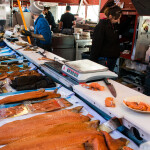
Photo courtesy of Marel
