


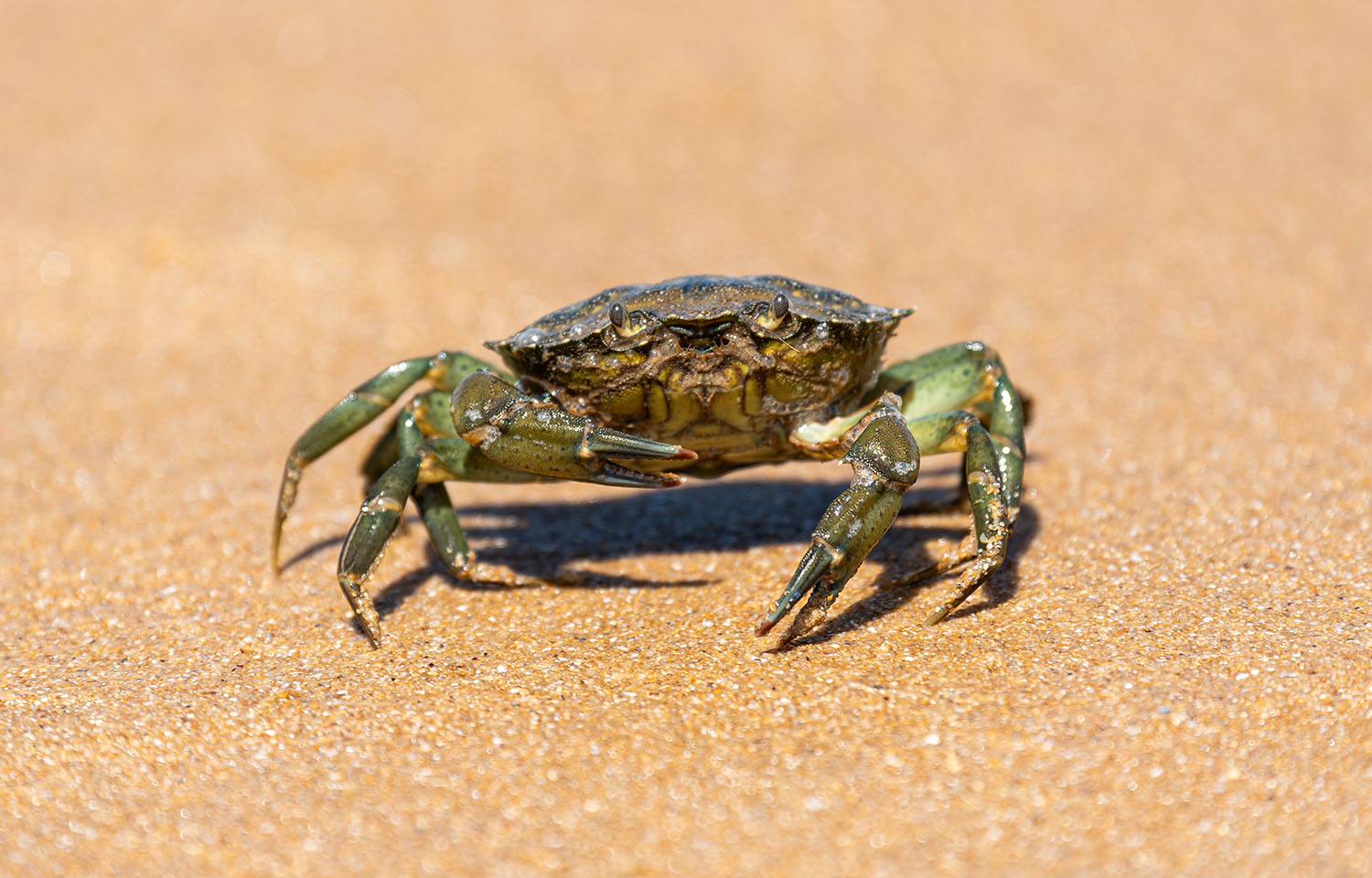
The Alaska Department of Fish and Game (ADF&G) has denied an emergency petition filed by the Ketchikan Indian Community (KIC) to reclassify invasive European green crabs from a Class A to a Class B banned invasive species, which would have enabled them to be frozen and transported for food use.
In a video posted to Facebook, Ketchikan Tribe Fisheries and Wildlife Biologist Emily Halsell said the petition was filed due to the prevalence of invasive European green crabs and said other solutions are not readily available nor in development. Currently, European green crabs are only able to be possessed or transported for scientific and educational purposes with an Aquatic Resource Permit. In the petition, Halsell said the goal was to make usage more attainable, in tandem with prevention efforts, so that people would be inclined to continue removing the green crabs without barriers to entry.
According to local Alaska news outlet KRBD, ADF&G Commissioner Doug Vincent-Lang responded with a letter to the petition saying that the department does not see a food value in European green crabs due to the very small size of the species and said there's a lack of evidence that the species is contributing to changes in eelgrass habitat; something KIC has long argued.
European green crabs were first discovered in Southeast Alaska in 2022. In a 2026 issue paper published by the Ketchikan Gateway Borough, researchers said the invasive species "poses a significant ecological and economic threat" to marine ecosystems in Southeast Alaska, as well as to the operations of commercial fisheries, mariculture industries, and traditional food gatherers.
"Green crab are aggressive, highly adaptable predators capable of tolerating wide temperature and salinity ranges, allowing them to survive and spread throughout Alaska’s diverse nearshore habitats," researchers said in the published paper.
The researchers also said the green crab preys on juvenile shellfish and eelgrass, which can have long-term implications like lower harvest levels, reduced recruitment, and long-term fishery production decline.
"These impacts have already been observed elsewhere; Washington state was forced to allocate more than USD 8.5 million [EUR 7.3 million] in emergency funding after detecting explosive population growth, removing over 677,000 European green crabs between 2022 and 2024 yet still reports ongoing ecosystem damage and high management costs," Ketchikan Gateway Borough reported.
In August 2025, NOAA called the green crab "one of the most invasive species in the marine environment," as it has few predators, hunts aggressively, destroys seagrass, and is able to overpower local species needing food sources and habitat.
"Green crab could potentially damage Alaska’s multi-billion dollar fisheries industry, especially for salmon, crab, and mariculture operations," NOAA said.
ADF&G has an invasive green crab management plan in place until 2028, called the "Early Detection and Rapid Response Plan for Invasive European Green Crab [Carcinus maenus] in Alaska, 2023-2028."
The 33-page document outlines the department's regional findings, prevention methods, early detection practices, methods of rapid response, and control measures. The department's early detection monitoring network relies on community-based monitoring in partnership with tribal organizations like KIC and the Metlakatla Indian Community. Organizations like Alaska Sea Grant are also publishing research methods on detection efforts.
The Prince William Sound Regional Citizens Advisory Council posts media reports of green crab findings and encourages individuals to continue reporting sightings to ADF&G to support future legislative efforts.
