



Los Ángeles, Bio Bio, Chile-based Salmones Austral saw shipments surge 88.9 percent to 19,500 metric tons (MT) during the first quarter of 2021, but lower sales prices and higher costs dragged the company into the red.
Salmon Austral posted a loss of USD 9.4 million (EUR 7.7 million), versus a net profit of USD 5.9 million (EUR 4.8 million) in Q1 2020.
The company credited its increased Q1 shipments to stronger coho salmon sales recorded in the last three months of 2020, driving a 66 percent increase compared to total volumes sold in Q1 2020.
Salmones Austral's revenues jumped 44.7 percent to USD 82.4 million (EUR 67.6 million) during the first quarter of 2021, compared to USD 56.9 million (EUR 46.7 million) recorded a year earlier. However, its average sale price dropped 20.3 percent to USD 4.17 (EUR 3.42) per kilo whole fish equivalent (WFE), compared to USD 5.23 (EUR 4.29) per kilo WFE in the first quarter of 2020. Its cost of sales rocketed up 85.3 percent year-over-year to USD 85 million (EUR 69.7 million) due to the higher volume and a 1.9 percent boost in production costs to USD 4.13 (EUR 3.39) per kilo WFE.
The company’s earnings before interest, taxes, depreciation, and amortization (EBITDA) was USD 3.8 million (EUR 3.2 million) in the red, compared to USD 10.4 million (EUR 8.5 million) in the black during the first three months of 2020.
“The results of the first quarter reflect that we are experiencing a transition period after a year marked by low salmon prices and the effects of the pandemic in production processes,” Salmones Austral Vice President Christian Samsing said in a release. “We anticipate that the situation will gradually normalize, which is already being seen in prices.”
Salmones Austral was created in 2013 through the merger of Trusal and Pacific Star. Today, it has annual production of some 45,000 MT to 55,000 MT exported to more than 20 countries, with more than 1,400 workers operating in two processing plants and 20 freshwater and seawater farming centers in the regions of Maule, Biobío, La Araucanía, Los Lagos, and Aysén. Of its annual production, 63 percent is Atlantic salmon and the remaining 37 percent is coho salmon.
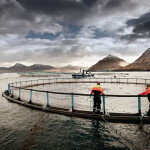
Photo courtesy of Salmones Austral
