






The Covid-19 pandemic was a massively disruptive force impacting businesses across the entire seafood industry.
Stuck at home with restaurants shut down and little to do, consumers began to look for alternative recipes and ways to access seafood, fueling a direct-to-consumer seafood boom. Existing direct-to-consumer companies like Wild Alaskan Company saw massive upticks in business, while more traditional seafood companies and distributors hastily added direct-to-consumer sales options.
Weathering the storm along with everyone else was Sitka Salmon Shares, which recently rebranded in November to become Sitka Seafood Market. The company, founded in 2011 and originally focused on selling Alaska-sourced salmon to customers across the country, has evolved over the years into a source of fish and shellfish from a variety of locations.
During the pandemic, Sitka Seafood saw similar booms in sales as other direct-to-consumer business models experienced. The sudden spike in sales challenged the operation to scale up fast enough to meet demand, Sitka Seafood Market Vice President of Marketing Carl Schwartz told SeafoodSource.
“The pandemic certainly put the company through its paces; it stretched our resources and pretty much every process we had to its limits in the best possible way,” Schwartz said. “That’s not a complaint. It caused the company to be honest with itself and look at where the gaps were.”
From the bottom to the top of the operation, he said, Sitka Seafood was stretched thin – from procurement to operations to shipping and member support.
“It definitely put people through their paces, and I still hear the war stories from people who lived through it,” Schwartz said.
The impact of closed restaurants didn’t last forever, but Sitka Seafood saw in its customer data that even with restaurants returning, many of its customers stuck around.
“We didn’t see the degradation in our sales. We were as strong as we have ever been,” Schwartz said.
That isn’t to say nothing changed at all – both for the business and for customer behavior.
“We definitely saw a change in consumer behavior, but just about every business on the planet can say that,” Schwartz said. “After the pandemic when things started to open up, we noticed that consideration for purchase took a little bit longer. People could go to restaurants, they could go back to grocery stores, and it took a little bit longer to consider the purchase.”
Despite taking longer to consider purchases, ultimately, many customers still decided to stick with Sitka Seafood, and Schwartz attributes that success to the core philosophies the business has adhered to since it was founded over a decade ago.
“The things that set us apart are our duration in business and our unmatched focus on quality; we have a very strict sourcing criteria,” he said. “We turn away way more suppliers than we work with, and that really protects the experience that our customers receive.”
Schwartz said customer experience and satisfaction are primary tenets of Sitka Seafood’s philosophy, which is why the company brought on Grace Parisi to serve as the company’s culinary director. The former senior test kitchen editor at Food & Wine Magazine and author of a James Beard-nominated cookbook, Parisi has created a range of recipes that customers can choose from to enhance their experience.
“It’s all meant to help further the experience and help people enjoy the product even more,” Schwartz said. “We continue to focus on that, and that is core to who we are and always will be.”
The recipes also help the company overcome any fears people might have with cooking a species they are not used to or perceptions that cooking seafood is difficult or time-consuming.
“She really focused on creating recipes that you can create in 20 to 30 minutes – from start to finish,” Schwartz said. “They’re so approachable and easy, and that really was the goal: to remove that barrier for people.”
Another part of ensuring customer satisfaction that has, in some ways, been consumer-driven is a private Facebook group, which Shwartz said is tens of thousands of Sitka Seafood’s customers use to share recipes and images of what they have been cooking from the company.
“We participate but only really as a consumer, not as a brand or a company, and it is all centered around what people can do with our products,” he said.
The growing role of health and wellness being at the forefront of seafood purchasing has also helped the company boost sales. Schwartz said some customers, when surveyed, readily admit they sought Sitka Seafood on a doctor’s orders to eat more seafood.
The increased customer base and evolving products are part of why the company closed its Alaska-based processing plant in 2022. Schwartz said the company had reached a crossroads, where it had to decide the proper path forward.
“We had to be honest with ourselves and make a decision on what business we really wanted to be,” Schwartz said. “ We had gotten to the point where we were scaling beyond our own plant, and it also just wasn’t a business that we were going to be able to compete with the bigger entities. It was more cost-effective, to be honest, to start work with other partners.”
Working with other partners also gave the company more flexibility in expanding the types of species it could offer and the geographic areas from which it could source.
“If we’re sourcing on the East Coast, we’re not going to process on the West Coast. It just doesn’t make sense,” Schwartz said. “It’s unfortunate the human toll it takes when you close a plant; it affects people’s lives, and that really is unfortunate and wasn’t taken lightly. But from a business perspective, it was the right move for us.”
Since that closure, Sitka Seafood has gone on to open other facilities. In early December, it opened a new warehouse facility in Galesburg, Illinois, which will help the company access markets in the U.S. Midwest region.
“This was a big leap forward for us. It’s a little more space, but it was also built to our spec,” Schwartz said. “The warehouse that we had been working in was co-located with a couple other businesses, and there was really no vertical space.”
The new warehouse has more vertical space, more up-to-date cold storage, and a new “assembly line” allowing Sitka Seafood to process orders quickly and expand on its product offerings, some of which include ready-to-eat seafood meals – a trend that is continuing to grow in popularity.
“It really gave us the opportunity to think ahead a few years,” Schwartz said.
Those years ahead for Sitka are likely to entail the same focus on user experience that allowed it to maintain the increased customer base it gained through the surge in interest during the Covid-19 pandemic, Schwartz said.
“We give people reasons to want to stay around. Direct-to-consumer is hard ... It is challenging, especially in a commoditized product like seafood where there are so many local options,” Schwartz said. “But, we’ve done taste tests in conjunction with some universities, and ours always comes out on top. To me, if you have quality products, customers will come and they will enjoy it.”
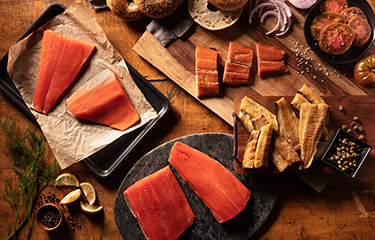
Photo courtesy of Sitka Seafood Market
