






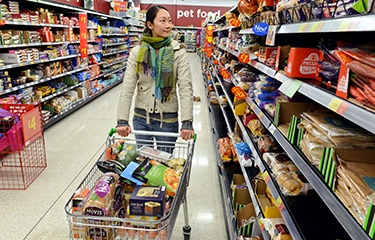
Overall food inflation declined to 9.9 percent in the United Kingdom in September 2023, down from 11.5 percent in August, while fresh food inflation fell from 11.6 percent in August to 9.6 percent in September, according to the British Retail Consortium and Nielsen IQ.
Inflation on ambient food items such as canned seafood decelerated to 10.4 percent in September, down from 11.3 percent in August, the lowest since November 2022. U.K. food inflation is the lowest it has been since August 2022, and even though fresh food inflation remains elevated, it is below the three-month average, BRC and Nielsen IQ said.
“Food prices dropped on the previous month for the first time in over two years because of fierce competition between retailers. This brought year-on-year food inflation down to single digits and contributed to the fifth consecutive monthly fall in the headline rate, helped by easing cost pressures,” BRC Chief Executive Helen Dickinson said.
Welwyn Garden City, U.K.-based Tesco, along with several other grocery chains, have announced additional price cuts through the end of the year. In September, Tesco locked in the price of more than 1,000 everyday products until 2024 and that it would match Aldi’s price of more than 600 staple goods.
“We know that this has been a year of budgeting carefully for shoppers, with customers wanting to make sure they are getting great value on their shop,” Tesco UK CEO Jason Terry said at the time. “By locking more than 1,000 prices, our customers know exactly how much they will pay for those items today, at Halloween, at Christmas, and into 2024.”
Tesco has benefitted from a variety of cost-cutting measures this year, reporting an 8.9 percent increase in sales in the first half of 2023, and a 14 percent incline in operating profit. Tesco is now consistently the U.K.'s cheapest full-line grocer, Tesco Chief Executive Ken Murphy said.
“Our investments in value, and in improving more than 1,100 own-brand products from pasta to fresh fish, are helping us to offer outstanding quality at great prices, all underpinned by market-leading availability,” Murphy said. “Customers are responding well, contributing to market share gains in store and online. We’re seeing the results at both ends of the basket, with strong growth in our Finest range as shoppers look to save by treating themselves at home, voting with their feet as they switch from premium retailers to Tesco.”
Food inflation fell across the half of the year, Murphy noted.
“While external pressures remain, we expect that it will continue to do so in the second half of the year. We are in a strong position to keep investing for customers, and will continue to lower prices wherever we can – doing everything in our power to make sure customers can have a fantastic, affordable Christmas by shopping at Tesco.”
Dickinson said her organization also expects price inflation to continue to fall through the rest of the year.
“However there are still many risks to this trend – high interest rates, climbing oil prices, global shortages of sugar, as well as the supply chain disruption from the war in Ukraine,” Dickinson said. “Retailers will continue to do all they can to support their customers and bring prices down, especially as households face being squeezed by higher energy and mortgage bills.”
NielsenIQ Head of Retailer and Business Insight Mike Watkins said there continues to be pressure on U.K. household budgets.
“Over half of households still [feel] that they are significantly impacted by the continued increases in cost of living, so it will be important for retail sales to keep momentum which means we can expect more price cuts and increased promotional activity across all retail channels,” Watkins said.
Photo courtesy of 1000 Words/Shutterstock
