




The Russian government is aiming to make it easier for the country's seafood producers, particularly crabbers, to export their products, with a move to transfer critical oversight functions regarding the export of live crabs to the Federal Agency for Fisheries.
Currently, a Russian fishery wanting to sell live seafood outside of the Eurasian Economic Union (comprised of Russia, Kazakhstan, Belarus, and Armenia) must receive approval through a two-tier bureaucratic system. First, a company must obtain an export license from Russia’s Ministry for Industry and Trade, and then a certificate from the Russian Federal Service for Environmental Control (Rosprirodnadzor) for each batch of products they wish to export.
That process got more difficult in Jun 2020, which Rosprirodnadzor’s certificate became much more difficult to obtain as the government body started to apply new rules requiring fishing companies to submit papers verifying the legality of their catch.
Exporters reacted by contacting both government officials and the members of the Russian Parliament. Obtaining all the documents could take up to 10 days, during which time the quality of their live seafood could deteriorate significantly, cost the companies money. Nearly half of all 70,000 metric tons (MT) of crab caught in the Russian Far East annually are sold live to China, South Korea, Japan, and other countries, putting crab-fishing companies at a significant trade disadvantage.
In response to the complaints, in October 2020, Russian Deputy Prime Minister Viktoria Abramenko ordered Rosprirodnadzor to make a draft of amendments to its rules concerning live seafood exports, and submit it by the middle of November. The amendments, recently submitted, eliminate Rosprirodnadzor entirely from the management of live seafood exports, with all oversight functions handed over to the Federal Agency for Fisheries.
The new process, with the proposed amendments implemented, will begin in early 2021, and is expected to significantly speed the approvals process. Until then, Rosprirodnadzor has been asked to issue temporary orders approving seafood exports in a timely fashion, Abramchenko said.
According to Russian media reports, fisheries export licenses are being completely eliminated, per the unanimous agreement of all the government bodies involved in their issuance, including the Ministry for Industry and Trade, citing the fact that importing countries routinely check the legality of the products they import.
The new rules will still take time to implement, as the licensing process is regulated by the E.E.U.’s legislation, and it will take a few months to implement, Abramchenko said.
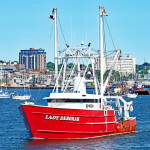
Photo courtesy of Korobcorp/Shutterstock
