



Feltham, U.K.-headquartered frozen foods company Nomad Foods, the parent company of Birds Eye, Findus, and Iglo, has partnered with innovation network Innoget to launch an open innovation portal.
Open to academics, subject experts, start-ups, and businesspeople, the portal has the goal of developing new partnerships to develop ideas to increase consumption of mussels and bivalve proteins.
Activities will include co-developing product solutions, consumer testing, facility testing, and funding. Initially, the portal will focus on increasing the consumption of frozen mussels and other bivalve products; recyclability solutions for products that are currently in multi-material, non-recyclable vacuum packaging; solutions to enable recyclable paper-based meal trays or bowl packaging to be used for frozen foods; and clean-label replacements that that replicate the functional properties of methylcellulose in food applications.
“Consumer demand for nutritious, high-quality, sustainable food and sustainable packaging solutions is growing and the role of technology in delivering these needs is accelerating. We are very fortunate to have a world class in-house R&D team and a growing number of partnerships in the food tech space, including our cell-cultured fish collaboration with BlueNalu,” Nomad Foods CEO Stéfan Descheemaeker said. “Our new Open Innovation Portal will help us to unlock the potential we see in important areas such as alternative protein as we play our part in helping to deliver a more-sustainable food system and bring to life our purpose of serving the world with better food.”
Nomad Foods Chief Research and Development and Quality Officer Stella Peace said the scale of current challenges facing the food industry will require partnerships if evolving consumer needs are to be met.
“The launch of our new Open Innovation Portal builds on work already underway to expand the use of mussel meat and other bivalve proteins to everyday meal occasions within the next two to three years,” Peace said.
Since 2021, Peace’s team has partnered with scientists David Willer, David Aldridge, and the University of Cambridge to research whether bivalves – clams, mussels, scallops, and oysters – could be used at scale as a source of healthy, sustainable alternative protein due to their wide availability and ability to absorb carbon.
“It’s exciting to think that the humble mussel could be one of our climate change heroes,” she said.
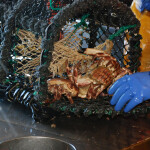
Photo courtesy of C E Newman/Shutterstock
