



CatchCam Technologies CEO and Co-Founder Tom Rossiter grew up with a love for technology and a background in fishing but never desired to be an entrepreneur.
“I think it was a necessity. It was never something that I said, ‘I want to have my own company and build a business empire,’” Rossiter told SeafoodSource. “For me, the most important aspect of my job is getting out on the boats. If you become a CEO, you get drawn off in a different direction. It's finance; it's all that kind of rubbish that I couldn't be bothered with. I wanted to be on boats.”
Growing up fishing gave him a basic understanding of fisheries, but educational demands drew him away from the space, he said. After school, he was pulled back to fisheries-related sciences, onshore production, factory management, and product development, which all helped hone his technological expertise and how it could make systems in the sector more efficient.
Rossiter and his future co-founders, Grace Aleman and Chris Lewis, worked together at former technology company SafetyNet Technologies. The trio found their niche in monitoring underwater conditions within small-scale fisheries and deemed it important work that needed to be continued. As a result, in 2024, the three co-founded Yorkshire, U.K.-based CatchCam Technologies.
“It's about giving the fishermen an understanding of what's happening under the water because that's where their business takes place, but they never get to see it,” Rossiter said. “That's a unique feature of fishing; if you're a farmer, you get to go out into the field, you get to see the hay, you get to see the animals, you can get up close to it, but for fishermen, those guys have been doing the job for 50 years and the only pictures they have are in their heads. It rarely is that accurate.”
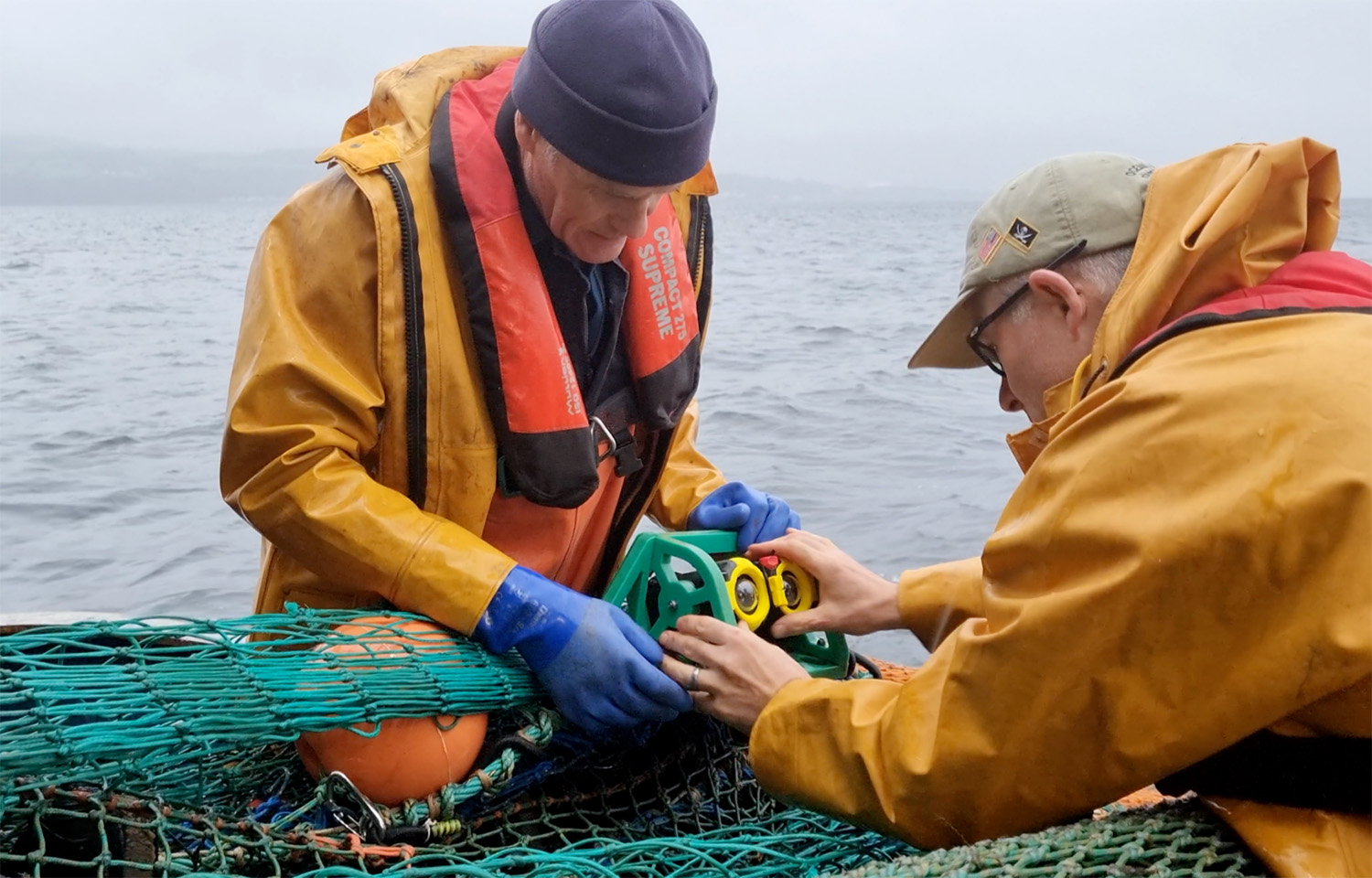
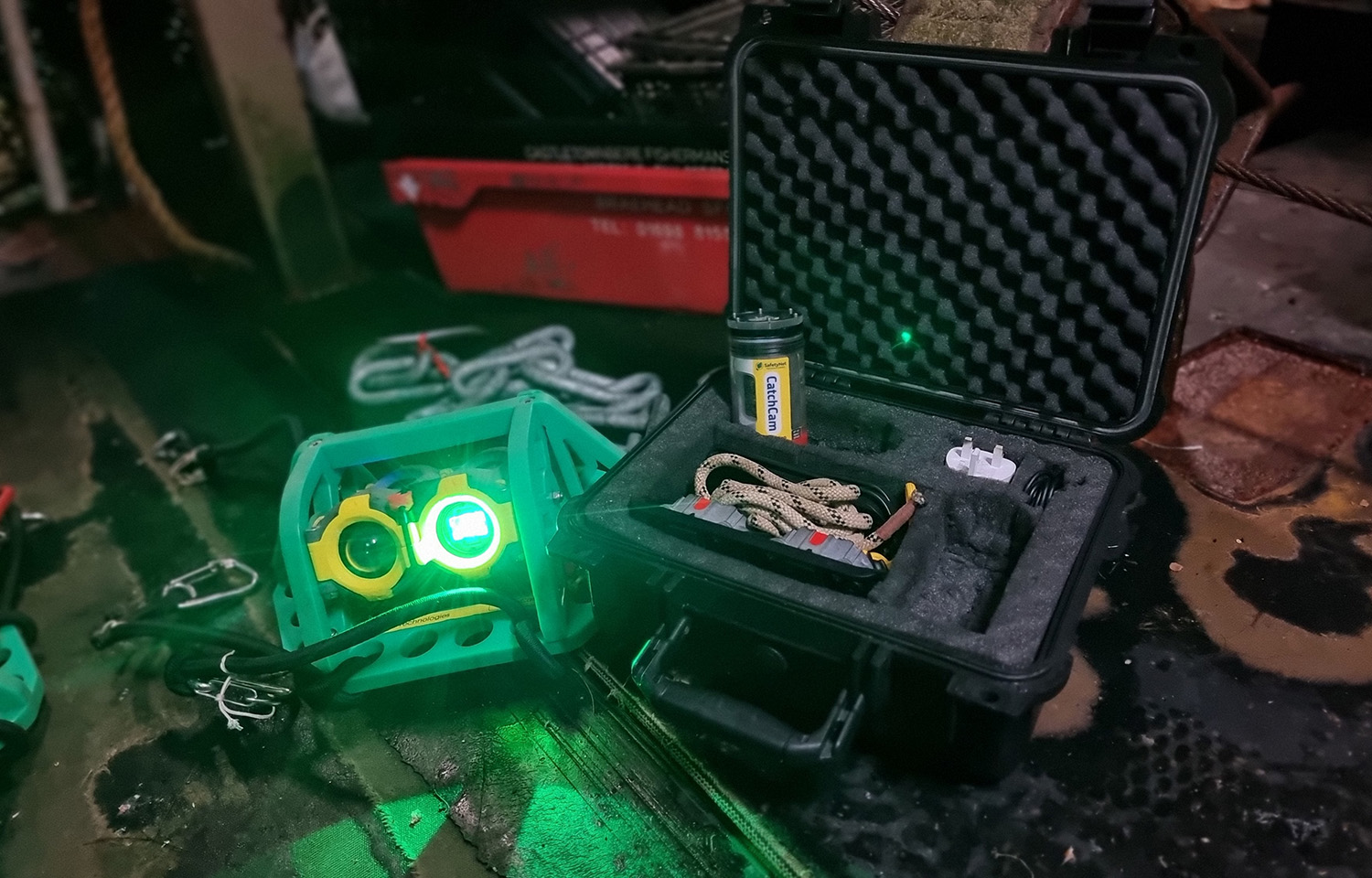
CatchCam’s system includes a small, wireless camera that’s roughly the size of a can of Coca-Cola. The data offloading process is wireless, and the camera system never has to be opened or manipulated. A small red light indicates the camera is on, and it can be turned on or off with a remote onboard the fishing vessel. Artificial lights can accompany the camera, which can both record footage and stream live feeds.
The system was designed by fishermen, not engineers, Rossiter said, which provided the product design with flexibility to attach to multiple types of gear, such as nets, hooks, and trawlers.
“If I'm a commercial person communicating to a technical person on the team, they'll take it with a pinch of salt,” Rossiter said. “But, if you bring a fisherman into the room … then [they] listen.”
The system grants fishermen at small-scale fisheries access to video content to see what’s underneath the surface, instead of risking fish welfare by pulling up nets and ending up with unnecessary bycatch. Rossiter said a small tablet holds all of the video, and there are options to share that data for scientific purposes.
His next goal is to encourage clients to take those individual video feeds a step further and allow scientific groups and nonprofits to see the footage to improve upon relevant legislation, regulations, and sustainability practices.
“In seafood, times are hard,” Rossiter said. “We're on our own [with] a lot of stress. The stocks aren't doing what they should do, so for guys to spend money, they've got to get a return on it and it's got to help them to get to where they want to be. Not everybody might agree with us, but we're pretty confident that this is a good thing and it's helping to feed people and sustain communities.”
About 200 cameras are currently in operation, mainly targeting the trawling sector, with an additional 50 sensors deployed. Rossiter said that number is only growing two years since the firm’s inception.
Markets that have particularly adopted the technology include Norway, Sweden, Finland, the Netherlands, Denmark, Belgium, France, and Spain. Elsewhere, other systems are deployed and growing in numbers in Australia, New Zealand, Japan, South America, Canada, and the U.S. states of Alaska, California, and Maine.
Inga Wise, executive director at U.S. nonprofit SAFET, said CatchCam first caught her attention when she heard it was developed by fishermen.
"What I love about Tom's [company] is not only the technology, [it’s] that Tom is working with fishermen,” Wise said. “There's a lot of wonderful technologies where they don't get to meet the people who use the technologies, and Tom gets all those insights.”
Wise said through her work, she’s able to help small companies like CatchCam get on the radars of legislators, bigger companies, and international clients – something small-scale entrepreneurs don’t have the time for. Wise said she’s already gotten feedback from many different sectors and governments who are encouraged by CatchCam’s progress.
Wise added that she’s equally overwhelmed and encouraged by the rise in artificial intelligence and sees daily innovations in the fisheries sector through technology. However, she said there’s a noticeable gap for small-scale fishers, who don’t have the time nor resources to sit down and learn entirely new systems and processes.
"Conversations [are] really tech-heavy. It’s about AI; it’s about things that don't really relate to … [a small-scale fisherman],” Wise said. “I think what we found at SAFET was that people just knew what was in front of them. We went completely back to the basics of what electronic monitoring is because people are expected to know all these things. I'm amazed at all the things that are happening and the use of satellites and AI, but I'm also amazed at the technologies that really help small-scale fisher lives. I love the fact that small-scale fishers and voices are out there now and they want to be part of the conversation."
A recent case study took place in Cornwall, U.K., where Rossiter visited local fisherman David Stevens to test and deploy CatchCam gear. Before the two even returned to the harbor, Stevens already had three or four ideas for additional projects implementing the gear, according to Rossiter.
“He’s like, ‘We need to do this. This is what we’ve been looking for. I wish I had it 10 years ago,’” Rossiter said. “It’s as much about the people as the technology in that regard.”
Other benefits were found in Finland, where alongside a team of scientists, Rossiter was able to analyze how different species are caught from onboard a vessel, as well as the impacts of a particular trap on other species.
Rossiter said that fishermen themselves, especially at a smaller scale, often want to make an impact on improving their own industry and that CatchCam grants them some ability to do so.
“There are a lot of people who are very passionate about what they do in our industry because it's not one of the sexy industries. It's far from it,” he said. “The people in here are really passionate about it, and they want to have an impact, but very often, they cannot. The system and process we have don't enable them.”
