

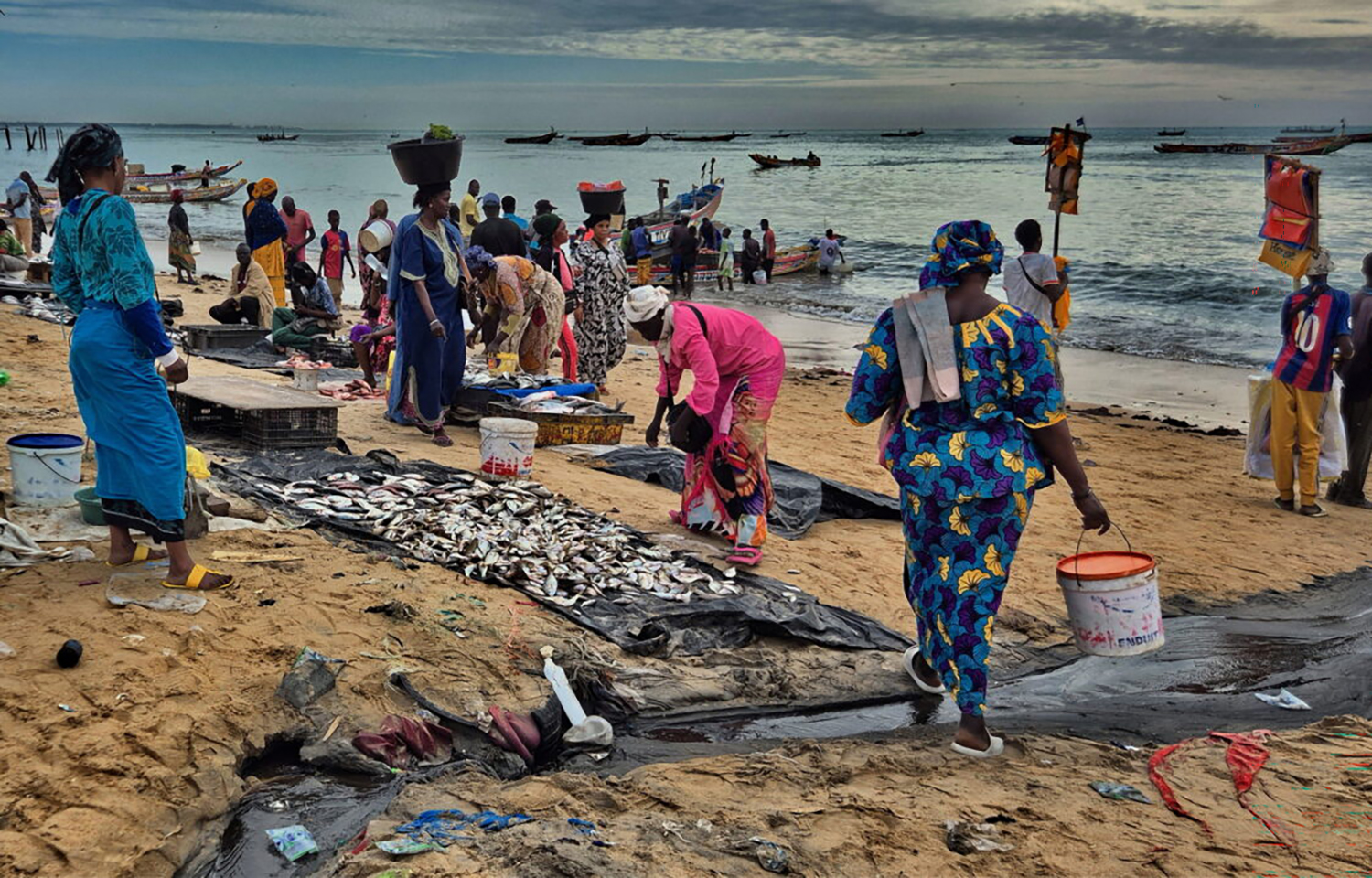
The Steering Committee of the Global Marine Commodities 2 (GMC2) project recently held its first meeting, officially kicking off a global collaboration aimed at improving sustainability in multiple commercial fisheries.
The five-year project includes seafood value chain actors and other private and public partners across six countries in Northwest Africa and Latin America: Mauritania, Morocco, Senegal, Ecuador, Guatemala, and Panama.
Implemented by the United Nations Development Program (UNDP) and funded by the Global Environment Facility (GEF), with the Sustainable Fisheries Partnership (SFP) acting as the project’s executing agency, GMC2 seeks to support ongoing fisheries governance to help reduce overfishing and strengthen fisheries supply chains in the Canary Current Large Marine Ecosystem (CCLME) and the Pacific Central American Coastal Large Marine Ecosystem (PACA).
“The project is intended to bring additional market-based tools and support to ongoing fisheries-governance efforts – not to replace existing institutions or initiatives. Its approach connects seafood buyers and suppliers with better fisheries information, improvement efforts, and management processes,” SFP Fisheries Governance and Livelihoods Director Pedro Ferreiro, who is serving as the technical lead for GMC2, told SeafoodSource.
In the CCLME, the project will aim to drive improvements in small pelagic and octopus fisheries, while in the PACA, it will cover large pelagics, titi shrimp in Ecuador, and broader shrimp species in Panama. Ferreiro said that although knowledge of such target and shared fish stocks in both regions has improved, “many of these fisheries are still not effectively managed at either the national or regional level,” requiring projects like GMC2 to fill in the gaps.
“The growing global demand for seafood continues to put pressure on these fisheries, contributing to increased fishing pressure, the loss of marine biodiversity, and negative impacts on the people and communities who depend on these resources,” he said.
GMC2 aims to take the lessons learned from the first phase of the Global Marine Commodities project, which took place from 2016 to 2021 in Costa Rica, Ecuador, Indonesia, and the Philippines, and apply them to new fisheries and supply chains.
The previous phase of the project employed market-based tools such as corporate purchasing policies, sustainable marine commodity platforms, and fisheries improvement projects (FIPs) to place sustainability at the forefront in the fisheries value chains of developing countries, broadly aligning with the objectives laid out for the new phase of the project.
“GMC2 brings collaborative fisheries management and responsible seafood markets together. Through government-led co-management platforms, fishers and other stakeholders can contribute their knowledge and perspectives to fisheries priorities and management actions. Engagement with buyers and suppliers can reinforce these efforts by connecting responsible market demand with practical improvements in fisheries governance and supply chains. The first Steering Committee meeting is an important step in building that collaboration across the six participating countries,” Ferreiro said.
