


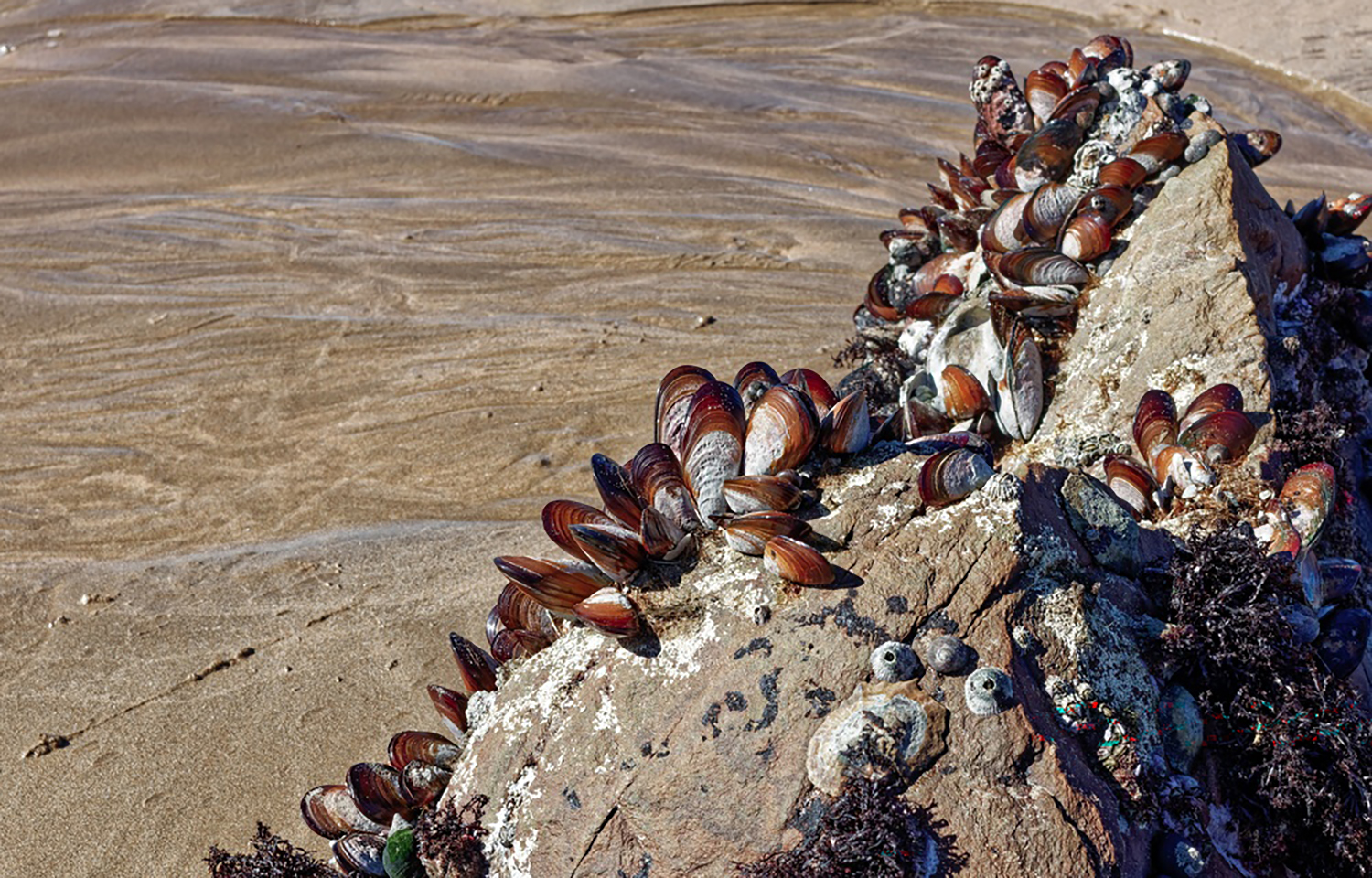
South Africa has indefinitely extended a ban on harvesting, collecting, and consuming wild shellfish from Saldanha Bay and surrounding coastal areas to safeguard public health against high concentrations of paralytic shellfish toxins (PST).
Shellfish aquaculture operations in the area have paused operations over the same concern.
South Africa Department of Forestry, Fisheries, and the Environment (DFFE) Director of Communication and Advocacy Zolile Nqayi told SeafoodSource that DFFE attributes high PST levels to an abundance of the “phytoplankton Alexandrium catenella in production areas.”
A report from the Food and Agriculture Organization (FAO) said Alexandrium has expanded into parts of the Southern Hemisphere over the past few decades and explained that because mussels and oysters are filter feeders, they accumulate substances from their surrounding environments. While PST does not usually harm shellfish, some forms of the toxin can pose serious risks to humans if not properly monitored and managed.
Nqayi said levels of PST in Saldanha Bay mussel and oyster farms have been recorded at more than 15 times the regulatory safety limit.
FAO advised the only way to manage such phycotoxins is to close harvest zones and wait until levels decline naturally; however, it cautioned the process “can take from days up to several months depending on the toxins involved, the shellfish species, the environmental conditions, and the persistence of organisms that produce these toxins.”
South Africa has rolled out exactly that strategy, and the government has continued to caution members of the public that while farms remain closed, they should not harvest or eat any wild shellfish from Saldanha Bay and surrounding coastal areas for an indefinite period.
