






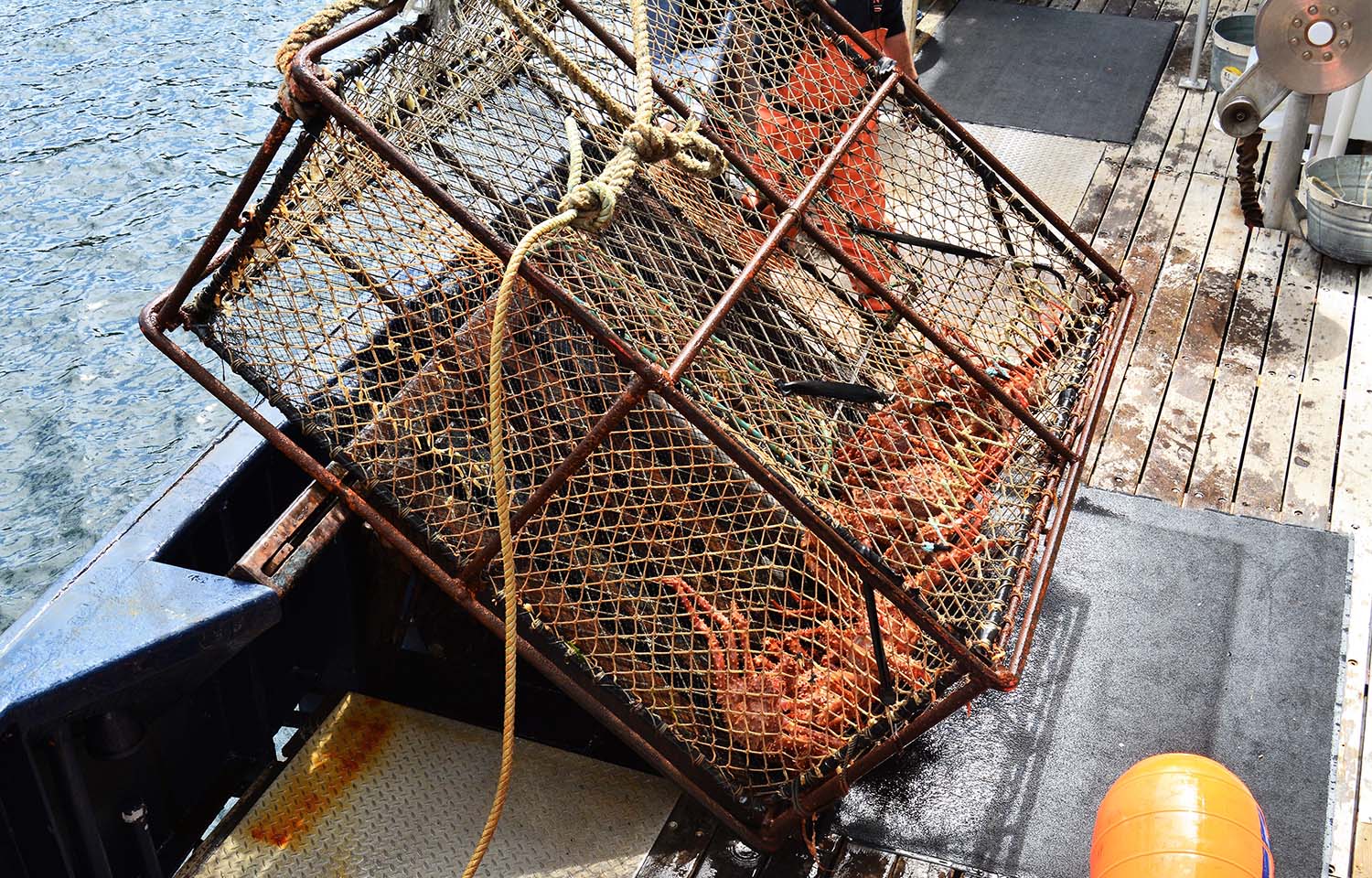
Crabbers in Southeast Alaska could soon be able to harvest red king crabs after the Alaska Board of Fisheries approved a proposal enabling regulators to open a small, limited commercial king crab fishery.
Previous regulations banned officials from opening a commercial king crab fishery in Southeast Alaska unless the estimated biomass of legal male red king crab exceeds 200,000 pounds. The requirement has made it nearly impossible for regulators to open a season in the region; Southeast Alaska has only authorized three commercial red king crab seasons over the last 20 years.
The Alaska Department of Fish & Game (ADF&G) and commercial fishers argue that requirement was based on an outdated claim that it wasn’t financially viable for crab processors to open for anything less than a harvest based on that 200,000-pound threshold.
“The current management plan that hinges on the 200,000-pound threshold is not based on a biological need but was established by the markets in past actions, saying that that's what they needed in order to open up the plants,” Petersburg Vessel Owner's Association Executive Director Nels Evens told the board of fisheries during its Southeast and Yakutat Finfish and Shellfish meeting, which took place in Ketchikan, Alaska, from 28 January to 9 February.
ADF&G submitted a proposal to the Alaska Board of Fisheries that will allow a smaller Southeast Alaska red king crab season by introducing individual catch limit for commercial permit holders.
According to ADF&G, the approved proposal will create three scenarios.
When the legal male biomass exceeds 200,000 pounds, a competitive fishery will be opened.
When the biomass is less than 200,000 pounds and less than 50 percent of the mean regional biomass, no commercial fishery will open.
However, when the legal male biomass is less than 200,000 pounds but greater than 50 percent of the regional mean, ADF&G will be able to open a limited commercial fishery with individual catch limits.
Supporters of the proposal say it would have allowed two additional seasons over the past 20 years if it had been in place.
Proposal 243 would turn “this fishery from one that you get to participate in every five years to one that you get to participate in every three years, creating a semi-reliable fishery I can rely on,” Eric Evans, a commercial fisher from Petersburg, Alaska, testified to the board of fisheries. “This is far from ideal, but it is a step in the right direction."
With wide public support for the change, the Alaska Board of Fisheries unanimously approved the proposal.
