






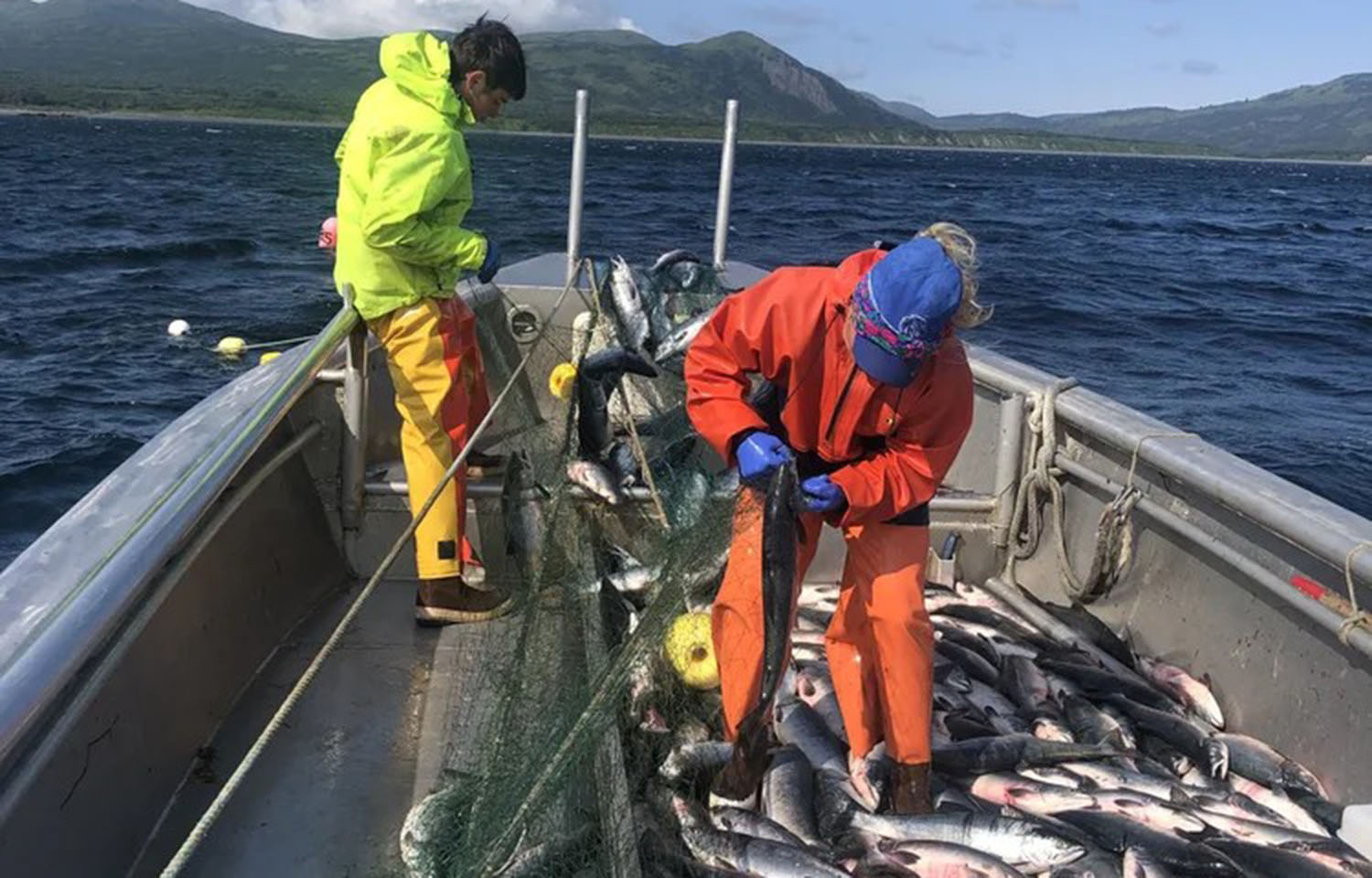
The Alaska House of Representatives unanimously passed a bill to provide a legal framework for establishing cooperatives among salmon setnetters, which would allow the commingling of fish to occur.
Commingling of fish, as defined by the U.S. Food and Drug Administration (FDA), is the action of mixing, blending, or combining different species of fish, shellfish, or fishery products that have been harvested before processing. Harvested products can come from different vessels, harvest dates, and sources, which can complicate quality and traceability.
According to the Alaska Beacon, multiple permitholders from the same family have historically been able to store and deliver salmon together in Alaska, but newer state statutes and regulations suggest that individual permitholders would have to store and deliver salmon separately.
This, according to Alaska State Representative Louise Stutes, can be impractical and unsafe, as permitholders are often elderly or children and setnetting can be a dangerous activity.
“This bill, at its heart, is not only about preserving the status quo but about keeping local access to permits in rural communities,” Stutes said in support of the bill, per the Alaska Beacon
The bill, titled “An Act relating to commercial set gillnet fishing; providing for an effective date,” will allow “two or more set gillnet entry permitholders in a salmon fishery” to fish together as a cooperative. The bill states that permitholders will not be able to operate gear owned by other permitholders unless all parties are “actively present and engaged in the operation,” and no more than 10 set gillnet entry permitholders can fish under one cooperative. Additionally, “fish harvested under this subsection do not need to be stored or delivered separately on the basis of the individual entry permits fished cooperatively."
Two regulations under the bill require set gillnet permitholders to register every unit of gear with the Alaska Department of Fish and Game and to report the fish harvested with other permitholders in a cooperative. A recent amendment added a new subsection to the two requirements, adding that permitholders “may sell all salmon that was harvested in combination with other permit holder members of the cooperative” under one single permitholder.
Kenai, Alaska, U.S.A.-based nonprofit organization Alaska Salmon Alliance expressed support for House Bill 117.
“One reason for this cooperative structure is to enable extended family units to work together, share expenses, and reduce financial risk,” the organization said in a statement. “It also provides the next generation with a more economical way into the fishery, teaches a strong work ethic, and strengthens family dynamics.”
Alaska Salmon Alliance added that setnetting varies across the state of Alaska, and many family operations already work together as cooperatives, without the need for legislation in place, calling the action to formally mandate the allowance of cooperatives “unfortunate,” as it’s “already been in place for decades.”
The organization further explained that while it supports the legislation, it would be counterproductive to impose a set number of permitholders per cooperative, as it would “be a form of micromanagement.”
The Alaska Libertarian Party (AKLP) said in a statement that setnetting is already a practice common in families, often multi-generational, who work under the same permit with the same machinery on the same waters. However, it said that “in remote regions [and] in rough conditions, pooling the catch is not a choice so much as a necessity.”
“The stated purpose: Keep the law in step with how this fishery actually works and keep rural permit access local,” AKLP said in a statement. “When rules drift out of step with practice, the gap closes eventually.”
The bill currently is on the Alaskan Senate floor waiting for approval.
