


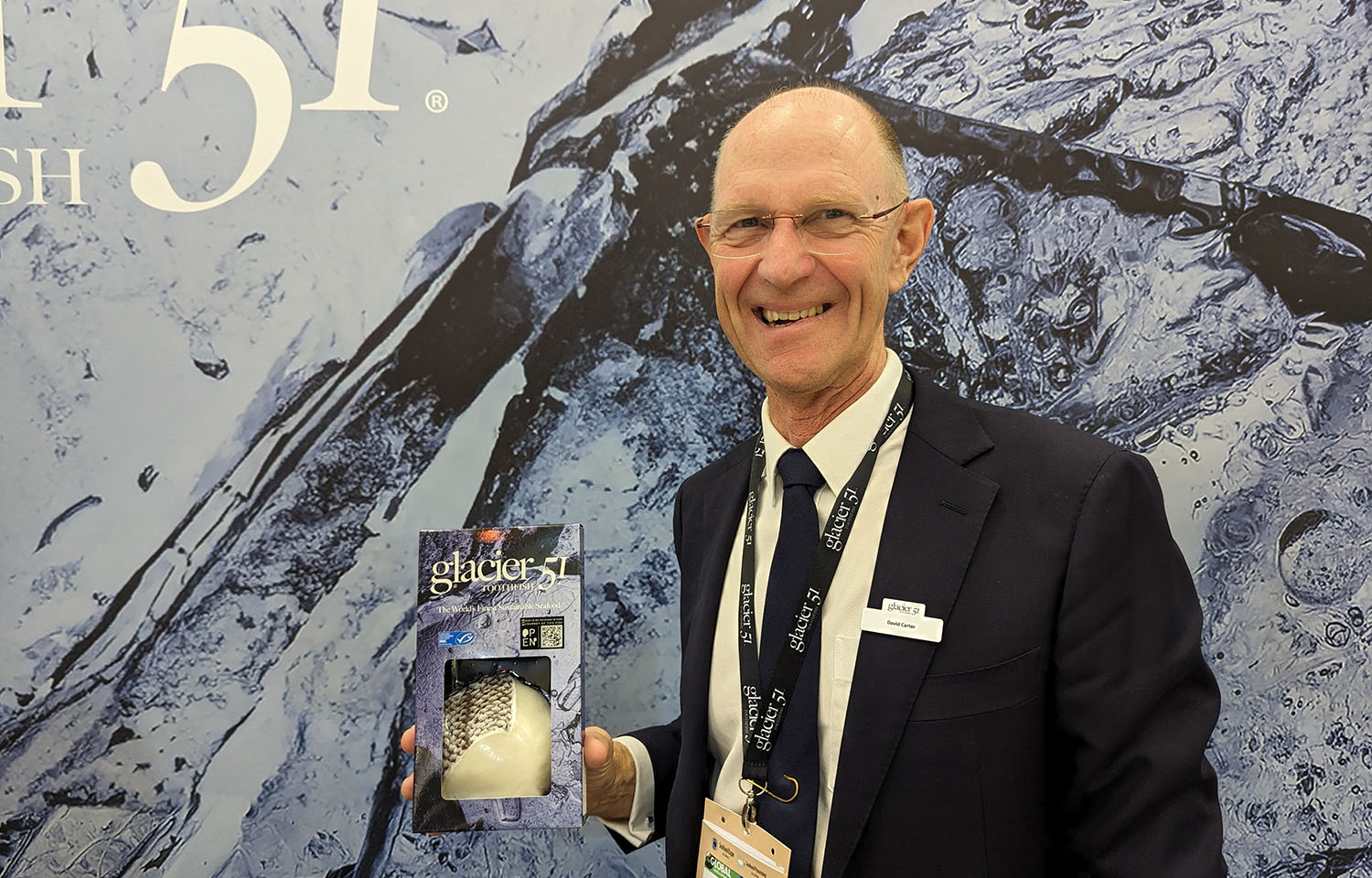
Fishing for Patagonian toothfish, also known as Chilean sea bass, first started in the early 1990s in Australia and has since evolved into a consistent fishery product for the country.
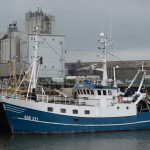
Located off Heard Island – over 4,000 kilometers away from mainland Australia – the toothfish fishery, which has Marine Stewardship Council (MSC) certification, targets the fish in underwater volcanic crevices that can be as deep as 2 kilometers below sea level. Globally, the resource is managed in international waters by the Commission on the Conservation of Antarctic Marine Living Resources (CCAMLR), but Australia has access to the species in its own territorial waters.
Austral Fisheries is one of the main companies targeting that quota and sells its fish under the Glacier 51 brand – named after a glacier on Heard Island.
Austral Fisheries CEO David Carter told SeafoodSource the company, which catches the majority of Australia’s 2,400-metric-ton (MT) total allowable catch (TAC) each year, is working to elevate toothfish's perception and make it a super-premium seafood item.
Carter said the company has been working to grow brand recognition for Glacier 51, and that work is starting to pay off with it being represented in higher-end markets.
“We’re menued on Nobu in the U.S. market, we’re menued on Quantas outbound first class from Sydney to Melbourne, and we’ve got some pretty neat distributors in Milan, in Dubai, and Saudi Arabia,” Carter said. “We’d really like to see this product fit into, if you’d like, the ‘Formula 1’ or ‘Rolls Royce’ of fine-dining restaurants and to be appreciated for the quality.”
The quality of the fish itself is just one half of the equation, he added, as Glacier 51 has managed to measure high on environmental and sustainability metrics.
“I think, ultimately, if we look at the history, it’s a really significant triumph for industry delivering good outcomes for things like IUU [illegal, unreported, and unregulated fishing], industry collaboration, and engagement with science,” Carter said.
Glacier 51 managed to win the “Best Sustainable Seafood Product” award from MSC, and the Monterey Bay Aquarium Seafood Watch program has rated it a “best choice” species.
Carter said Austral Fisheries is working to develop the branding with those third-party endorsements and certifications in mind.
“The idea is that we populate a brand with all of these values that are important to us around third-party endorsement of our practices with sustainability or sustainable fisheries management, with the carbon neutral claim that we make,” Carter said. “And, in the social space, we’re well down the process with the FISH standard.”
The FISH standard – which stands for fairness, integrity, safety, and health – is a third-party certification for labor practices onboard wild-capture fishing vessels, certifying a vessel meets labor rights standards.
Incidents of IUU fishing for the species is also important to address, Carter said, and has been reduced as workshops and initiatives led by CCAMLR effectively “tighten the net” on the species via catch documentation schemes and international cooperation.
CCAMLR’s history isn’t entirely faultless, however, as the managing body has, in recent years, run into conflict. Since 2021, Russia has rejected any consensus on catch limits for toothfish in the waters managed by CCAMLR – a move Carter said is intentionally throwing a wrench into the consensus-style governance of regional fishery management organizations (RFMOs).
The issues with CCAMLR, though, don’t affect Glacier 51, as its fishery isn’t based on areas managed by the RFMO.
“In our case, we have an undisputed territorial claim. Were our stock assessment to be challenged or were other allegations of illegality brought – either real or fictional – then we are in a slightly better position,” Carter said.
That sourcing is also detailed in the company’s branding, which contains QR codes that highlight the traceability of each piece of fish.
“Scanning the code gives consumers a back-story on where the fish has come from, its journey that got it here, and some information around things that are important to us,” Carter said.
The company is also using trace-element fingerprinting to differentiate the geographical areas in which its Glacier 51 toothfish is caught. There’s a library of “fingerprints” of the trace elements present in the areas fish are harvested from, and sampling can identify exactly where each piece of fish comes from, which also means it’s impossible to imitate Glacier 51’s products.
“Once you build your brand, you’ve got something to lose; you’ve got something people will want to copy,” Carter said. “So, we’ve built in protections.”
