





A pair of NOAA Fisheries surveys of the Northern and Eastern Bering Sea show positive signs for two Alaskan fisheries: pollock and snow crab.
“The good news is that there's lots of good news,” Thaddaeus Buser, a NOAA Fisheries research biologist who worked on the Bering Sea bottom trawl surveys, said.
Buser’s comments were delivered in a 22 January talk hosted by Straight Science, a seminar series produced by the University of Alaska Fairbanks Northwest campus in Nome and the Alaska Sea Grant.
NOAA Fisheries surveyed the Eastern Bering Sea from 31 May through 26 July 2025 and the Northern Bering Sea from 27 July through 17 August. The Northern Bering Sea was last surveyed in 2023.
The survey showed positive signs for two of the Bering Sea’s commercial fisheries – pollock and snow crab.
“This was a really interesting year for walleye pollock. Biomass was up in the Northern Bering sea, kind of close to the long-term average with lots of small roughly 1-year-old individuals,” Buser said. “This could potentially produce a really strong year-class as they grow older, if survivorship is high.”
The survey showed 12 species with an increase in biomass of more than 10 percent and estimated a biomass of 1.1 billion fish in the Northern Bering Sea, an increase of 51 percent from 2023. While the Eastern Bering Sea survey indicated a dip in pollock, with the biomass dropping 30 percent year over year to 6.6 billion fish, the data showed promising numbers for the future of the fishery.
“In the Eastern Bering Sea, pollock numbers were down from the large estimate that we had last year but not very far below the long-term average for the species,” Buser said. “It looks like the adult class is really massive in the Eastern Bering Sea, and there are some nice age classes following along behind it so that could be a good sign in the future, if survivorship can go as high as it has historically.”
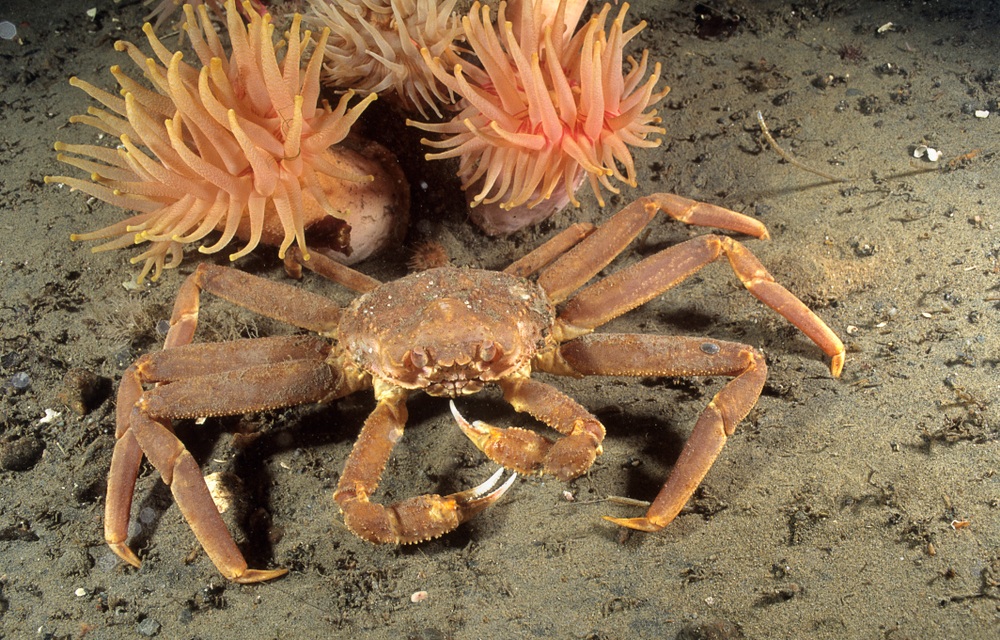
The survey also included several positive indicators for the commercial snow crab fishery.
“Snow crab numbers were very encouraging this year. The biomass increased substantially from the past several years, and in the Eastern Bering Sea, it's approaching the levels of abundance that we saw before the big crash in 2020. We've seen lots of small individuals in the past several years, so this is telling us that recruitment has been successful, and this is a super positive step in the ongoing recovery of the species,” Buser said. “In the Northern Bering Sea, the gains are a little more moderate, but it still is exciting and encouraging to see them coming back.”
The snow crab estimated biomass jumped 52 percent in the Eastern Bering Sea to 7.2 billon individuals and 15 percent in the Northern Bering Sea to 4.6 billion individuals.
Red king crab abundance continues to be low, but Buser pointed out some positive signs for that fishery, too.
“Red king crab continue to be a relatively low biomass species in the Northern Bering Sea, and the biomass estimate is moderately depressed this year compared to 2023. But, in the Eastern Bering Sea, they're maintaining a very modest increase, and that's been consistent for several years now. So that’s encouraging,” Buser said.
Red king crab biomass fell 2 percent year over year to 37.6 million individuals in the Eastern Bering Sea and 29 percent in the Northern Bering Sea to 3.2 million individuals.
The surveys also showed bottom temperatures were near average, continuing a cooling trend over the last few years.
“In both the Eastern and the Northern Bering Sea, we observed that the average temperature on both the surface and at the bottom has been relatively cool in the years since 2020, after having been relatively warm throughout the 2010s,” Buser said.
