



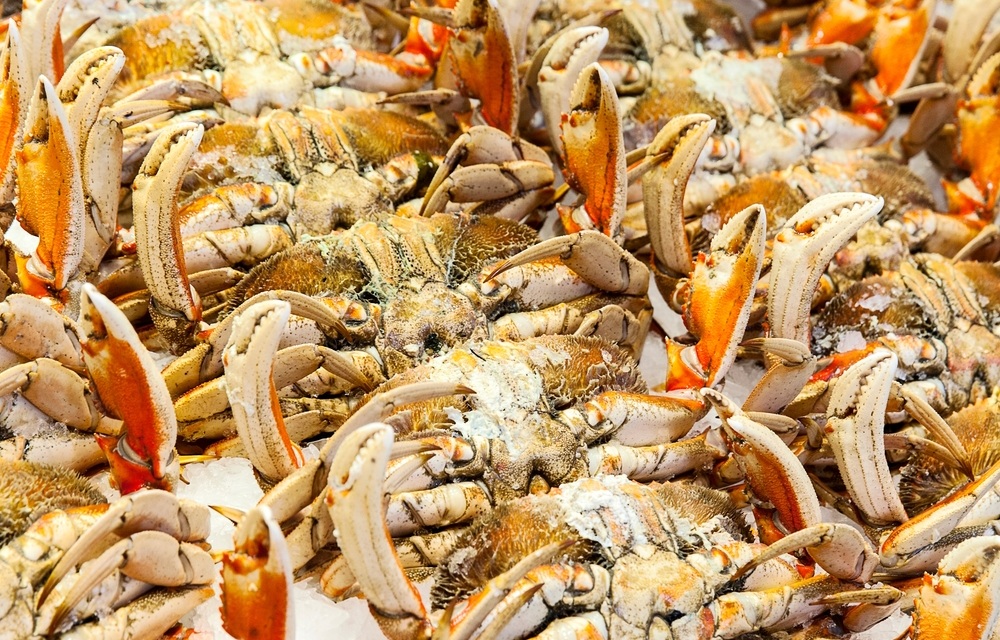
The U.S. state of California is set to open up the last section of its coast to commercial Dungeness crab harvesting after testing revealed domoic acid levels in the area had gone down.
Although the rest of the state’s coastline opened for commercial harvesting earlier in January, a small stretch from the southern tip of the Reading Rock State Marine Protected Area to Cape Mendocino was further delayed due to elevated levels of domoic acid in crabs sampled from those waters. Domoic acid is a naturally occurring neurotoxin that can cause health issues for humans when they consume shellfish that contain high levels of it.
On 8 January, the California Department of Fish and Wildlife (CDFW) decided to delay the commercial season for the affected area, which was otherwise set to open 15 January. Now, however, state health and safety officials have confirmed that domoic acid levels had returned to safe levels, allowing the state to finally open the area for commercial harvesting.
“On 23 January 2026, [the Office of Environmental Health Hazard Assessment] in consultation with the State Public Health Officer at [the California Department of Public Health] determined that the consumption of Dungeness crab from the affected area no longer poses a significant human health risk due to elevated levels of domoic acid,” CDFW Acting Director Valerie Termini said in an order. “Therefore, under the authority granted by Fish and Game Code Section 5523, I am lifting the delay and opening the commercial Dungeness crab fishery from the southern boundary of the Reading Rock State Marine Protected Area (41o 17.6' N. latitude) south to Cape Mendocino (40° 10.0’ N. latitude) at 12:01 a.m. on Friday, 30 January.”
Harvesters will be allowed to begin setting traps in the area 27 January, and they can begin pulling those traps starting 30 January. The area will be open under a 15 percent gear reduction to help reduce the risk of whale entanglements.
The staggered opening of commercial harvesting in California also brings into play the state’s Fair Start Provision, which means that vessels that have already harvested crab from other areas of the state’s waters must wait 30 days before harvesting in the newly opened area.
