





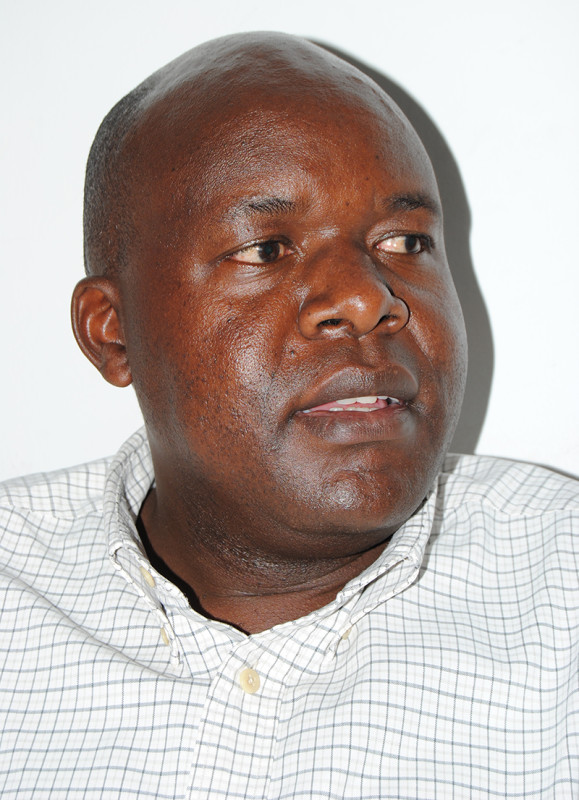
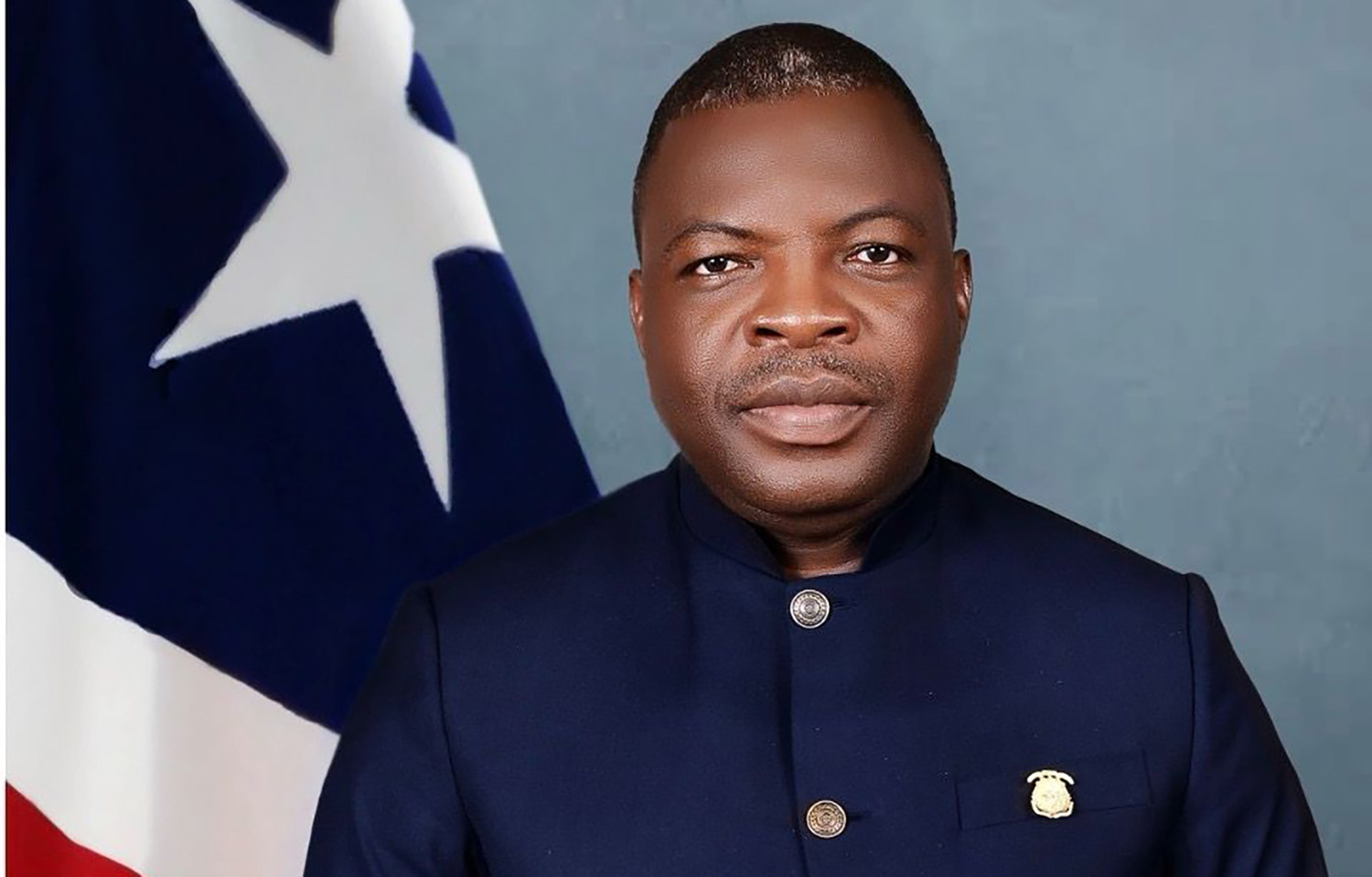
Cyrus Saygbe has officially been confirmed as the director general of Liberia’s National Fisheries and Aquaculture Authority (NaFAA) after serving in the role with an interim tag for 11 months.
“With a heart full of gratitude and humility, I extend my sincere thanks to His Excellency, the President of the Republic of Liberia, for the confidence reposed in me and for the unwavering support to the fisheries and aquaculture sector,” Saygbe said on LinkedIn. “I also salute our fishing chiefs and artisanal fishermen across the nine coastal counties, our dedicated fish farmers in the inland counties, and our resilient fishmongers and cold storage operators; you are the backbone of this sector and the lifeline of food security for our nation. This journey is not mine alone. This is for all of us. Together, we will continue to build a stronger, inclusive, and sustainable fisheries and aquaculture sector for Liberia.”
Saygbe was appointed acting director general in March 2025, replacing Emma Glassco, who was suspended over allegations of financial and administrative mismanagement.
According to Liberian President Joseph Boakai, Glassco’s suspension was “due to managerial and financial inefficiencies and insulting behavior.”
“This conduct, considered unbecoming of a public official, was reportedly exhibited during an official investigation meeting,” the president’s office said in a statement. “President Boakai has urged the suspended director general to fully cooperate with the investigations in order to address the concerns raised.”
With the backing of the NaFAA’s board of directors, Boakai asked the Liberia Anti-Corruption Commission (LACC) to launch an investigation into Glassco’s conduct, and by March 2025, LACC Chair Alexandra Zoe had informed Glassco about the commencement of an investigation into claims of her involvement in financial impropriety, including procurement fraud.
Glassco, for her part, has claimed in the past that such accusations are politically motivated, as she was appointed to office under former Liberia President George Weah in February 2018 under a four-year appointment that was renewed in January 2022.
A February 2025 editorial published by Front Page Africa asserted that once Boakai took office, he engaged in a political purge of Weah-appointed officials across the Liberian government.
“Without clear evidence or specific allegations to support these claims, the justification appears conveniently broad – a tactic often used to justify politically motivated dismissals,” the editorial said.
Almost a year after the LACC launched the investigation, there still has been no official release of the inquiry’s findings, with LACC saying it is handicapped in completing such investigations due to a lack of capacity and resources in the country.
“The lack of a specialized anti-corruption court remains our primary challenge in the fight against corruption,” LACC said.
Regardless of the open case against Glassco, with the appointment of Saygbe, NaFAA expects to improve the system for renewing fishing licenses in Liberia and fast-track the expansion of the nation’s Quartermaster System, which the authoritative body said is a modernized monitoring, control, and surveillance technology it is implementing as a solution to track fishing vessels in real time within Liberia's exclusive economic zone.
Saygbe is also expected to spearhead the construction of a new NaFAA Fisheries Complex and improve the country's annual revenue “levels while advancing environmental sustainability, institutional efficiency, and regional collaboration,” according to NaFAA.
Saygbe was previously involved in implementing a project aimed at modernizing government-owned hatcheries and feed mills under his tenure as interim director general.
The project, which has financial backing from the World Bank, aims to improve the management and governance of the country’s fisheries, enhance the value addition of its fishery products, and support aquaculture development, all of which aim to help Liberia lessen its reliance on seafood imports and earn more money from the seafood it ships abroad.
“Our aim is to build commercially viable and sustainable aquaculture value chains – from seed to feed, grow-out to market. We must industrialize, not remain focused on subsistence farming,” Saygbe said last year.
