



In late August, Icelanders will vote on whether their government should restart negotiations on attaining E.U. membership.
If the nation’s citizens vote for resuming the talks, it would mark the first time Iceland publicly revisited the issue of joining the E.U. since 2013, when talks ceased mainly due to disagreements over fisheries management.
Fisheries representatives in Iceland have recently warned that many of those disagreements remain 13 years later and, because of these differences, the country should not try to pursue E.U. membership.
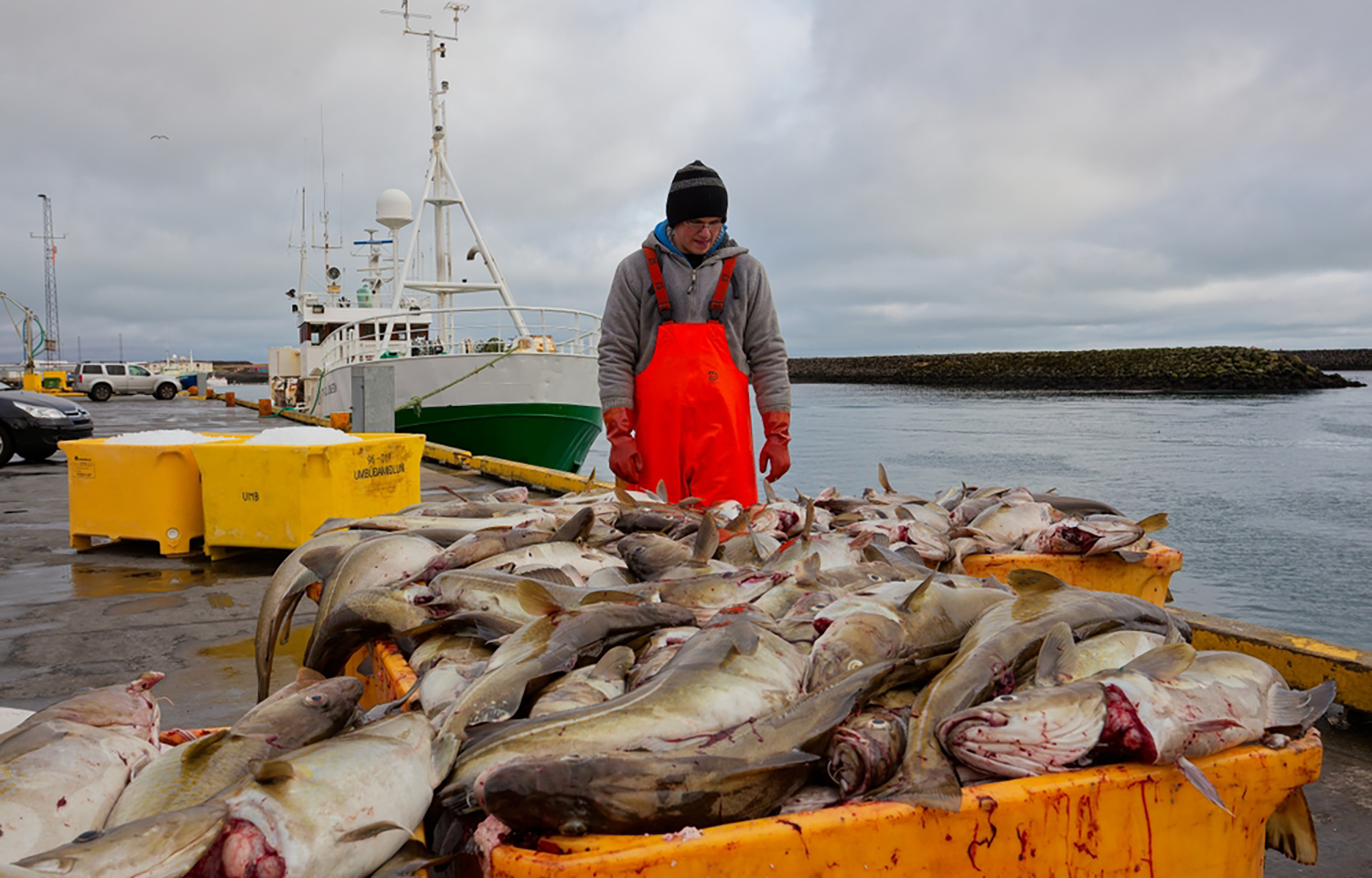
One main difference that drove Iceland away from the negotiating table in 2013 concerned sovereignty over fishing resources and the country’s adherence to shifting and stringent E.U. rules, such as its Common Fisheries Policy, should it join the bloc. Industry representative body Fisheries Iceland said that those issues remain as prevalent now as they did in 2013.
"Icelandic society and economy are really built on sustainable use of natural resources," Fisheries Iceland said in a 23-page document warning against E.U. membership. “They are not only the foundation of the nation's prosperity but also an important part of its identity.”
It further emphasized that the fishing industry in Iceland accounts for around 40 percent of total exports and contributes large amounts of income to state and local municipalities. Membership in the European Union, the group said, would likely allow foreign companies to take over quotas in the country, which would run counter to laws Iceland currently has in place that prevent foreign ownership of Icelandic natural resources.
“The success in the fishing industry was not a given but the result of Icelandic decisions on the basis that Iceland has full control of its fishing resources and its exclusive fishing zone,” Fisheries Iceland said.
While the group said it does not object to Iceland holding a referendum vote, the organization called on the government to map out the goal of negotiations with the E.U., non-negotiables for Iceland, and the cost of those negotiations before citizens vote.
"Otherwise, there is not enough information available about the content and scope of the mandate that the government is seeking from the people in the proposed referendum,” Fisheries Iceland said.
While Fisheries Iceland warned against the damage joining the E.U. might do to Icelandic sovereignty over its natural resources, Icelandic financial consultancy firm Arctica Finance released a report in late April that found the largest Icelandic fishing companies would benefit from E.U. membership, even if Iceland does not secure any quota exemptions for the fishing industry.
According to Icelandic broadcaster RUV, the value of the quotas held by private companies would likely increase significantly, no matter the outcome of negotiations between Iceland and the E.U. on an accession agreement.
Additionally, European Commissioner for Fisheries and Oceans Costas Kadis told the Financial Times that any deal with Iceland could include both fisheries and aquaculture exemptions to E.U. rules.
“We can find solutions on issues that are a challenge, such as sharing arrangements on shared fish stocks,” Kadis said, per the Financial Times. “Iceland and the European Union are coming closer … taking into consideration recent geopolitical developments.”
If Iceland receives exemptions from E.U. fishing policies, other North Atlantic states, such as the Faroe Islands, may seek similar agreements.
Bárður á Steig Nielsen, the newly appointed Faroe Islands minister of foreign relations and fisheries, said that if Iceland joins the E.U. without losing control of its fishing industry, Faroe could follow.
”The road would be paved for us joining the E.U.," Bárður á Steig Nielsen, the newly appointed Faroe Islands minister of foreign relations and fisheries, said regarding the possibility of Iceland joining the E.U. without losing control of its fishing industry.
Nevertheless, the Faroe Islands faces a steeper public climb toward E.U. membership as around 95 percent of Faroese products comprise seafood, according to data from Statistics Faroe Islands, highlighting the importance of sovereignty on the semi-autonomous territory’s economy.
Nielsen, though, said that if the E.U. is interested in granting exemptions, Faroese opinion on membership might change.
"If Iceland starts substantive negotiations with the E.U., I think the political situation in the Faroes would change, and there would be support for getting closer to joining the E.U. in some way,” he said.
Regardless, whether the Faroe Islands could join as an independent member is unclear, as it is already a semi-autonomous territory of Denmark, which is already a member of the E.U.
Back in Iceland, Gallup polls have so far shown that the August vote is likely to be tight, with a small majority tilting toward voting against resuming negotiations.
