



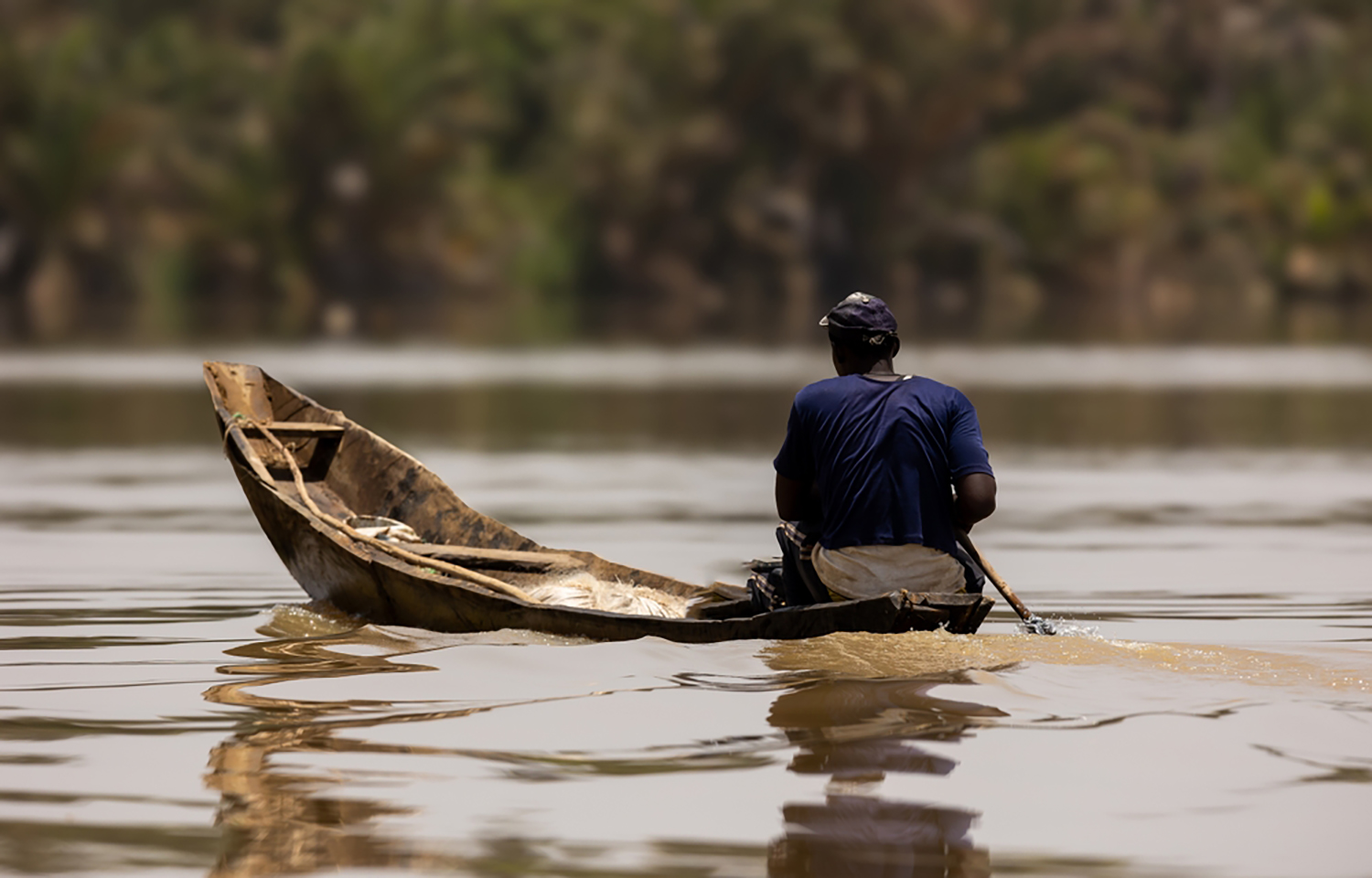
Conflicts between foreign trawler operations and local artisanal fishers in The Gambia have reached a boiling point over access to limited fish stocks, resulting, in the most extreme cases, to physical injuries and arson.
Small-scale fishers in the West African nation have protested what they claim is encroachment and unfair competition for limited fish stocks by mainly Chinese industrial trawlers within areas supposedly reserved for them by the Gambian government.
Local and international organizations, including the Gambia-based African Fish and Wildlife Conservancy (AFWIC), have said the intrusion by foreign vessels, as well as the exclusion of small fishing communities from decision-making on fishery resources, is slowly morphing into a national security issue for the country.
AFWIC General Secretary Dawda Foday Saine told SeafoodSource that the clash is directly linked to incidents where “many trawlers operate close to shore, where small-scale fishers traditionally work, leading to direct competition and eventual exclusion.”
“Local fishers are pointing fingers at international fishing vessels for illegal encroachment and destructive fishing methods that destroy the marine ecosystem,” he said. “Communities feel their customary, including legally defined fishing zones, are being taken over by industrial operators, jeopardizing local governance and resource management participatory efforts.”
The Gambian government has previously attempted to mitigate the issue through the introduction of fisheries reform, such as requiring foreign trawlers to ensure at least 30 percent of their onboard crew are Gambians, as well as tightening licensing requirements and regulating industrial fishing activities to protect inshore waters.
However, Saine said these measures have done little to improve the situation.
“Enforcement of some of these measures is weak, and trawlers continue to encroach on artisanal fishing grounds,” he said, explaining that limited resources have made the monitoring of marine fishing operations difficult. “The government’s efforts are at least a recognition of the problem, but if we are to achieve fairness for Gambian fishing communities, we require stronger enforcement, clearer boundaries for industrial vessels, and genuine empowerment of local co-management structures. Without these, artisanal fishers remain vulnerable to both economic and physical harm.”
The confrontation between local fishers and foreign trawlers is not the first time China’s presence in The Gambia has garnered backlash.
For instance, Chinese fishmeal firm Golden Lead settled out of court in 2024 for alleged discharge of wastewater into the ocean off of Gambia.
Off the coast of other West African nations, Chinese trawlers have been similarly accused of negatively affecting the operations of local artisanal fishers, including in Ghana, Senegal, and Guinea.
“The West African fishery industry is not equipped to operate in deeper waters, and the local fishermen only fish close to the shore where there is now a drop in fish resources,” Emeka Chukwu told SeafoodSource in 2020. “The mainly foreign vessels come to fish also close to the shores and, by so doing, deplete the fish stocks in shallower waters where the local fishermen operate. This is why you hear the complaint of overfishing by officials and local fishermen.”
Nevertheless, China has made the expansion of its distant-water fleet a strategic priority. Maintaining and increasing its global footprint of ports, for instance, is a specific priority in the Maritime Silk Road – a policy blueprint which commits China to creating three “blue economy corridors” connecting China’s eastern and southern coasts to global ports.
