




A recent report by an internal U.S. government watchdog found that the U.S. Coast Guard is not prioritizing the prevention of illegal, unregulated, and unreported (IUU) fishing, leading it to miss its interdiction goals for the last two years.
According to the U.S. Department of Homeland Security’s (DHS) Office of the Inspector General, the Coast Guard devoted just 4 percent of its mission hours to tackling IUU fishing in 2023 and 2024. While setting a goal of interdicting 40 percent of foreign fishing vessels illegally operating in U.S. waters, the Coast Guard only interdicted 21 percent of those vessels.
“The Coast Guard attributed its low interdiction rates to competing priorities and insufficient resources,” the Office of the Inspector General said in the report. “As a result, the Coast Guard missed opportunities to potentially interdict 79 percent of the foreign fishing vessels suspected of illegally fishing in U.S. waters and protect the ecosystem from illicit fishing practices that threaten the sustainability of the fishing industry.”
The Coast Guard boarded and inspected 274 fishing vessels over that two-year period, but the watchdog office was unable to evaluate that number since the Coast Guard did not set goals for boardings beforehand.
“Although the Coast Guard recognizes IUU fishing as one of the world’s top maritime security threats, its low interdiction rates and limited enforcement hours show a significant gap between the severity of the threat and the level of commitment required to effectively address it,” the Office of the Inspector General concluded its report.
To address the gap, the office recommended the Coast Guard set performance goals for IUU fishing enforcement on the high seas and conduct an analysis on how to best improve interdictions of IUU fishing operations in the Gulf of Mexico, currently referred to as the Gulf of America by the U.S. government.
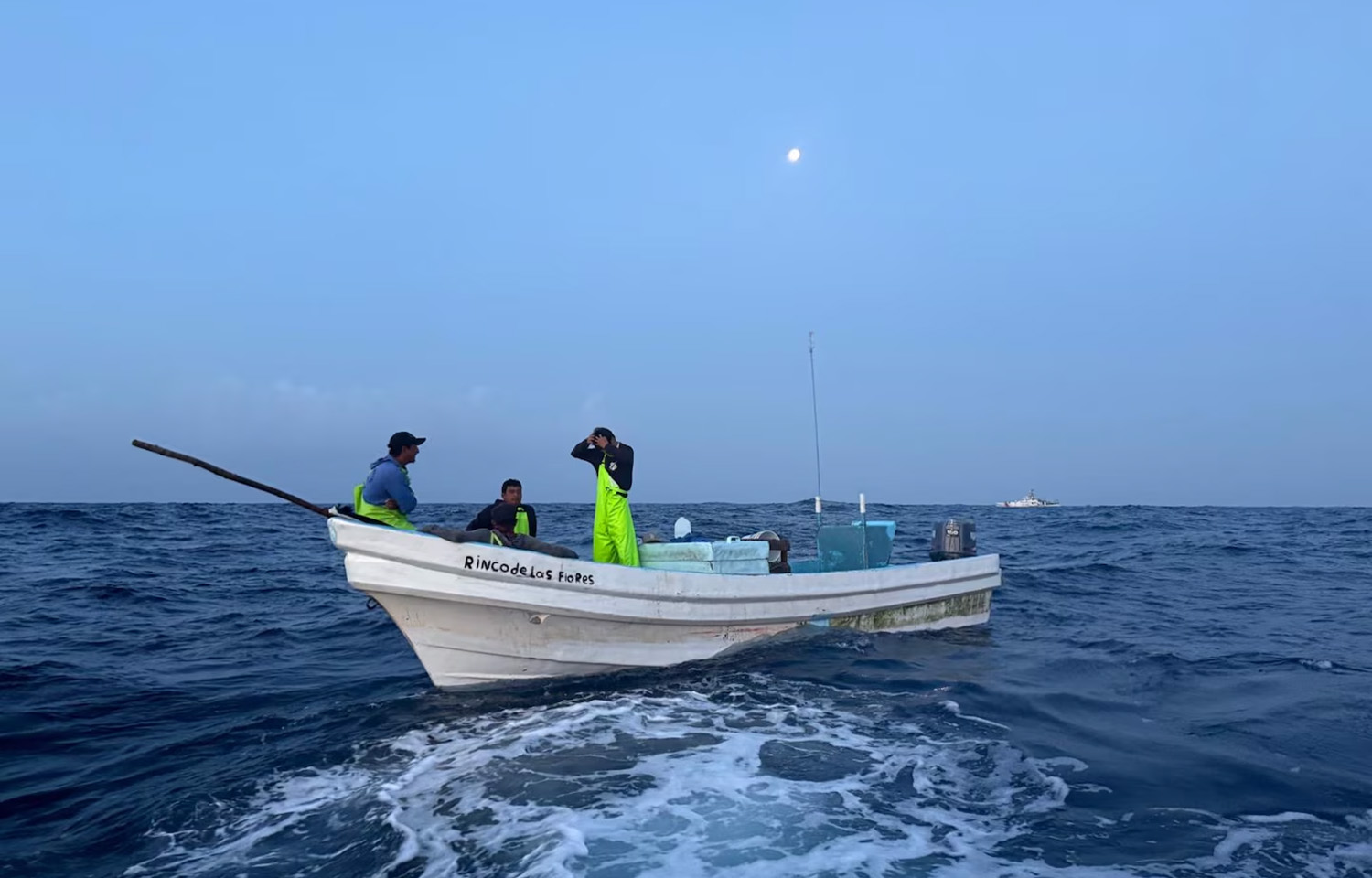
Almost all – 98 percent – of the Coast Guard's interdictions in 2023 and 2024 took place in the Gulf of Mexico, where Mexican fishers frequently cross over the Maritime Boundary Line into U.S. waters to illegally harvest red snapper, sharks, and other fish.
Red snapper poaching has become a hot button issue for U.S. lawmakers representing states along the gulf; U.S. Senator Ted Cruz (R-Texas) condemned the practice in a 12 June hearing.
“For years, Mexican fishermen have brazenly crossed into U.S. waters off the Texas coast to poach red snapper in the Gulf of America,” Cruz said. “Some of these illegal boats have hauled in thousands of pounds of red snapper at a time, stripping our waters of one of the Gulf's most iconic and economically valuable fish. They set long lines and nets hauling out tons of snapper, only to export many of those fish back to the United States. These actions are illegal and flat-out theft.”
Earlier this year, Cruz joined other lawmakers in introducing the Illegal Red Snapper and Tuna Enforcement Act. If passed, the legislation would require the National Institute of Standards and Technology (NIST) and NOAA to create a field test kit that can show whether red snapper or certain species of tuna originated in foreign waters.
“The U.S. Coast Guard, the Drug Enforcement Administration, and NOAA are all grappling with this complex issue, trying to maintain the integrity of our waters,” Cruz said. “Last year, the Coast Guard seized more than 18 tons of illegally caught fish from Mexican lanchas, a dramatic increase from just under 3.5 tons in 2017. Already this year, the Coast Guard has arrested more than 50 Mexican fishermen and seized thousands of pounds of illegally caught fish, further underscoring the need for additional measures to protect our resources.”
On 13 June, the Coast Guard announced it had interdicted and detained another 13 Mexican fishers who were caught in U.S. waters with 1,500 pounds of red snapper.
Four Mexican fishers recently pled guilty to violating the Lacey Act, a federal law that prohibits the trafficking of illegally harvested fish, after they were interdicted by the Coast Guard with 693 pounds of red snapper and four sharks. The guilty pleas reflect a new policy of the U.S. government to charge commercial fishers from Mexico caught illegally operating in U.S. waters.
“In past instances, authorities would seize the catch and destroy the vessel but release violators back to Mexico. Any commercial fisherman now apprehended in U.S. waters caught violating the Lacey Act face potential fines and imprisonment,” the U.S. Attorney's Office for the Southern District of Texas stated.
