


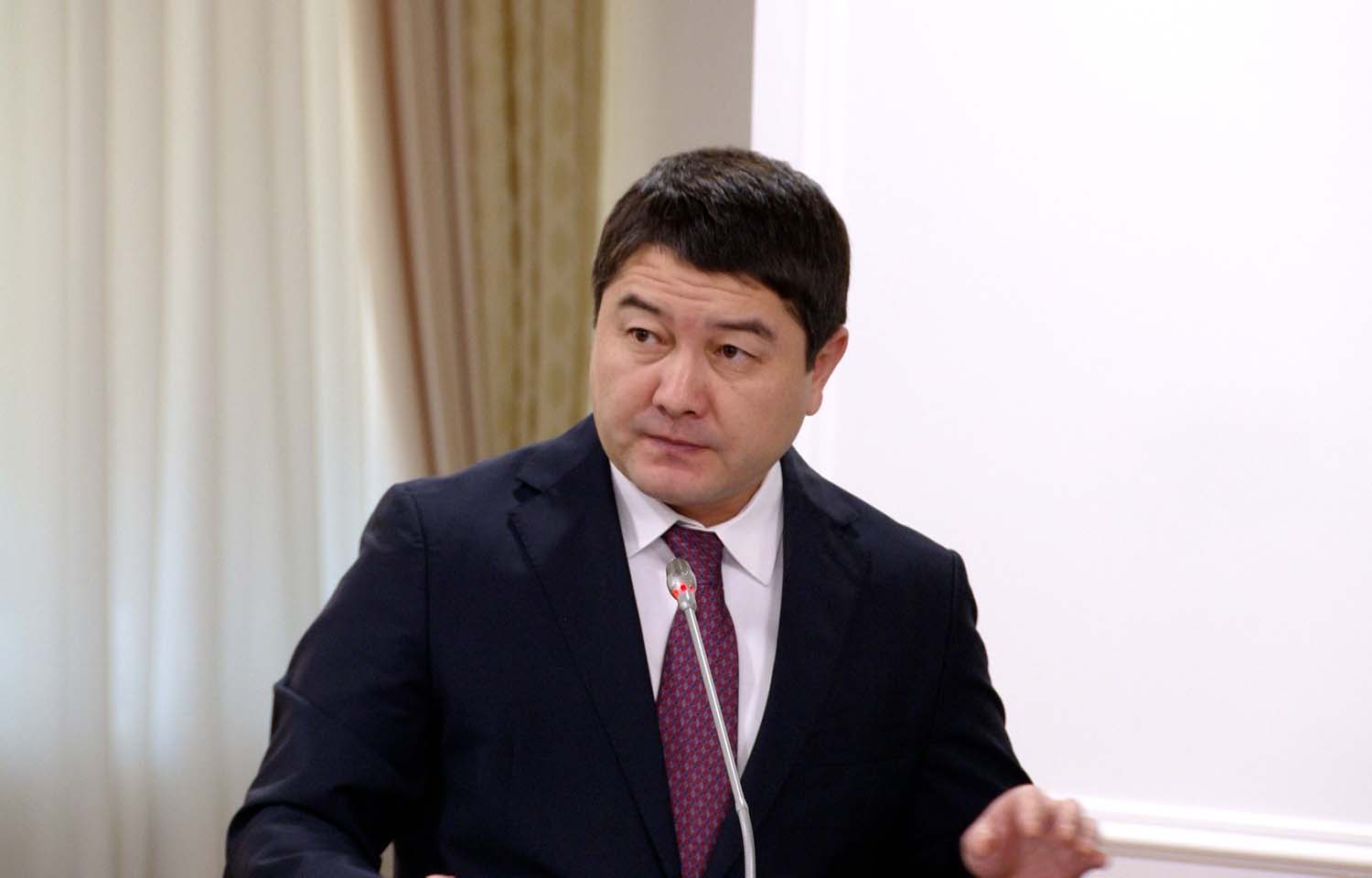
A Kazakhstani regional governor is seeking Chinese aid to revive his area’s caviar industry.
Nurdaulet Kilybay, the governor of the southwestern Kazakhstan region of Mangystau, which borders the Caspian Sea, recently traveled to China in an attempt to find partners that have an interest in developing sturgeon farms in the Central Asian country.
The trip was fruitful, as Kilybay secured a signed memorandum of cooperation with Gansu Joy Sturgeon Ecological Technology Co. to develop aquaculture operations in Mangystau.
“Gansu Joy expressed interest in government support measures, such as the provision of subsidies, allocating land plots, and improving infrastructure. In the case of implementation of the project, new jobs will be created in the region, the Kazakhstan fishery brand will be formed, and some of the products will be exported,” Kilybay’s office said in a statement. “We are ready to fully support projects aimed at creating new jobs, diversifying the region's economy and increasing export capacity.”
The Caspian Sea was once a key hub of global caviar production, but most of that production comprised caviar harvested from wild sturgeon. Once stocks became overfished, the world’s caviar production largely turned toward farmed sturgeon operations, and regions bordering the Caspian Sea have lagged behind the changing trends.
Nevertheless, Mangystau is now trying to catch up, and its strategic location places it close to the markets of Azerbaijan, Iran, and Russia.
Chinese investors are not the only ones recognizing the region’s potential. Switzerland-based investment firm Swiss Choice Holding has backed the construction of a Mangystau farm that aims to produce between 100 and 600 metric tons (MT) of sturgeon per year and eventually reach 100 MT of annual caviar output.
The projects also align with national goals to rapidly increase aquaculture production by 2030, which the Kazakhstani government outlined as a strategic objective in 2021.
