






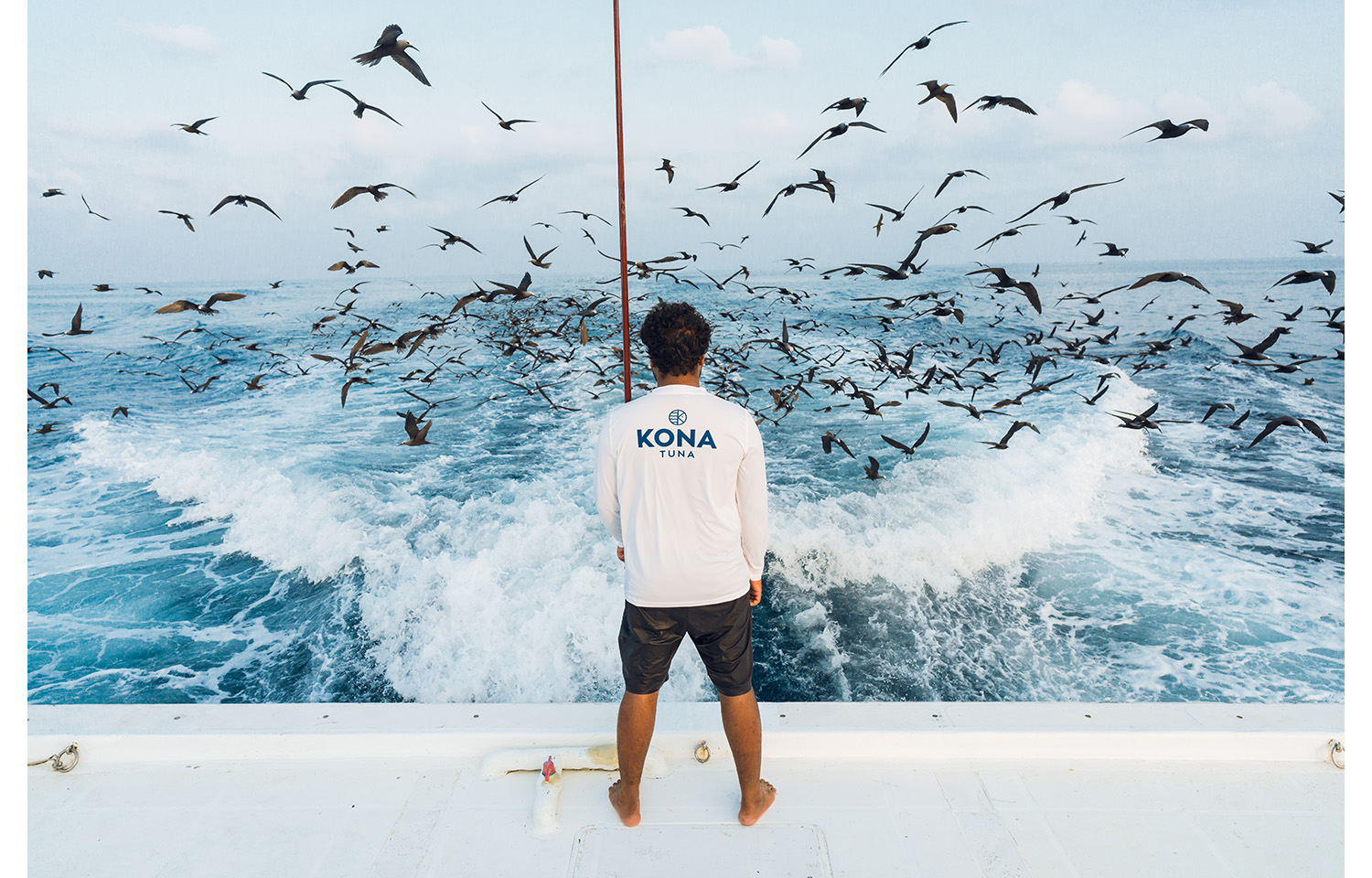
Sami Bugaighis took a gamble in 2018 when he founded canned tuna brand Kona Tuna.
Bugaighis, the CEO and founder of Dublin, Ireland-based Kona Tuna, bet that consumers in his home country of Libya would be open to paying more for sustainably caught tuna products in a market oversaturated with cheap, dubiously sourced canned fish.
By not underestimating his home country’s desire for sustainable products, his gamble has paid off, and he’s now looking for what’s next.
Bugaighis told SeafoodSource that his home country’s connection to tuna has deep historical roots. When Italian colonists occupied the area that is now Libya in the 1930s, they brought their tuna-fishing and -canning practices along with them, which caught on with the locals, according to Bugaighis.
Though the industry evolved, with Libyans mainly importing canned tuna over the years, the fish has remained central to Libyan cuisine and culture.
According to Bugaighis, his country’s appetite for canned tuna means that supermarkets are filled with the product throughout the country but that many of the options consumers can buy are low-quality, poorly sourced, and produced in ways that devastate ocean ecology.
Bugaighis acknowledged that his company’s mission of marketing a costlier sustainable product in a consumer space dominated by cheap tuna canned elsewhere was a risky proposition, but after his country emerged from a civil war in 2020, Bugaighis’s priorities shifted.
An industrial engineer by trade, who also previously owned a successful home furnishing business, set his sights on the fish so central to his culture.
“I wanted to do something that I love,” he said. “I wanted to do something that would work both in war and peace. I didn’t want something that was bulky to produce, requiring loads of warehouses and things like that. When I was thinking more about the food industry, I wanted to do something that was healthy, which caused no harm to people.”
To that end, all of Kona Tuna’s products are caught via traditional pole-and-line fishing methods in the Maldives, which recently reaffirmed its ban on more destructive longline fishing practices to prioritize traditional methods like pole and line.
Bugaighis controls Kona’s entire supply chain.
Kona team members on the ground in the Maldives and in Morocco, where the firm recently started harvesting sardines, can the fish immediately, sometimes so quickly, Bugaighis said, that the sardines retain their shimmering colors in the can.
“We control all the methods, from the fishing, to the handling, to the canning until we bring it here, and then we also take it to the shops to distribute it and put it on the shelves,” he said.
Bugaighis even hires local Libyan artists to design the colorful, modern cans in which he sells his fish.
Though Kona Tuna is pricier than other options in Libya, Bugaighis aims to keep costs as modest as possible for customers by cultivating strong personal relationships with the fishers from whom he buys, as well as making strategic decisions about seasonal and regional availability.
“When you buy big quantities at the perfect time, you can manage to keep your prices not extremely expensive,” he said.
Bugaighis also limits prices by eschewing sustainability labeling, which he said he believes almost solely serves marketing purposes.
“[Sustainability labels] make products more expensive, and this money is not actually going to the community, not going to the fisherman, and not going to the people who are actually doing the job there,” Bugaighis said.
Consumers in Libya trust Bugaighis, he said, because he personally assures them that their fish is harvested sustainably and ethically, which he does through several community-building initiatives, such as sponsoring youth programs and local sports teams, among other projects.
He added that this local approach presents a challenge to scaling up his business, including in Western markets.
Though he’s not yet ready to sell to the West just yet, Bugaighis said Kona’s success offers an important lesson to other producers and marketers: Don’t neglect the value of sustainability – and quality – to Middle Eastern and North African consumers (MENA).
That was a lesson he and his team had to learn themselves.
When he first proposed the idea of selling sustainable tuna in Libya, Bugaighis said his team thought it was a ridiculous idea. He said that even he had doubts about whether Libyan consumers would care about how their tuna was caught and whether they would be willing to pay more for pole-and-line-caught fish.
“I was keen on either doing it [sustainably] or finding something else to do,” he said. “We’ve been amazed by how the brand was quickly appreciated.”
In fact, Bugaighis said that Kona Tuna’s future-forward sustainability goals have actually made an impression on consumers nostalgic for the tuna of Libya’s past.
The early 20th-century Italian fisherman whose trade helped develop Libya’s taste for tuna once caught bluefin in Libyan waters; by the 1970s, however, Bugaighis said bluefin was regarded as too valuable to be canned and sold locally, and Libyan consumers became used to eating canned skipjack and yellowfin caught elsewhere and imported.
Now, however, Libyans can enjoy high-quality tuna again.
“Old people have told me that this tuna reminds them of the old days,” he said.
