






Just as shipping stability is returning to the Suez Canal, Iran has threatened to close the Strait of Hormuz – a key transit route for oil and gas.
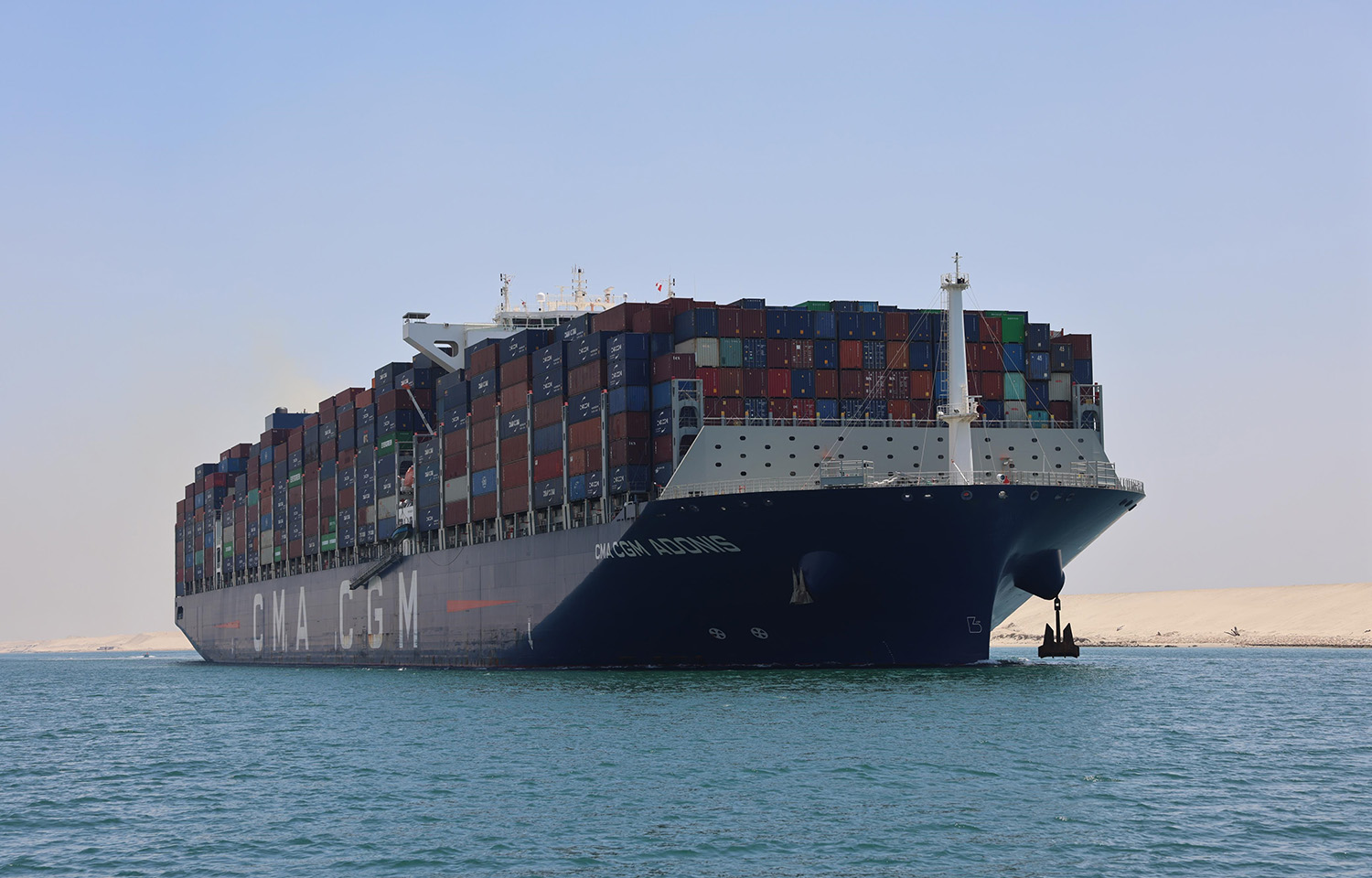
On 19 June, the Suez Canal reopened to very large container vessels after conflict-related closures, and soon after, the French-operated container ship OSIRIS was the first vessel to pass through the canal from the Bab al-Mandeb Strait since March 2024.
Suez Canal Authority (SCA) Chairman and Managing Director Admiral Ossama Rabiee announced the ship’s transit, saying that “geopolitical challenges and the successive changes in regional developments impose an urgent need to deal flexibly with surrounding market variables and make effective strategic decisions supported by flexible pricing policies that contribute to encouraging major shipping lines to return to transit through the canal.”
The OSIRIS was the first ship to take advantage of the program, which is a first for the SCA and includes a savings program for container ships weighing more than 130,000 net tons. The 15 percent discount, which the SCA said will last for three months, is an enticement to large vessels which have avoided the canal since the start of the Red Sea Crisis.
For over 18 months, many of the world’s largest shipping companies have been avoiding Red Sea routes – which utilize the Suez Canal – in order to avoid Yemeni Houthis who have targeted shipping vessels in attacks. The disruption has resulted in major losses for the canal, which saw transits of cargo ships fall dramatically year over year.
A 6 May ceasefire between the U.S. and Houthis was supposed to secure the canal for shipping, but large companies hesitated to return, with the CEO of Copenhagen, Denmark-headquartered A.P. Moller-Maersk, Vincent Clerc, telling The New York Times that he believed his company was “pretty far from the threshold” of safety that it would require before it would bring its vessels back to the route.
By 19 June, however, CMA CGM brought the OSIRIS, which weighs 154,000 tons and can carry 15,536 20-foot-equivalent units (TEUs), and two medium tonnage ships, the AQUILA and the CALLISTO, through the canal.
In announcing the news, Rabiee emphasized “that the return of mega container ships to transit through the Suez Canal is inevitable, given the canal's numerous competitive advantages, making it the shortest, fastest, safest, and most sustainable navigational route.”
Just a bit farther east, though, the Iranian Parliament simultaneously threatened to close the Strait of Hormuz.
Since the 21 June U.S. bombardment of Iranian nuclear sites, ship tracking data has shown that a number of large oil tankers have changed course to avoid the strait, likely in anticipation of a retaliatory closure by Iran. If Iran choses to close the strait, it could place a chokehold on a transit through which one-quarter of the world’s oil and 20 percent of its liquified natural gas passes, possibly trapping foreign vessels in the Persian Gulf.
In a 22 June interview, U.S. Secretary of State Marco Rubio urged China, Iran’s biggest oil customer, to pressure the nation into keeping the transit open.
"I encourage the Chinese government in Beijing to call [Iran] about that because they heavily depend on the Strait of Hormuz for their oil," Rubio said.
“We have been extremely clear to the Iranians,” U.K. Foreign Secretary David Lammy similarly told the British Commons. “Any action to blockade their Strait of Hormuz would be a monumental act of self-harm, making a diplomatic solution even harder.”
It is now up to Iran’s National Security Council to make the final decision about the strait’s closure.
