



Maryland officials have formally requested the U.S. federal government issue a fishery resource disaster designation for the state’s commercial oyster fishery, which has struggled in the face of icy weather and a massive sewage spill this season.
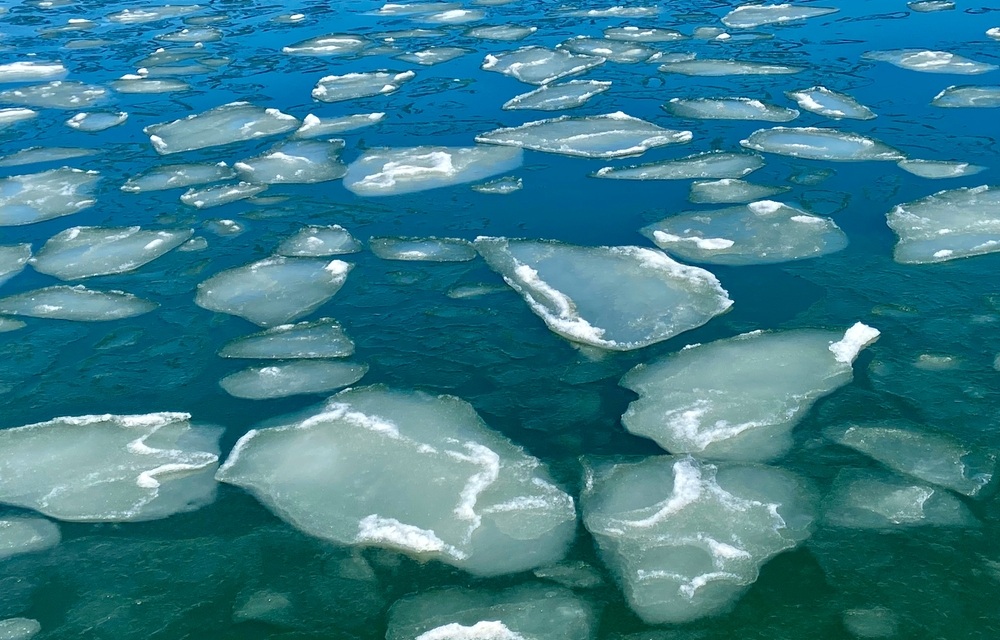
The state’s commercial oystermen had already been struggling with an unusually cold winter that produced icy conditions in the Chesapeake Bay, preventing them from getting out on the water and accessing the valuable shellfish underneath for much of the season. The Maryland Department of Natural Resources even used state vessels to break up ice and keep navigation channels open for commercial fishers but found that water was quickly refreezing.
The icy conditions spurred calls for a federal fishery resource disaster determination; a group of state lawmakers representing the Eastern Shore wrote to Maryland Governor Wes Moore asking him to submit a request immediately. On 4 February, U.S. Representative Andy Harris (R-Maryland) sent a letter to NOAA asking for a disaster declaration and federal emergency relief for affected commercial fishers.
“Severe weather this year, combined with shrinking market access and increased competition, left many crews effectively tied to the dock, with watermen able to fish for just one or two days all season,” Harris said in a statement. “These pressures threaten both livelihoods and a major sector of the Eastern Shore economy. For that reason, I am urging NOAA to approve a federal disaster declaration because immediate disaster relief is necessary to help watermen recover from the financial losses caused by this season.”
To help alleviate the situation, the Maryland Department of Natural Resources (DNR) announced in mid-February that it would extend the commercial oyster season – which was set to end 31 March – by two weeks, ensuring oystermen they would still be able to harvest once waters thawed.
“Maryland’s watermen have faced a difficult oyster season after recent declines in market demand and ice on waterways blocked access to traditional harvest areas,” Maryland DNR Secretary Josh Kurtz said in a release. “This oyster season extension will give them additional opportunities to boost their livelihoods and the local communities where they live. DNR made this decision after extensive conversations with industry stakeholders and scientists.”
However, Chesapeake Bay oystermen have also been dealing with another disaster – a broken sewage pipe dumping hundreds of millions of gallons of untreated wastewater into the Potomac River. Maryland DNR had to close a section of the river to oyster harvesting, though that ban is expected to be lifted 10 March. Maryland DNR put out a statement 27 February stating that Chesapeake Bay oysters currently being sold are safe, despite concerns over the spill
“The work of the National Shellfish Sanitation Program (NSSP) in Maryland and its partnership with state agencies has helped to ensure seafood from the Chesapeake Bay and state waters are safe and healthy to consume. While these efforts are always critical, incidents like the recent Potomac Interceptor sewage spill in the Potomac River highlight the importance of these rigorous quality control measures,” the state agency said in a social media post. “In addition to other state monitoring after the Potomac spill, the NSSP has ensured that oysters currently being sold on the market that come from the Chesapeake Bay meet safety standards. In its water quality monitoring, the Maryland Department of the Environment’s (MDE) Water and Science Administration has found no evidence that shellfish harvesting waters of the Potomac River are affected by the spill further upstream.”
Despite that, oystermen have reported a decline in demand for their harvest due to concerns over the sewage spill.
In the face of both challenges, Governor Moore has now written to U.S. Commerce Secretary Howard Lutnick to request a fishery resource disaster determination.
“The compound effects have the potential to devastate our watermen’s economy,” Moore said, according to the Baltimore Banner. “In-person and online, the ‘unsafe’ bell has been rung, and the impact to Maryland seafood and aquaculture and associated buying behavior may be long-lasting.”
The state’s congressional delegation has also joined the call for a fishery resource disaster determination, issuing a joint letter to Lutnick supporting Moore’s request.
“Given recent challenges facing the industry – including icy conditions due to the unseasonably cold winter season, recent fishery closures resulting from the Potomac River sewage spill, and overall challenging market conditions – we urge you to declare a fishery disaster and approve fishery resource disaster assistance for the Maryland oyster fishery as soon as possible,” the lawmakers stated in the joint letter. “As compared with a five-year average of commercial landings, data from January 2026 shows a concerning 44 percent decline in oyster harvest with continued depressed levels of harvest expected this year, while the dockside value of a bushel of oysters has dropped by 66 percent.”
