




Norway’s seafood export value dropped slightly in October 2025, largely due to lower values of mackerel and herring, with salmon exports increasing year over year.
According to data collected by the Norwegian Seafood Council (NSC), Norway exported NOK 18.3 billion (USD 1.79 billion, EUR 1.56 billion) worth of seafood in October 2025, a slight NOK 122 million (USD 11.9 million, EUR 10.4 million), or 1 percent, decrease compared to the same month of 2024. That decline belies the strong month the country had in October, as it is still the second-highest month for Norwegian seafood exports and other key species performed well.
“The main reason for the decline in the value of seafood exports in October was a sharp fall in the export volume of mackerel and herring. Most other major species saw an increase in value in October,” NSC CEO Christian Chramer said in a release. “For salmon, there was an export record for a single month, both in terms of volume and value, in addition to an increase in value for cod, trout, saithe, and haddock.”
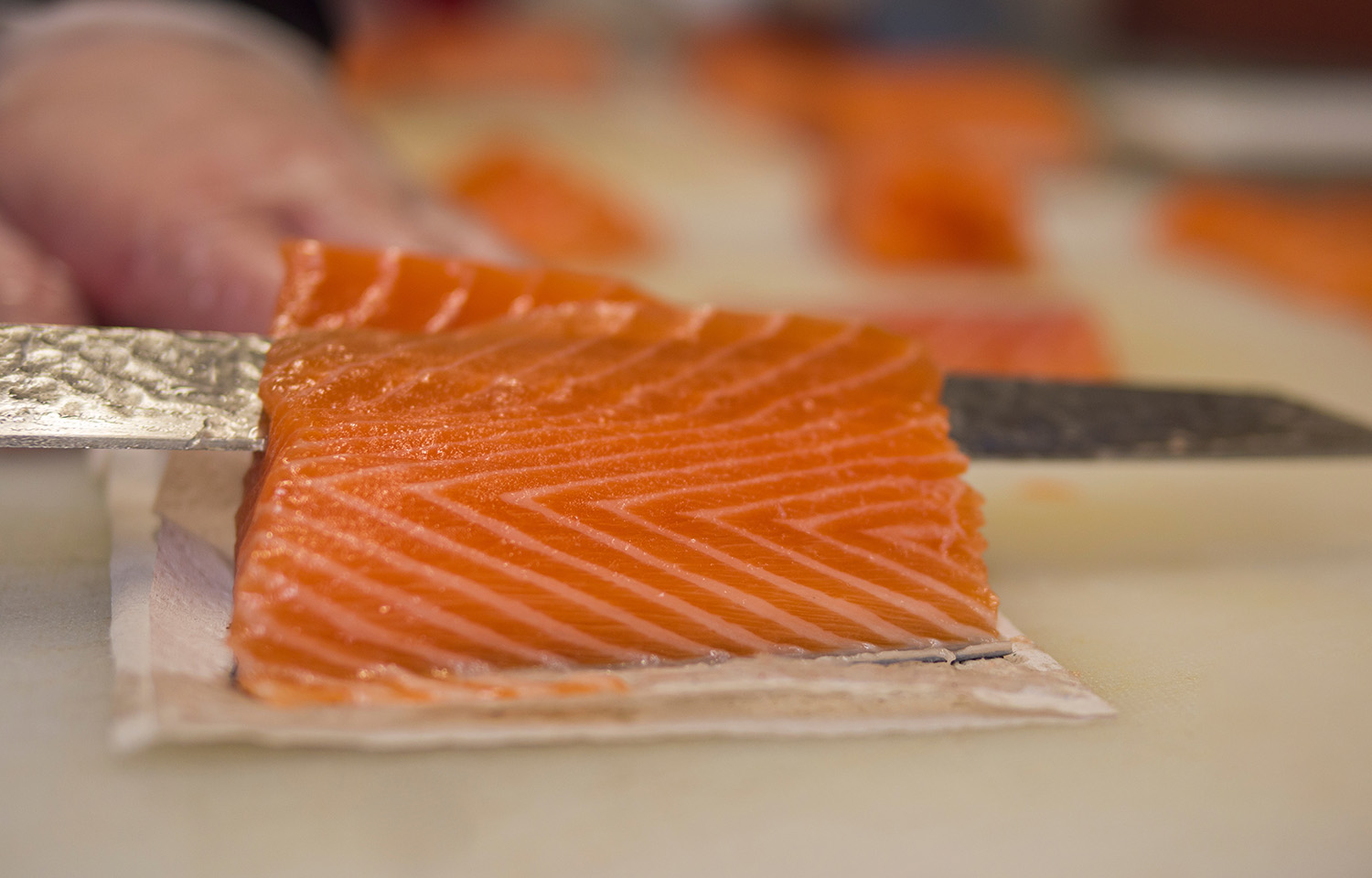
Norway exported 148,729 metric tons (MT) of salmon in October 2025 worth NOK 12.6 billion (USD 1.23 billion, EUR 1.07 billion). That marks an increase in value of NOK 816 million (USD 79.8 million, EUR 69.5 million), or 7 percent, and an increase in volume of 4 percent compared to October 2024.
That total is NOK 696 million (USD 68 million, EUR 59 million) higher than the previous record month for salmon exports – November 2024 – with Poland, the U.S., and France as the largest markets for salmon in the month.
Norway has seen strong demand growth for salmon from multiple major markets in 2025, including the U.S.
“In recent years, the U.S. has become an increasingly important market for Norwegian salmon, and in the first quarter of this year, as much as 11.5 per cent of all Norwegian salmon measured in value was exported to the U.S.,” Chramer said.
That strong growth has slowed somewhat in the second half of the year, and in the last three months that total shrank to 8 percent, according to Chramer.
As growth in the U.S. slows, Norway’s salmon sales to Asia have growth. Chramer said 20 percent of Norway’s salmon is now going to Asia.
"Strong growth in demand in China, as well as tariffs on Norwegian salmon in the USA, have been some of the main drivers behind this development," Chramer said.
Norway’s salmon export value to China increased by 92 percent to NOK 332 million (USD 32.5 million, EUR 28.3 million) in October 2025, and as of the third quarter of 2025 Norway’s exports to China have growth 44 percent. NSC Envoy to China Sigmund Bjørgo said Norway’s market share in China has steadily increased compared to its main competitors Chile and Australia.
NSC Seafood Analyst Paul T. Aandahl said it has been more than just China that has seen growth for salmon exports in Asia, for a number of reasons.
"The reasons are complex, including increased demand, increased availability of large salmon, and customs duties in the USA, which are helping to shift the flow of goods towards Asia,” he said.
Trout also saw volume and value growth in October 2025. Norway exported 8,306 MT of trout worth NOK 712 million (USD 69.7 million, EUR 60.6 million) in the month, an increase in value of 16 percent and an increase in volume of 18 percent.
Notably, the average price for fresh whole trout in the month hit NOK 80.09 (USD 7.83, EUR 6.82) per kilogram, which was higher than the average salmon price for the first time since October 2024.
“The biggest growth market for trout was Poland. We are seeing growth in both consumption and exports from Poland this year," Aandahl said.
While trout and salmon had strong growth, key pelagic species mackerel and herring both saw big drops which dragged the entire country’s seafood export value with it.
Noray exported just 27,150 MT of mackerel in October 2025, a drop in volume of 71 percent compared to October 2024. Those exports were worth NOK 1.3 billion (USD 127 million, EUR 110 million), a drop of NOK 1.2 billion (USD 117 million, EUR 102 million), or 47 percent.
"The sharp decline in mackerel exports in October reflects the fact that the fishery slowed down considerably as early as mid-September, compared with last year when a significantly larger quota was fished throughout October,” NSC Head of Pelagic Fish Jan Eirik Johnsen said.
As volumes have dropped, the average price per kilogram paid to fishermen for mackerel has shot up. In October 2025 the price reached NOK 47.16 (USD 4.61, EUR 4.01) per kilogram, up from NOK 21.84 (USD 2.13, EUR 1.85) in October 2024. Johnsen said that value total is going to continue to spike.
"We're in a period where demand far exceeds supply, and with the expectation that it will get even worse,” Johnsen said. “There are warning signals coming all the way from the industry in Norway to customers out in the markets.”
The demand and price shifts may also be in response to projected cuts to the mackerel quota in 2026, after ICES recommended a cut as high as 70 percent. Coastal states are negotiating how that much smaller quota might be shared, with some arguing the states should ignore the advice.
"The big question in the industry now is what the coastal states will come up with in their negotiations,” Johnsen said. “Will there finally be a comprehensive agreement between all the coastal states that also involves a distribution of the total quota? Either way, the industry both at home and abroad is facing a tough period with low mackerel volumes and a price level that was unimaginable only a short time ago.”
Herring saw a similar pattern, with lower volumes and values. Norway exported 16,796 MT of herring worth NOK 381 million (USD 37.3 million, EUR 32.4 million) in October 2025, a drop of 38 percent and 28 percent respectively.
“We must go back to 2015 to find a lower export volume of herring in the month of October,” Johnsen said. “The low volume is due to a late start to the autumn season for NVG herring. With good fishing towards the end of the month and a higher quota than last year, we expect exports to pick up in the coming months.”
As pelagic species dropped, fresh and frozen cod both experienced value growth. Fresh cod exports increased 46 percent by volume to 2,626 MT in October 2025, with those exports achieving a value of NOK 202 million (USD 19.8 million, EUR 17.2 million), up 73 percent over October 2024.
Higher landings of wild cod and higher volumes of fresh farmed cod both contributed to the increase in the month.
Frozen cod saw a 10 percent drop in volume to 2,960 MT, but a 10 percent increase in value to NOK 277 million (USD 27.1 million, EUR 23.6 million). More telling was that Vietnam was the largest market for frozen cod for the second month in a row, a dramatic shift from years of China being the largest market.
“The reason for the strong growth in Vietnam can probably be attributed mainly to the USA's high tariffs against China,” NSC Seafood Analyst Eivind Hestvik Brækkan said. “Both China and Vietnam export a lot of frozen cod fillets to the USA, and the tariffs for imports from Vietnam to the USA have been lower than for imports from China for several months. This has helped to make Vietnam more competitive as a producer for the U.S. market, and increased Vietnam's demand for Norwegian cod to produce frozen cod fillets.”
Norway’s exports of crab also varied in the month. Exports of king crab dropped by 21 percent in volume and 2 percent in value due to lower landings, and the U.S. remains the largest market for the species. Snow crab exports increased to 61 MT, up 615 percent by volume. Value increased by a whopping 942 percent to NOK 12 million (USD 1.17 million, EUR 1.02 million).
“While waiting for the snow crab fishery to resume in December, only limited volumes are being exported,” NSC Head of Shellfish Josefine Voraa said.
Finally, prawn exports fell 31 percent by volume to 2,620 MT in October 2025. Value dropped 14 percent to NOK 148 million (USD 14.5 million, EUR 12.6 million).
“Weaker landings in the prawn fishery in the Barents Sea this year, compared with a strong prawn fishery in 2024, are now affecting prawn exports for October, with a decline in the largest frozen prawn products,” Voraa said.
