



The International Council for the Exploration of the Seas (ICES) is recommending big cuts to quotas of pelagic species in the Northeast Atlantic, continuing a downward trend amid continued overfishing.
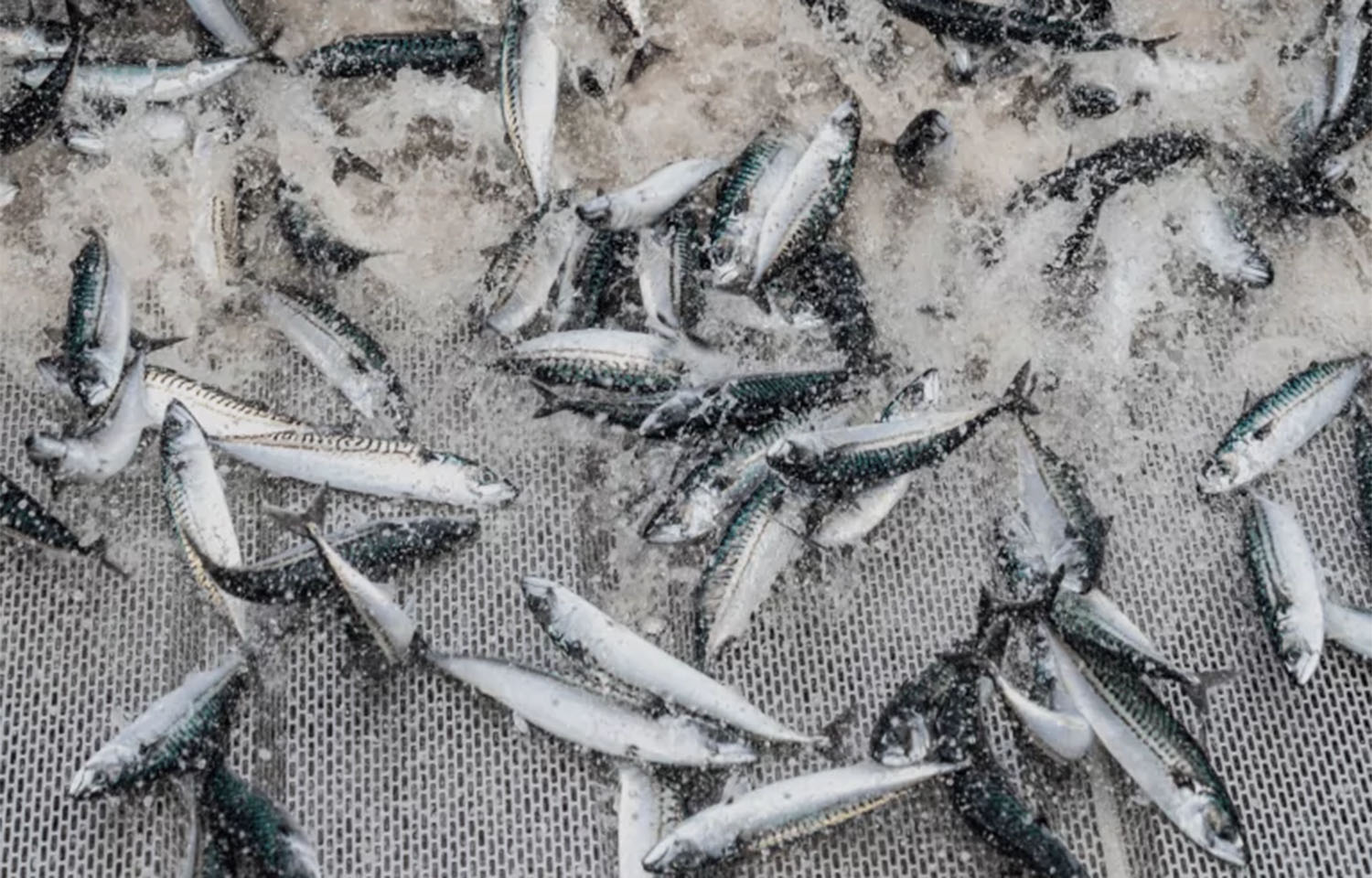
ICES recommended the blue whiting catch in the Northeast Atlantic should be dropped to no more than 851,344 metric tons (MT) in 2026, a 41 percent decrease from the 1.45 million MT quota it recommended for 2025. The drop for Northeast Atlantic mackerel was even more severe, with ICES recommending a nearly 70 percent drop from the 576,958 MT recommended for the 2025 season to a quota of just 174,357 MT in 2026.
According to ICES, mackerel recruitment has continued to remain low, and fishing pressure has continued to remain above the maximum sustainable yield of the species. The decline in the stock size is the main reason for the big decrease in recommended quota, despite changes to ICES modeling.
ICES said it benchmarked the stock in 2025 and made several changes, including new age-varying natural mortality, the use of radio-frequency identification data, and a shorter assessment period. ICES said that resulted in an upward revision in the estimated stock size and a downward revision in fishing mortality.
For blue whiting, the story is similar – a decline in stock biomass and a decrease in recruitment has resulted in big drops in the potential of the species.
“This year’s assessment shows a substantial downward revision of the estimated spawning stock biomass,” ICES said.
The drops are the latest in a series of decreasing recommendations for the two fisheries, which have faced continued overfishing caused by a lack of political agreement between coastal states targeting the species. ICES pointed out that the mackerel fishery has been overfished by, on average, 39 percent since 2010, and that the blue whiting fishery has also frequently been fished at higher pressure than advised. According to ICES data, in 2024 countries fished a total of 1.81 million MT of blue whiting, 18 percent above the recommended total allowable catch of 1.53 million MT.
Mackerel, meanwhile, was fished at an estimated 897,701 MT of catch in 2024, 21 percent higher than the 739,386 MT that ICES recommended at the time. Between 2020 and 2023, the total catch of Northeast Atlantic mackerel was above 1 million MT every single year, despite ICES advice to catch as little as 782,000 MT.
While E.U. laws have pushed to eliminate overfishing in the area, the problem continues to plague the region, which has seen multiple species lose sustainability certifications – including mackerel losing Marine Stewardship Council certification in 2019, blue whiting and Atlanto-Scandian herring losing MSC certification in 2020, and the more recent downgrade of Northeast Atlantic mackerel by the Marine Conservation Society.
At the center of the issue is agreements on distribution of the quota, which typically result in agreements initially but devolve to each nation targeting the species disagreeing on how much they should catch. Norway, the E.U., the U.K., Iceland, the Faroe Islands, and Greenland have repeatedly agreed to set the collective total allowable catch (TAC) in line with ICES advice, but ultimately end up catching more of the species than is allowed when disagreements arise over how that amount should be split up.
Countries have repeatedly blamed Norway and the Faroe Islands for overfishing the stocks and raising quotas above advice, and the European Commission has claimed the two nations have rejected calls to collaborate. Negotiations over blue whiting in June 2025 followed much of the same formula as past talks, with countries quickly hitting an impasse over reducing quotas.
Fiskebåt CEO Audun Maråk, who was one of Norway’s delegates at the talks, claimed the E.U. sabotaged the negotiations in June.
"The E.U.’s frivolous and unsubstantiated proposal for a share agreement of blue whiting is a step back in reaching an agreement, not only for blue whiting but also for mackerel and Norwegian spring-spawning herring,” Maråk said. “It [will also] have consequences for future fisheries cooperation between Norway and the E.U.."
The Northeast Atlantic Pelagic Advisory Group, which has pushed the countries to reach an agreement to bring fishing back into sustainable levels for years, said in a release it is “concerned” by the latest data shared by ICES.
“This could have devastating consequences for the fishery and for everyone who relies on it,” the organization said. “The need for a comprehensive catch sharing agreement has never been more pressing. There is no other alternative.”
