



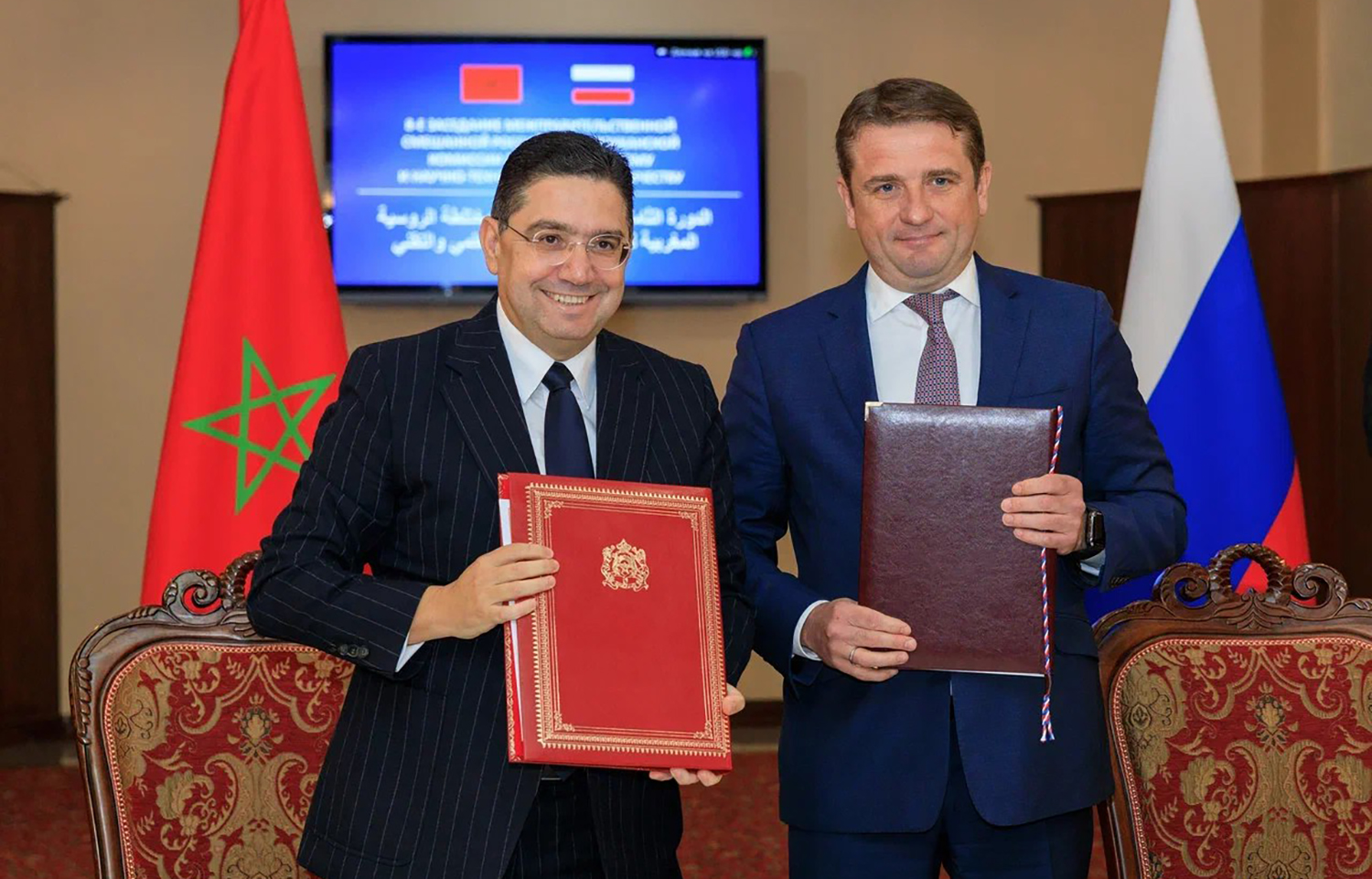
Russia has renewed its fishing agreement with the North African nation of Morocco for another four years.
Under the previous agreement signed in 2020, Russia, which has been signing fishing deals with Morocco since 1992, was allowed to have 10 of its trawlers access Morocco's Atlantic waters to fish 140,000 metric tons (MT) of small pelagic species, such as sardines, mackerel, and anchovies, over a four-year period.
In exchange, Russia gave Morocco USD 7 million (EUR 6 million) in annual compensation, and the owners of each trawler paid 17.5 percent of the total value of their catch to Moroccan authorities. The deal expired at the end of 2024.
Annual quotas under the new deal, signed by Moroccan Foreign Affairs Minister Nasser Bourita and Russia Federal Fisheries Agency Head Ilya Shestakov, have yet to be publicized, but the Russian Federal Fisheries Agency said it expects them to rise from around 60,000 MT caught annually near the end of the last agreement to around 90,000 MT to 100,000 MT annually as the latest agreement progresses.
Morocco's fisheries agreements with foreign countries have been steeped in controversy because of the nation’s political conflict with the contested neighboring territory of Western Sahara.
Morocco annexed Western Sahara in 1975 after the withdrawal of Spain from the area, claiming ownership of the land and decision-making power on what to do with it. However, the annexation has largely remained unrecognized by several countries around the world, and the Polisario Front, a rebel nationalist liberation group, claims it owns the decision-making power in the territory.
This unsettled conflict has led to such foreign entities as the European Union annulling its fishing deal with Morocco.
“[The deal] regarding fisheries and agricultural products, to which the people of Western Sahara did not consent, were concluded in breach of the principles of self-determination and the relative effect of treaties,” the Court of Justice of the European Union (CJEU) said in late 2024. “The consent of the people of Western Sahara to the implementation, in that non-self-governing territory, of the 2019 E.U.-Morocco trade agreements regarding fisheries and agricultural products is a condition for the validity of the decisions by which the European Council approved those agreements on behalf of the European Union.”
According to Western Sahara Resource Watch, a network aiming to preserve the natural resources in Western Sahara for the people living in the territory, Russia’s fishing operations similarly do not have the consent of the people of Western Sahara, as required by international law.
Nevertheless, Russia appears to be moving forward in its fisheries partnership with Morocco and has also signaled it is interested in similar deals with Sierra Leone and Guinea-Bissau, with experts already having carried out studies in the African nations “to assess the biomass, biological characteristics, and size-age composition of demersal fish and invertebrate species in addition to analyzing the distribution of commercial and associated species.”
