





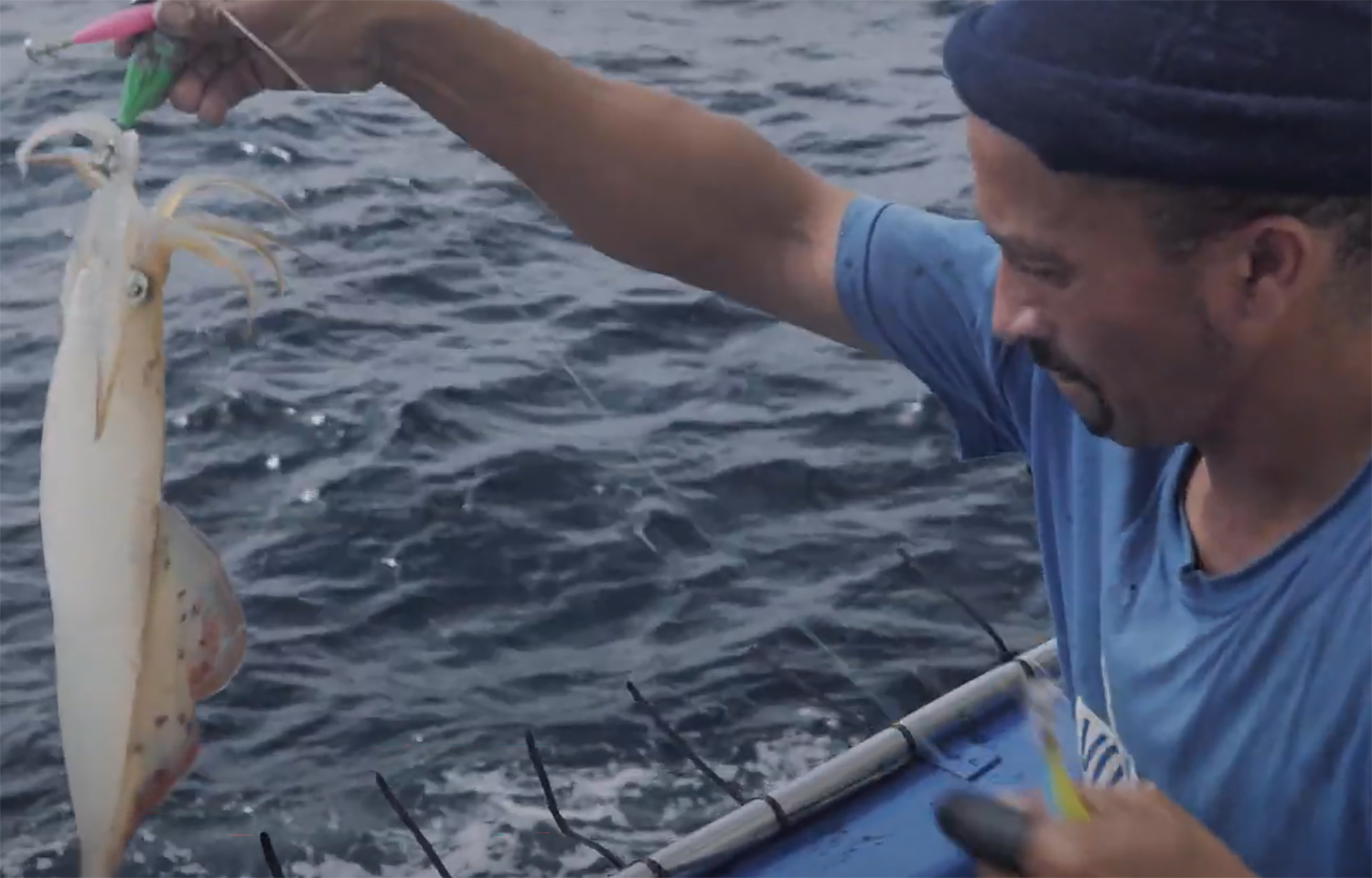
South Africa’s High Court recently upheld a decision to open up the country's lucrative squid fishery to 15 fishing cooperatives and 600 individual small-scale fishers, ending a multi-year legal battle carried out by the commercial fishing sector, which attempted to stop the move.
In 2021, former South Africa Fisheries Minister Barbara Creecy announced plans to award 15 percent of the nation’s chokka squid quota to the small-scale sector, with future plans to up that allocation to 25 percent.
“[Small-scale fishers] play an important role in promoting household food security and providing livelihoods in areas where there are little other means of support,” she said at the time.
Dion Spandel, the chair of the Eastern Cape Khoisan Small-Scale Fishers cooperative, echoed Creecy at the time, commending her department for recognizing the importance of small-scale fishers.
"With the 15 percent that the department has put in our baskets, we can now go to sea and look at buying our own boats, sending our guys to training," Spandel said.
The South African Squid Management Industry Association (SASMIA), however, challenged that ruling in 2022, petitioning the High Court to reverse it on the grounds that the plan threatened jobs within the commercial sector, involved little consultation with the commercial sector, and gave the small-scale sector a share of the quota that it didn’t even have the ability to fish.
“If small-scale co-ops were to use the permissible small-scale equipment and technology, a 15 percent apportionment of the [quota] would grossly exceed what could be fished by them,” SASMIA said in its court papers, per GroundUp.
Another reason why the announcement alarmed commercial fishing companies was that they had already been voicing concern over low catch rates in the nation’s squid fishery.
“While the export market for squid remains very strong as the market saw high prices per kilogram, the group unfortunately could not capitalize on the price factor due to low volumes caught,” Premier Fishing said in its 2022 full-year financial report.
Nevertheless, the nation’s High Court recently dismissed SASMIA’s petition and even approved the plan to increase the allocation to 25 percent in subsequent total allowable catch allocations.
Prior to the 2021 announcement, squid was not included in the species allowed for small-scale fishers in squid-rich areas of South Africa’s Eastern Cape to haul in.
“The decision to apportion 15 percent of the annual squid total allowable effort to the small-scale fisheries sector is intended to bring about inclusion and socioeconomic stability for the small-scale fishers within the fishing industry,” South Africa’s current Fisheries Minister Dion George said. “The decision of the High Court is therefore a victory for the [Department of Environment, Forestry, and Fisheries] and for the members of the small-scale fishing cooperatives who rely on fishing as a source of income and food security to feed their families and look after their communities.”
