






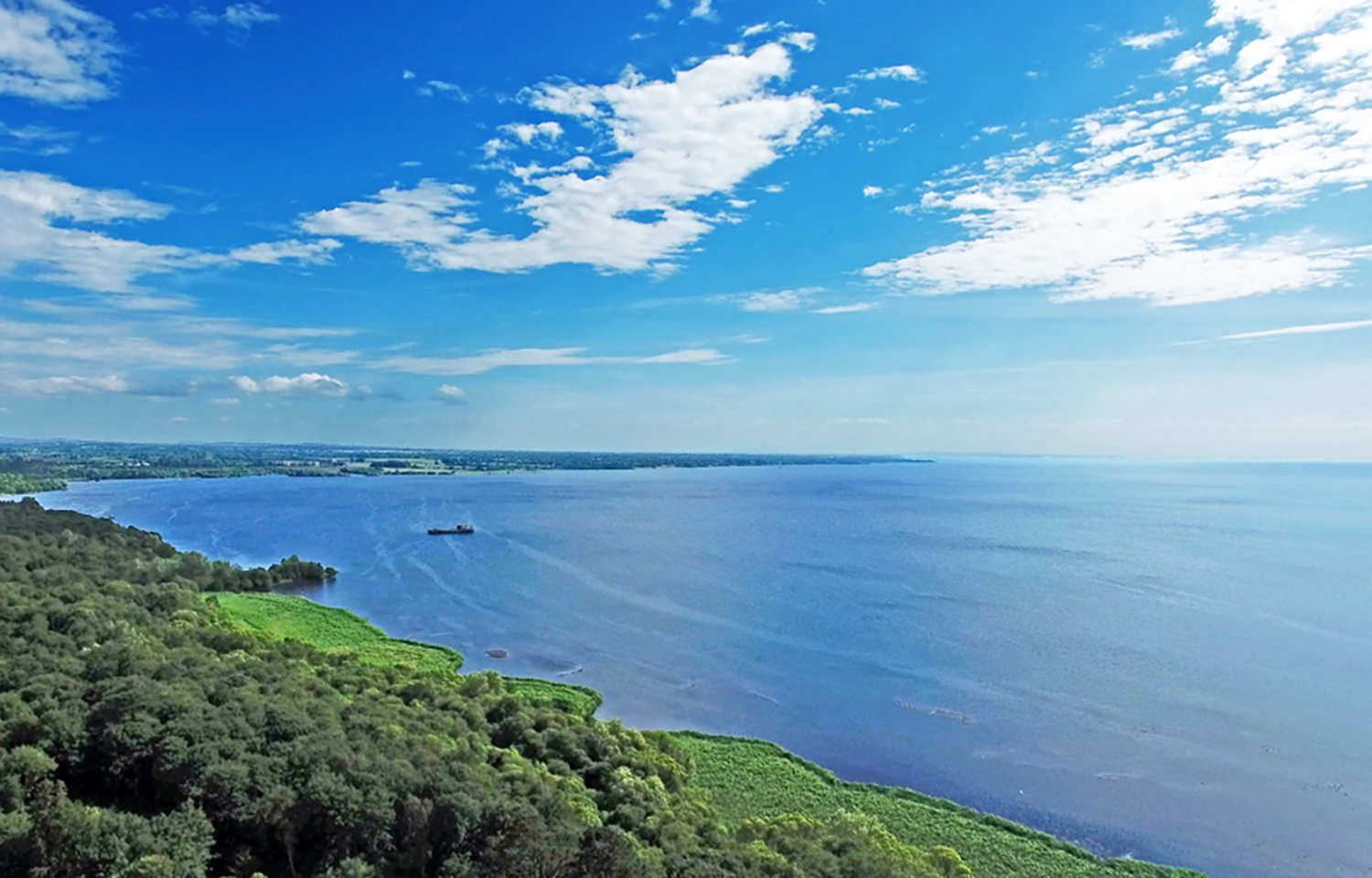
Commercial fishing for European eels on Lough Neagh, a 148-square-mile freshwater lake in Northern Ireland, has been suspended until the middle of July, with some experts warning that the same issues that caused the temporary closure may soon plague other bodies of water across the U.K.
Fishing for eels on Lough Neagh was originally suspended just one week into this year’s season on 12 May due to low fat content in the eels.
Soon after, on 6 June, Kathleen McBride, the CEO of the Lough Neagh Fishermen’s Cooperative Society, met with the lake’s eel fishermen to deliver the news that the suspension would be extended.
McBride told the fishermen additional samples would be taken and another decision would be made some time in the middle of July.
“I don’t think anyone was surprised,” McBride said. “It was a very difficult decision to make, but we felt we had no option.”
The Lough Neagh eel, which has been fished for centuries and is now the largest remaining wild eel fishery in Europe, is prized as a smoked delicacy in Holland, where the majority of the catch is exported. Key to the smoking process and why the eel is so highly regarded is the high fat content in Lough Neagh eels – up to 23 percent in mature eels.
McBride said when their main buyers received this season’s first cohort of eels, they found that the eels were too lean to smoke to their standard.
“Unfortunately, our eels weren't of the smoking caliber, which was absolutely devastating for us to hear,” McBride said.
The Lough Neagh Cooperative is now calling on politicians to provide support to the eel fishermen.
“If this level of failure was experienced in any other industry, like say in agriculture there was a crop failure, the farmers would be supported and assisted by the government,” said McBride. ”There is no program available for the fishermen.”
The Scottish salmon industry has made similar complaints, saying that cases of avian flu that result in the culling of farmed chicken or turkeys, for example, typically “trigger widespread calls for governmental support and funding.”
“Far from receiving calls for government and regulatory support, our sector endures continual criticism and a ratcheting of regulatory controls. All farmers, whether on land or at sea, work to produce nutritious, healthy, and sustainable food for consumers,” Salmon Scotland CEO Tavish Scott said earlier this year. “From time to time, we all experience challenges that are beyond our control. Elected representatives need to recognize all modes of food production in a fair and balanced manner.”
Even if the Lough Neagh Cooperative decides to open fishing in mid-July, the season closes six weeks later on 31 August, meaning there would only be approximately six weeks of potential fishing time this year. When asked about the chances of the season re-opening in July, McBride declined to comment on specific details.
“We wouldn't be in fishing if we weren't eternal optimists. We need to at least give a chance to those eels,” she said. “Maybe their diet could change. Maybe the temperature could change. Maybe the water conditions could change.”
The damage of the suspension on the local economy may be profound, McBride said – not just economically but also culturally if no assistance is provided to the historic fishery.
“There are the families, the boatmakers, the maintenance guys for the engine, the netmakers, the bait suppliers,” McBride said. “There are so many different parameters there that all factor into fishing on Lough Neagh.”
The decline in the fat content of Lough Neagh eels is likely due to problems with its food chain.
“This is a direct consequence of the eels' inability to feed, stemming from the lake's deteriorating water quality,” Catherine Nelson, who serves on the Armagh City, Banbridge, and Craigavon Borough Council, said.
McBride agreed that there is “something missing in the food chain,” but exactly what is affecting the food chain is another question experts are racing to figure out.
One possible culprit is an overload of nutrients in Lough Neagh, causing toxic blooms of blue-green algae, known as cyanobacteria, which is a result of excessive nutrients from agriculture fertilizer and wastewater.
The eels are not testing positive for cyanobacteria, according to McBride, but it is possible that the algae is damaging the food supply of the eels.
While blue-green algae has garnered a lot of media attention– mainly because Lough Neagh supplies 40 percent of Northern Ireland’s drinking water – some, like McBride, are skeptical that it’s the sole reason for the decline in quality of the eel.
“We've had blue-green algae here since the 1970s,” McBride said. “It seems to me that social media has made it into such a new thing in the last two years. I think it's just like a perfect storm out there at the moment that has developed into these conditions, which are not conducive to fat in the eels.”
Another concern is frequent sand dredging affecting the lake’s bed.
Chris Hackney, a sand mining expert and a senior lecturer within the School of Geography, Politics, and Sociology at Newcastle University, found that sand dredging had created scars of up to 56 feet deep in some places on the lake.
Politicians are now warning that what is happening on Lough Neagh may foreshadow increasing instances of ecological devastation across the U.K.
"We would argue that Lough Neagh is a big red flag – an indicator of what can, and indeed, will happen elsewhere if things don't materially change,” said Glenys Stacey, the chairwoman of the U.K.’s Office for Environmental Protection, in a presentation to Defra’s Agriculture, Environment, and Rural Affairs Committee.
The decline of eels on Lough Neagh is also occurring as wild eel populations have dropped across Europe. The European eel is now declared as “critically endangered,” with recruitment levels remaining under 10 percent of historical levels, according to the International Exploration of the Sea (ICES).
The exact reasons for the dramatic decline in European eels are mysterious to experts, in part due to the complex life of the eel species, which hatch over 6,500 kilometers away in the Western Atlantic Ocean near Bermuda and travel over two years to get to European waters.
Once in Europe, they transform into see-through miniature eels, known as glass eels, and then enter freshwater bodies like Lough Neagh, where they stay and grow for 10 to 20 years depending on their gender. Fully mature eels, known as silver eels, make the long journey back to their birthplace to spawn and die.
ICES has advised a zero-catch policy across all of Europe for the species.
“Current management of European eel is clearly not at all in line with scientific advice,” Niki Sporrong, the senior policy officer and European eel project manager at fisheries conservation nonprofit FishSec, said in a press release.
