






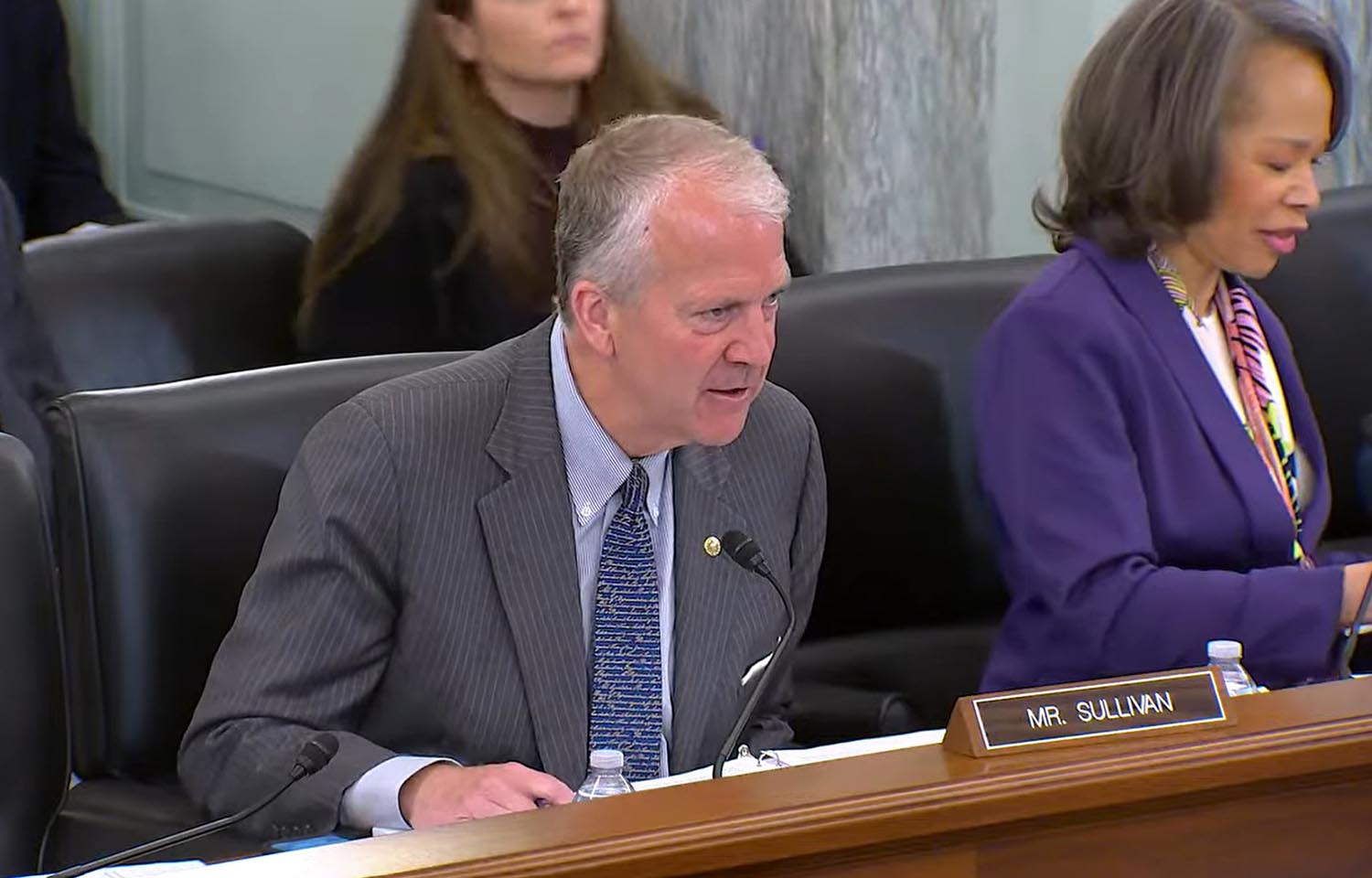
U.S. Senator Dan Sullivan (R-Alaska) took credit for the recently extended ban on Russian seafood during a Congressional committee hearing 2 June, stating that “Americans are buying American freedom fish, not communist fish from Russia.”
The hearing, titled “The Blue Economy: Advancing American Fisheries, Maritime Strength, and Coastal Economies,” took place more than a month after U.S. President Donald Trump opted to extend the ban on Russian seafood imports into 2027.
Sullivan was a critical advocate of the original ban on Russian seafood, which was done in retaliation for that country banning the importation of U.S. seafood starting in 2014.
“That’s an unlevel playing field. That’s really an outrage, and to be honest, we didn’t really react. I was certainly trying to get the governments of [U.S. President Barack] Obama, Trump [during his first term], and [U.S. President Joe] Biden to retaliate, and I was successful,” Sullivan said during the 2 June Senate Commerce Coast Guard, Maritime, and Fisheries Subcommittee hearing he chaired.
A four-year ban on Russian seafood imports was finally put in place in 2022, nearly a decade after Russia had banned U.S. seafood, through an executive order issued by Biden. That ban was later strengthened in 2023 to ensure Russian seafood couldn’t be processed in another country, such as China, and then forwarded on to the U.S.
“I worked with the Biden administration; my team and I put thousands of hours into making sure there was a ban on the importation of all Russian seafood into America. Then, they tried to launder it through China, and we got that loophole closed,” Sullivan said. “By the way, if anyone else says they were working on it, don’t believe them because it was my team and I, and that’s a fact.”
Sullivan has attempted to pass legislation banning Russian seafood imports, as well, but has been blocked by some of his fellow lawmakers.
During the hearing, Sullivan asked Alaska Seafood Marketing Institute Executive Director Jeremy Woodrow whether the ban had benefited American consumers.
“Isn’t that benefiting our coastal communities and fisheries, not just in Alaska but throughout the country, for Americans to buy American seafood from American fishermen, not rely on this communist fish from China and Russia?” Sullivan asked.
“Two years ago, seafood processors told Alaska pink salmon fishermen to stop fishing because they could not buy their fish for a single penny per pound and sell that fish on the market,” Woodrow said in response.
Woodrow said that was because Russian pink salmon was being dumped into the global supply in a direct effort to harm American fishers.
“They weren’t just flooding the U.S. market; they were flooding the global market,” Woodrow said. “They have publicly said that their goal is to bring down Alaska’s fisheries.”
“Russia is expanding its fleet of fishing vessels with government subsidies at a rate we can’t compete with,” Woodrow said. “The cost to build a Russian vessel is around one-third of the cost it is to build here in the U.S. I don’t have a silver bullet how we fix that here at home, but all I know is that we’re falling behind our competitors, and it does make it very challenging for us to continue to compete with them in a global space.”
Woodrow went on to say the ban had “made a difference” and credited it with helping “prices rebound” in the U.S. marketplace.
“This was a really, really important policy goal that my team and I are proud to have led on and delivered, not just for Alaskan fishermen, but for American fishermen,” Sullivan concluded.
