






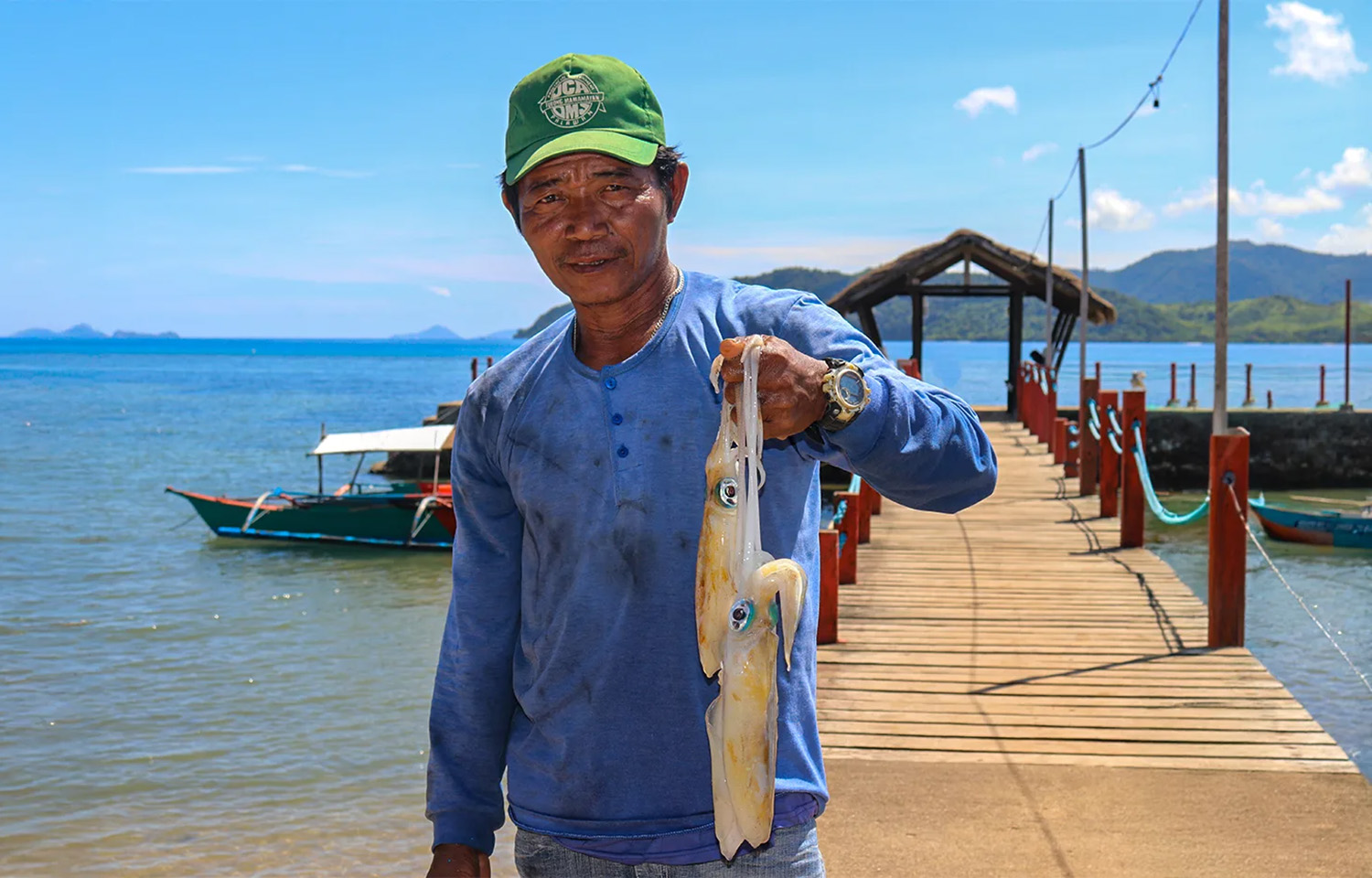
Funding cuts that the administration of U.S. President Donald Trump has made to the United States Agency for International Development (USAID) have affected several seafood projects across the globe, including components of a nonprofit in the Philippines aimed at advancing sustainable fisheries management practices domestically.
Bluer Seas Philippines was launched in 2023 to build upon the success of the USAID-funded Fish Right Program, which itself was intended to be a seven-year partnership between USAID, the Philippines government, the University of Rhode Island, and the Sustainable Fisheries Partnership (SFP), among other groups, to improve marine biodiversity and the fisheries sector in the Southeast Asian nation.
Fish Right was set to run through 2025, but funding cuts initiated earlier this year have jeopardized the project’s intended objectives.
Though Fish Right was restarted after a brief hiatus in May, it is now operating under a very different scope; the focus has shifted to maritime security and increasing the visibility of the U.S.’s presence in the West Philippine Sea, leaving the part of Fish Right’s mission focused on tackling illegal, unreported, and unregulated (IUU) fishing, responsible fisheries management, and increasing the availability of sustainable seafood in the Philippines terminated.
Now, Bluer Seas Executive Director Becky Andong and Sustainable Markets Specialist Josette Emlen Genio are trying to figure out how to keep the work moving forward or, at the very least, not lose the progress Fish Right and Bluer Seas have been able to accomplish.
Up to 40 percent of wild-caught seafood in the Philippines comes from IUU fishing, according to Bluer Seas, costing the country an estimated PHP 62 billion (USD 1.1 billion, EUR 978 million) in annual lost revenue and depleting lucrative stocks.
To address the impacts of IUU fishing, overfishing, and climate change on marine habitats, Fish Right aimed to achieve a 10 percent increase in fish biomass in the Calamianes, Southern Negros, and Visayan seas.
Bluer Seas added a market component to Fish Right, aiming to create awareness in the Philippines to advance transparent and responsible sourcing practices.
“Out of efforts to localize seafood sustainability for the Philippine domestic market, it became apparent that capacity building in the country would be critical,” Andong told SeafoodSource regarding the original goal of Bluer Seas.
Industrial fisheries in the Philippines typically have more robust management, oversight, and responsible practices in place, but small-scale fisheries, which comprise the vast majority of the country’s catch, often lack some of the management infrastructure that would allow a program like Bluer Seas to provide assurances to buyers that the seafood they are purchasing is sustainable.
Because of the lack of harvest and production data in small-scale fisheries, traditional marketplace tools like certifications were unlikely to work, Bluer Seas quickly found.
“There had been previous attempts to mobilize the domestic market or link national market players with small-scale fisheries, and there was experience from SFP working with small-scale fisheries in other regions which we could learn from. We realized that certification is really unfit for small-scale fisheries in the Philippines, especially for fisheries that are meant for domestic and national markets,” Genio said.
Bluer Seas and SFP ended up developing the Responsible Seafood Sourcing (RSS) standard, which is a set of criteria used to assess supply chain practices in the capture, sourcing, and trading of seafood in the Philippines. The standard is organized around the principles of legal compliance, traceability and transparency, and social and environmental responsibility – which also form the foundation for the Bluer Seas program.
With a set of criteria established, Bluer Seas set out to address the next challenge – building market demand for RSS products and simultaneously building supply compliant with the standard.
“Initially, we were able to engage approximately 30 companies in the marketplace, and we were able to work with these companies to support the process to operationalize the RSS standard in their supply chains. This work also involved much more than connecting buyers and suppliers because of the geographic complexity of the Philippines and the challenges of small-scale fisheries,” Genio said. “There were a lot of value chain gaps including infrastructure, logistical, and post-harvest cold chain challenges. We worked with communities to establish livelihood opportunities in their areas by doing fish processing and value-added activities. Now, there are also hotels, restaurants, and even institutional distributors [onboard].”
Bluer Seas was in the process of continuing its positive momentum by establishing a post-harvest processing facility in the geographically isolated municipality of Linapacan, which is heavily dependent on fishery production for income, when USAID funding was cut.
Though many of Bluer Seas’ initiatives have come to a halt for now, the market recognition of the RSS standard and Bluer Seas in general remain and some of the program’s partners are trying to find ways to help close the funding gap.
However, there is no viable long-term solution at the moment without USAID funding.
“We appreciate the willingness of companies to explore some type of collaborative agreement and partnership with us, and this will likely help us continue some capacity building. There were also local government units that did not want us to stop our activities, and they have made a commitment to help us,” Andong said. “Those contributions and our staff volunteering their time to work on this [will support us] until we can find a longer-term solution.”
Genio said Bluer Seas recognizes the challenge of finding new fiscal partners in the present environment, but it also believes in its model and results.
“Facilitating market access for a geographically complex country like the Philippines was daunting – but not impossible. We moved 21 metric tons of responsibly sourced seafood from smallholder producers to seafood distributors, hotels, restaurants, and retailers while fostering valuable partnerships that strengthened fishing community livelihoods and augmented incomes by at least 20 percent,” Genio said.
