






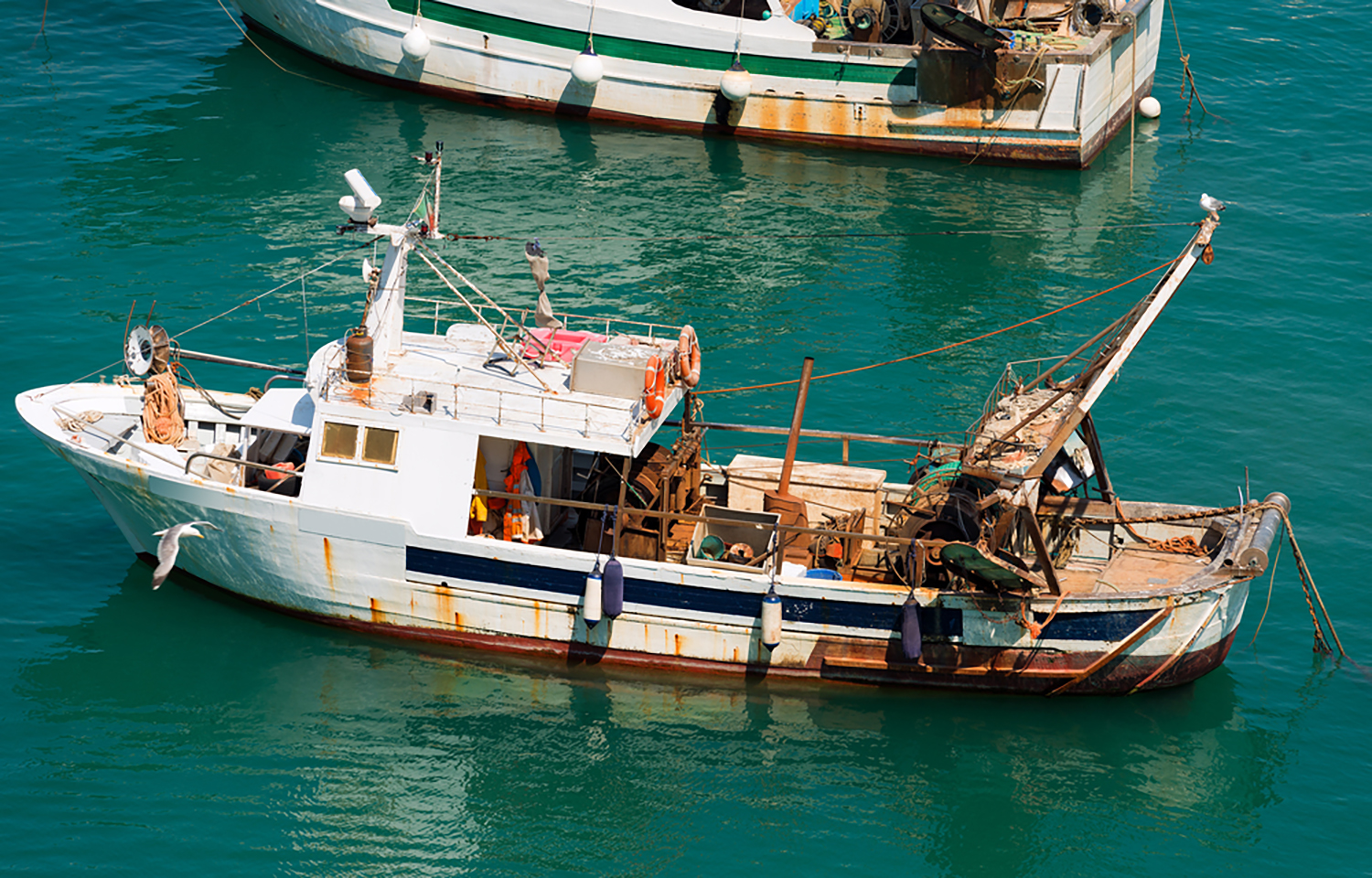
A new report commissioned by Oceana Europe has cautioned that most bottom-trawling fleets operating in the Western Mediterranean Sea are either unprofitable or only marginally viable, despite for years being the beneficiaries of public subsidies and management measures intended to restore fish populations.
The NGO’s “Navigating Change” report – assessing French, Italian, and Spanish trawlers directly affected by the European Union’s Western Mediterranean Multiannual Plan (West Med MAP) adopted in 2019 – has found that the region’s bottom-trawl fleet is structurally oversized and competing for fish populations that have been overfished for at least a decade. This imbalance, it said, is trapping the sector in a cycle of shrinking stocks, weak catch rates, and declining profitability.
Regarding the latter factor, it found that nearly all trawlers recorded low or negative net profit margins between 2014 and 2022, and only three segments – small- and medium-sized Spanish trawlers and medium-sized Italian vessels – achieved profit margins above the 10 percent benchmark for long-term viability.
Even that data may be painting too rosy of a picture, according to the report, which found that national and E.U. subsidies, including at least EUR 7.5 million (USD 8.6 million) in payments tied to the MAP, EUR 2.6 million (USD 3 million) in Covid-19 relief, and EUR 9.1 million (USD 10.5 million) in fuel subsidies following the Ukraine war, have temporarily masked losses in some segments.
Exacerbating the issue is the fact that it’s impossible to track whether public funds are supporting sustainable practices or inadvertently contributing to overcapacity and overfishing, according to Oceana Europe Senior Policy Advisor Giulia Guadagnoli.
“Subsidy opacity is a significant issue,” Guadagnoli told SeafoodSource. “There is no complete, centralized record of all public money going to fishing fleets, despite legal reporting requirements. Some transfers are not reported at all, and several member states have indicated they will use ‘non-notified’ schemes – meaning subsidies will not appear in E.U. transparency systems. Oceana believes the E.U. needs standardized, mandatory, centralized reporting of all subsidies, including national-level support. This is essential to prevent harmful subsidies slipping through the system.”
As for the shrinking stocks and weak catch rates, the report found that governments have long assumed that economic performance would naturally improve once fish populations recovered and have simply allowed overcapacity to persist as a result.
“From Oceana’s perspective, this signals a structural problem that governments have long tolerated and even promoted: The fleet is simply too large for the limited and still-overfished resources it depends on,” Guadagnoli said. “As long as overcapacity persists, trawlers will continue competing over depleted populations, keeping profit margins chronically low and preventing stock recovery. However, the annual capacity review process faces heavy political resistance; member states are reluctant to reduce fleet size. At the same time, many vessel owners have a debt and often need to continue to pay wages to crew members even when their business is unprofitable. This combination has locked the fleet into a long-term imbalance.”
In an attempt to mitigate the issue, France introduced a buyback scheme for large trawlers after 2022, and Italy is preparing a similar program, but the report has warned that the effects will not be visible until later in the decade.
Even if the buyback schemes start to elicit benefits, they will not solve the problem on their own, according to Oceana. The NGO cautioned that if capacity is brought back into balance but fishing opportunities are not redistributed or if fish populations, such as such as hake, red mullet, and deepwater shrimp that have shown “weak signs of recovery,” remain too depleted to support a profitable activity, the remaining vessels will still struggle.
The real solution, the NGO said, requires two parallel actions: First, reduce overcapacity, and second, rebuild fish populations. Oceana emphasized that only when stocks recover will the remaining vessels begin to see meaningful economic improvement.
More specifically, Oceana is urging governments to undertake a more transformative approach that addresses both biological and economic challenges.
Its recommendations include:
- Reducing overcapacity through targeted decommissioning and preventing relocated effort in other E.U. or North African fisheries;
- Rebuilding fish stocks by strengthening enforcement of MAP measures, tightening fishing day limits, and adopting catch limits or temporary closures for severely depleted species;
- Redirecting subsidies away from loss-making vessels and toward transitioning fishers to selective gears and sustainable business models;
- Assessing the viability of gear transitions such as longlines and gillnets to replace a portion of bottom trawling capacity;
- Supporting a just transition for coastal communities through compensation, training, and diversification programs;
- Improving subsidy transparency through standardized E.U.-wide reporting requirements; and
- Integrating economic resilience into MAP governance so stock rebuilding and fleet profitability advance together.
Guadagnoli said that out of the suggestions, the indispensable condition for long-term prosperity for fishers is restoring fish populations to health.
With the West Med MAP now several years into implementation but resulting in limited biological or economic improvements, Oceana has insisted that France, Italy, and Spain make difficult decisions to realign fleet capacity. Without decisive action to reduce effort and rebuild stocks, Oceana said Western Mediterranean bottom trawling will remain trapped in a downward spiral – propped up by subsidies but unable to restore profitability or ensure long-term sustainability.
