






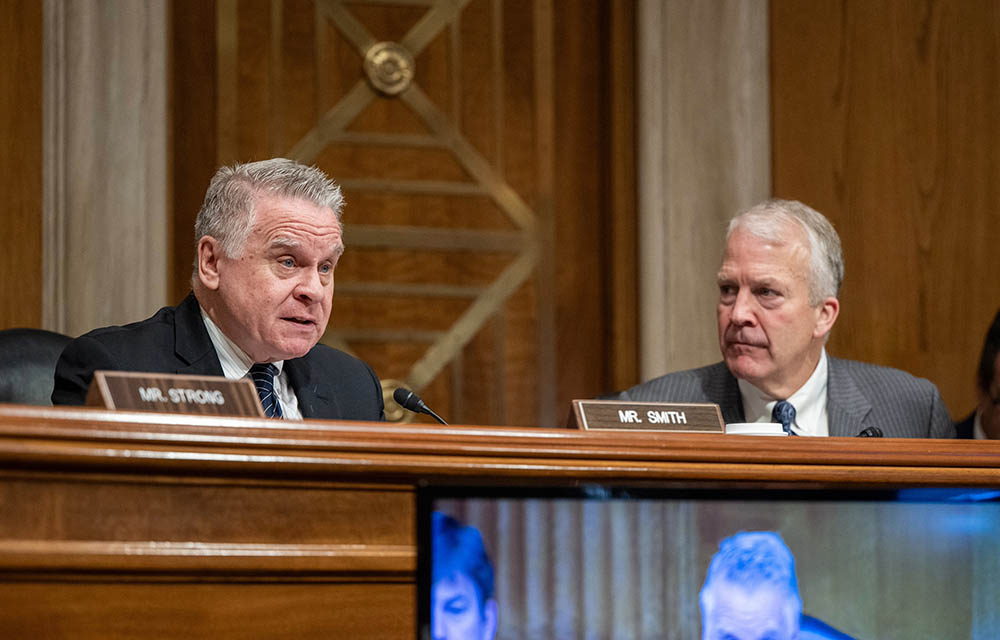
U.S. Representative Chris Smith (R-New Jersey) has introduced a bill to ban Chinese-origin seafood from Congress’ dining facilities.
If passed, the No PRC Seafood in Congress Act would prohibit Chinese seafood from being procured for, served in, or sold by congressional dining facilities. The ban applies to any seafood harvested, produced, or processed in China and any seafood harvested by a vessel owned or operated by Chinese nationals or companies. As part of the legislation, Congressional dining halls would be required certify any country a seafood product was “fished, harvested, raised, produced, or processed.”
The bill text justifies the ban over forced labor in China’s seafood supply chain.
“Forced labor is pervasive in fishing, seafood harvesting, aquaculture, and seafood processing supply chains in the People’s Republic of China,” the bill reads. “The lack of reliable supply-chain transparency and traceability makes it impracticable to verify that seafood products from the People’s Republic of China are free from forced labor.”
A series of bombshell investigations released by the Outlaw Ocean Project in 2023 documented evidence of forced labor across China’s seafood supply chain, including the use of Uyghur labor at Chinese seafood processing facilities, the use of North Korean laborers, and a slew of labor violations within China’s distant water fishing fleet. U.S. lawmakers have leaned on those reports to call for increased scrutiny of China’s seafood sector. In 2024, the U.S. Department of Homeland Security (DHS) listed seafood as a high-priority sector in enforcing the Uyghur Forced Labor Prevention Act (UFLPA), a law that bars importing products made with Uyghur labor.
As a chair of the Congressional-Executive Commission on China (CECC), Smith has pushed for restrictions on Chinese seafood imports and has urged U.S. President Donald Trump to ban all seafood from China. On 14 July, Smith and other members of the CECC signed a letter to Trump arguing that Chinese seafood should be banned over forced labor concerns in alignment with the president’s Restoring American Seafood Competitiveness executive order.
“China is the most immediate test of your policy, leveraging its vast fishing fleets and processing plants to cheat American fishermen, exploit vulnerable workers, and project power at sea. The United States should not help pay for these egregious behaviors. We urge you to use your authority to make our country the least hospitable market in the world for Chinese harvested seafood. We urge you to use your authority to make our country the least hospitable market in the world for Chinese harvested seafood,” the lawmakers stated in the letter. “Chinese seafood is too often produced through forced labor and enters our market at prices honest American fishermen cannot match. That is not competition. It is abuse shipped into the United States.”
U.S. lawmakers have made similar calls for a ban on Chinese seafood in recent years and introduced other bills to ban Chinese seafood from government purchases. Last year, Congress used budget legislation to ban Chinese seafood from school lunches. In fiscal year 2026 funding legislation, Congress voted to bar the U.S. Department of Defense from purchasing seafood from China, Iran, North Korea, and Russia to serve in dining halls or commissaries, and an amendment to the 2027 legislation would again bar Chinese seafood.
“American seafood producers desperately need support,” Southern Shrimp Alliance Executive Director Blake Price said when the amendment was introduced in July. “Serving our troops Chinese seafood rather than domestically harvested and processed seafood is an insult to the men and women serving our country and to U.S. commercial fishermen across the nation.”
