






Despite boasting incredibly high wild capture potential across its archipelago of more than 17,000 islands, Indonesia lacks a modernized cold chain infrastructure to fully realize that potential.
An absence of ice-making capabilities and cold storage warehouses, frequent power outages, substandard port facilities, and logistical challenges that are inherent as an archipelagic nation have resulted in Indonesia’s fishing industry losing between 20 percent and 35 percent of its catch totals in post-harvest losses.
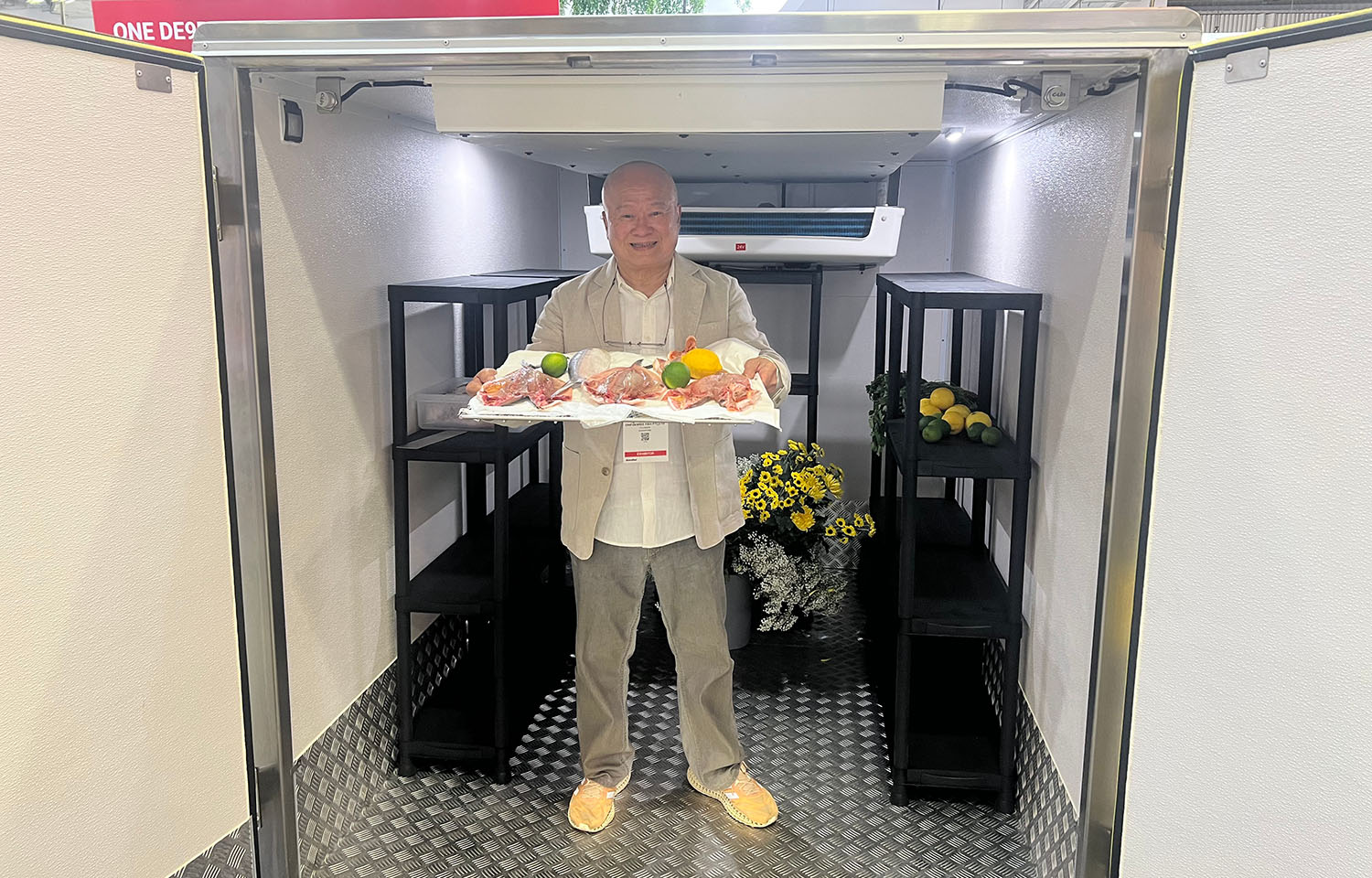
Recognizing these issues, as well as the commercial possibilities in rectifying them, Calvin Lim founded Singapore-based OneDe9ee Fish, which derives its name from the fact much of Indonesia’s fish is caught between 1 degree of latitude north and south of the equator.
“Indonesian fishermen go out in the morning, get their fish, and when they come back, they have nowhere to put it but heavyweight plastic containers. They throw a few pieces of ice in there, which often has sediments and melts easily. The fish deteriorates very fast and can get contaminated,” Lim told SeafoodSource at the 2026 Seafood Expo Asia (SEA), which is taking place 2 to 4 September in Singapore. “If the fishermen bring in the fish and it’s not fresh, you can’t do anything.”
To help Indonesian fishermen better preserve their products, the company has outlined a thermal continuity control (TCON) pipeline from boat to end consumer, starting with ice-making technology using seawater that preserves catch quality aboard fishing vessels.
Following the firm’s TCON roadmap, once in port, fish enters containers developed by Japanese cold storage firm ICHI that utilize electric field technology (EFT), which does not freeze the food but keeps it cold enough to lock in quality. Then, processing and transport operators use ICHI-backed technology to ensure the fish maintains its quality throughout the rest of its supply chain journey, whether it stays in Indonesia or is sent first to Singapore and then abroad to such markets as China.
Lim explained that if this infrastructure were established in Indonesia, stakeholders up and down the nation’s seafood value chain would be able to benefit from increased value and begin bringing down post-harvest loss rates.
“Many of my Indonesian friends trade 4,000 to 5,000 tons of fish a month and can make [decent] money, but with more investment, they can add value,” he said.
With the pipeline drawn up and the technology in place, OneDe9ee Fish is now planning on how best to implement this infrastructure across Indonesia and has approached government-owned holding firm ID FOOD, which manages national food reserves, to help in that task.
“ID FOOD controls 34 fishery ports across Indonesia, so we have appealed to them to give us control over an old port, and we can convert it to our TCON pipeline,” he said.
In addition to seeking a closer relationship with government agencies, Lim said he is also trying to market the TCON pipeline at this year’s SEA to restaurants and retailers, starting to spread the word of the technology throughout the Southeast Asian value chain.
