

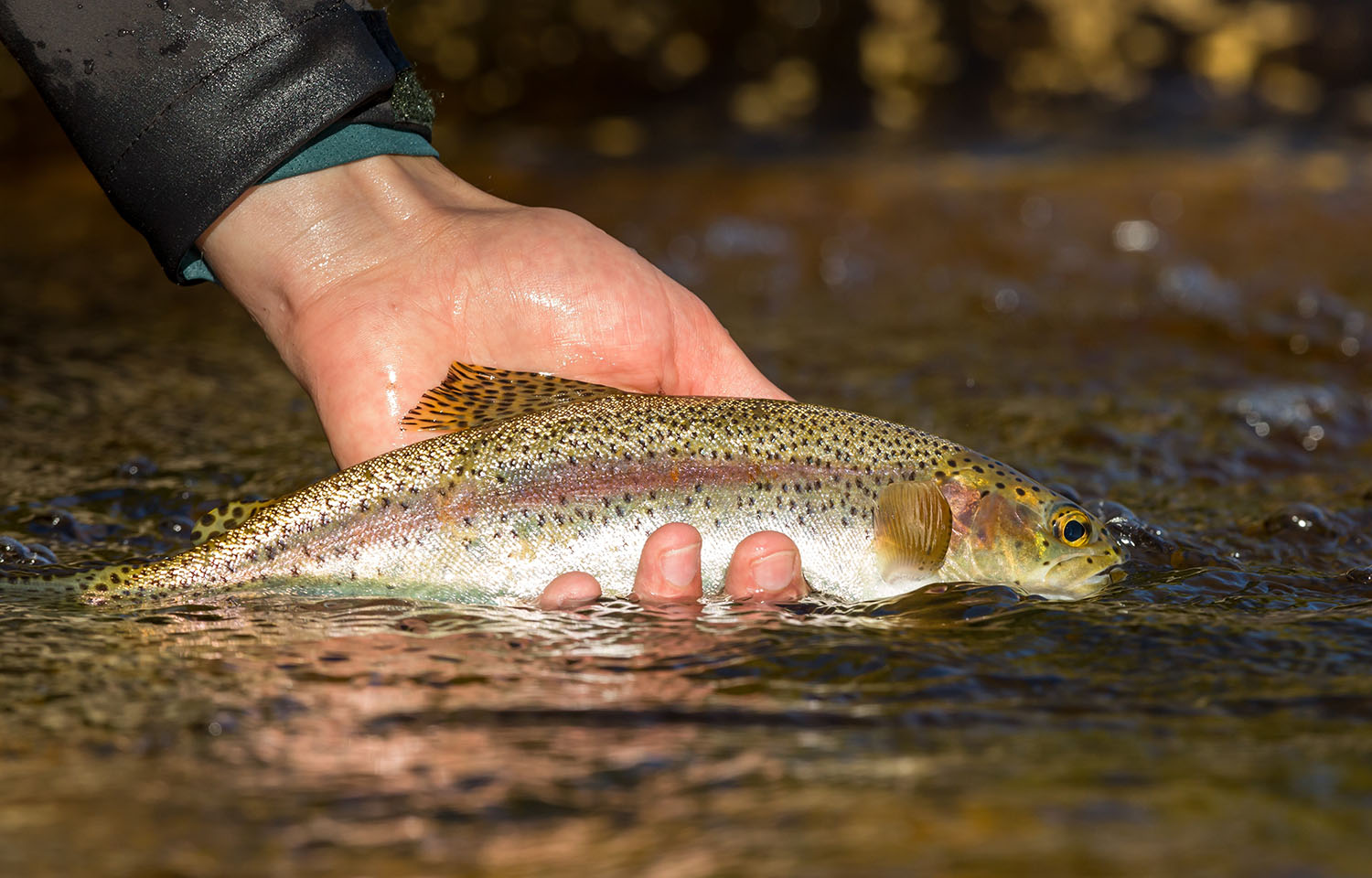
Three organizations have joined together to pool USD 1.5 million (EUR 1.3 million) in funds to support the development of enhanced rainbow trout breeding for aquaculture in the U.S. state of Washington.
Washington, D.C., U.S.A.-based nonprofit Foundation for Food and Agriculture Research (FFAR) initially provided funds through its Growing Impact Award. Those funds were matched by Washington State University (WSU) and Bonney Lake, Washington, U.S.A.-based aquaculture and trout breeder Troutlodge.
The funding will support WSU research into producing sterile fish, aiming to keep aquaculture resources directed toward growth while preventing escaped farmed fish from reproducing with wild populations.
“Healthy, sterile fish would be a win for farmers and the environment,” FFAR Scientific Program Director Jasmine Bruno said. “Through the Growing Impact Award, FFAR is advancing this innovative research to put a practical breeding tool into the hands of fish farmers that reduces ecological risk and supports the productivity of U.S. aquaculture.”
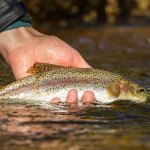
WSU Department of Animal Sciences Associate Professor Michael Phelps will lead research into new ways to farm rainbow trout, building off of research conducted in 2021 through FFAR’s New Innovator in Food and Agriculture Research Award that found rainbow trout can be sterilized through the prevention of the development of reproductive cells. This is opposed to current practices of adding an extra set of chromosomes to sterilize fish.
FFAR said the team will work to identify potentially scalable approaches for using rainbow trout fish’s natural biology to control fertility.
“Nature may have already solved part of this problem for us,” Phelps said in a release. “By studying infertility that occurs naturally in trout, we hope to find traits fish farmers can use to produce sterile fish of other breeds on a large scale.”
WSU researchers will look into two different methods.
First, specially produced male trout will pass down a trait to female offspring that makes female fish sterile. Second, researchers will use female trout whose eggs produce offspring that cannot make eggs or sperm. FFAR said these two different approaches will help researchers collect data on breeding to determine which method produces the most viable offspring across generations by tracking fertility, health, and growth. Once the best practice is found, Troutlodge will apply the method at the commercial scale.
FFAR said in the release that farmed catfish, trout, and tilapia contributed about USD 820 million (EUR 715 million) in sales around the U.S. in 2023, but the country still imports 7.4 billion pounds of fish to support demand, highlighting the opportunity for domestic aquaculture to fill in the gap.
