
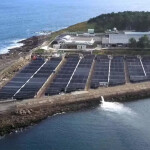
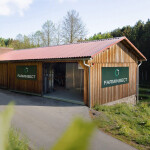

Feed producer Skretting has expanded its Lerang Research Station at its headquarters in Stavanger, Norway, to include a new facility concentrating on research on recirculating aquaculture systems (RAS).
Skretting’s new recirculation hall is comprises 12 independent recirculating aquaculture systems, primarily dedicated to conducting trials for salmon feed product development. The systems “enable researchers to conduct precise experiments on its latest closed system feed formulations in strict, closely monitored environmental conditions,” according to a company press release.
“Attempts to mitigate the biological risks associated with traditional aquaculture is leading to a lot of momentum for closed fish production systems, and this is happening all over the world,” said Paulo Mira Fernandes, a Skretting researcher and RAS expert and international director of the Aquaculture Engineering Society Board of Directors. “While these are unique systems with their own particular challenges, Skretting has been operating within this space for a long time; we brought the first recirc-specific diet to the market in 2009. The knowledge and expertise that we continue to amass along with the R&D facilities that we have in place will prove invaluable as more and more of these systems come on stream.”
The development increases Skretting’s investment in research and development, as it joins other Skretting research facilities in Chile and Australia. All three facilities conduct research on feed and formulations, and evaluate feed interactions and influences on system performance, according to Skretting. The facilities are all equipped with Skretting’s AquaSim technology, which predicts farm performance and enables production to be optimized, the company said.
“The [facilities’] importance is growing quickly as more innovative production facilities emerge that require customized feeds,” the company said.
“Skretting has multiple research facilities dedicated to closed containment systems. As well as developing feeds that can help optimize our customers’ production, we have built an unprecedented knowledge bank of the most effective ways to manage and apply this technology. We know that feeding the fish means feeding the system, and our knowledge in this area ensures that we can help our customers maximise their production capacity,” Fernandes said.
