
Japanese salmon farmers have formed a new association to promote the domestic industry and exchange information on best practices.
The council was announced on 6 September at a foundation meeting held in Tokyo. It included companies such as salmon farmers and feed producers, municipalities, and research institutions. In Japanese, the organization is called the “Zenkoku kaimen sāmon yōshoku suishin kyōgi-kai,” which roughly translates to National Ocean Salmon Aquaulture Promotion Council.
Koichi Okamura, president of Okamura Food Industry (Aomori City), was elected as a secretary of the new organization. Miyagi and Aomori prefectures are the main production areas for farmed salmon, as they have cool water and protected areas for net pens.
The formation of the council was encouraged by Japan’s Fisheries Agency, which sponsored a "National Sea Salmon Aquaculture Promotion Conference" in November 2017. Japanese news website To-o Nippo Press reported that, at the foundation meeting, the Fisheries Agency stressed the need to develop vaccines and to breed salmon suitable for the Japanese marine environment.
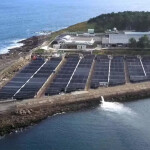
Some operations in Japan move fish to ocean pens only for the cooler months, aiming to harvest before hot summer weather. For example, Uwajima Project Inc., based in Uwajima City, Ehime Prefecture farms silver salmon in water off Shikoku Island that would normally be considered too warm for salmon, but they are grown only in the winter when water temperatures are cooler and are harvested after only five months, at about 1.5 kilograms.
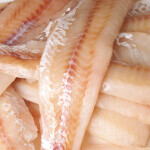
Salmon is the most popular sushi topping in Japan, according to an annual Internet survey conducted by Maruha Nichiro. It is also widely sold as thin salted half-steaks to be grilled for breakfast, and as fillet slices advertised for meunière preparation. Though imports still account for most Japanese consumption of raw salmon, domestic production of farmed salmon and ocean-raised trout is growing, due in part to high prices for salmon from Norway.
Silver (coho) salmon is the main species farmed in Japan, but ocean farmed trout is also becoming popular. In Japan, ocean-farmed rainbow trout is sold as “salmon-trout.” (China has gone in the same direction, with Chinese authorities deciding in August to allow all salmonid fish to be sold as salmon).
Japan does have significant wild salmon harvest as well as farmed production. This year’s landings of wild fall chum salmon have been strong and the stock forecasts call for a big increase over 2017. Chum salmon, called “Akijake” or literally “autumn salmon,” are caught in the waters of Hokkaido, Iwate and Miyagi prefectures.
Yoshitomo Izumi of the Hokkaido Prefectural Government’s Fisheries and Forestry Department, Fisheries Administration, Fisheries Management Division, Resource Management Group said that Hokkaido landings make up 80 percent of the catch. He said that the forecast for Hokkaido for the entire season was 1.8 times that of 2017. As of 10 September, Hokkaido’s catch amounted to 534,683 fish, weighing 1,598,959 kilograms, an increase in weight of 150.2 percent over the same time last year. Supermarkets are now running sales on fall chum salmon.
Tokyo-based seafood trader Marunaka reports prices of frozen imported salmon at an average of JPY 1,500 (USD 13.30, EUR 11.29) per kilogram for Atlantics and JPY 1,700 (USD 15.08, EUR 12.79) for silver (coho) salmon. The National Oceanic and Atmospheric Administration (NOAA) in the U.S. reports that at Tokyo’s Tsukiji wholesale auction prices on 20 September were in the range of JPY 1,296 to 1,350 (USD 11.50 to 11.98, EUR 9.76 to 10.16) per kilograms for frozen sockeye.
