






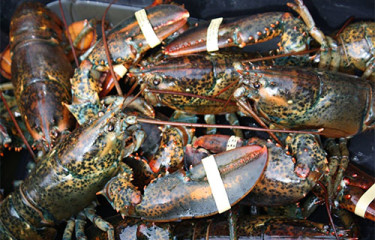
Cape Breton lobsters are getting bigger.
Or rather, the lobsters being landed are getting bigger, as the 100 members of the Inverness South Fisherman’s Association (ISFA) have agreed to increase the minimum length of the lobsters they catch.
According to ISFA president Jordan MacDougall, the move this year to a minimum carapace size of 81.7 millimetres is nearing the target set out in a three-year plan to match the catch sizes of other regions. In 2019, the region’s fishermen will add 0.8 millimeters to up the minimum size, to reach 82.5 millimeters.
In 2014, the minimum catch-size for lobsters coming from zone 26B South (from Inverness to Auld’s Cove) was 79 millimeters. This left the area’s lobstermen playing catch-up to their colleagues in other regions.
“Our ultimate goal has been to get to 82.5 [millimeters]. That is our last increase forever,” MacDougal said. “The increase is the standard that South West Nova, Canso, Sydney area and all up that side of Cape Breton, has so our goal was to be the same as them.”
It is also the minimum size for Canadian lobsters to enter the United States without processing.
"Anything smaller than that will be sent back," MacDougall said. "So, when we sell our product at the wharf, the buyer, when we have a smaller size than 82.5 millimeters, has to go through the crates and basically pick out the smaller ones and make sure the product he's sending to the States is bigger than 82.5 millimetres. This size allows the people we sell it to not have to grade the lobsters. They can take the tray, put it on a truck and go right to Boston with it and sell it. Anything under that are usually processed as canners.”
They’re a little behind their planned increases because some of the fishermen were concerned about moving too quickly. MacDougall said that 30 years ago, the minimum size to fish lobsters in his zone was 63.5 millimeters, and by 1990, it was raised to 70 millimeters.
Another reason for the switch to marketing a larger size is conservation, MacDougall said.
“On the fishing part, when the lobsters get that size they’ve had more cycles of egg reproduction on the females. So it should equate into more lobsters because there’s more eggs being reproduced each year,” he said. “We don’t see that effect for years down the road, but it should mean a healthier, stable population for future catches.”
