



Seven African and Middle Eastern countries have launched an initiative to promote sustainable fisheries management in the Red Sea, where stocks are under pressure from overfishing and the adverse effects of climate change.
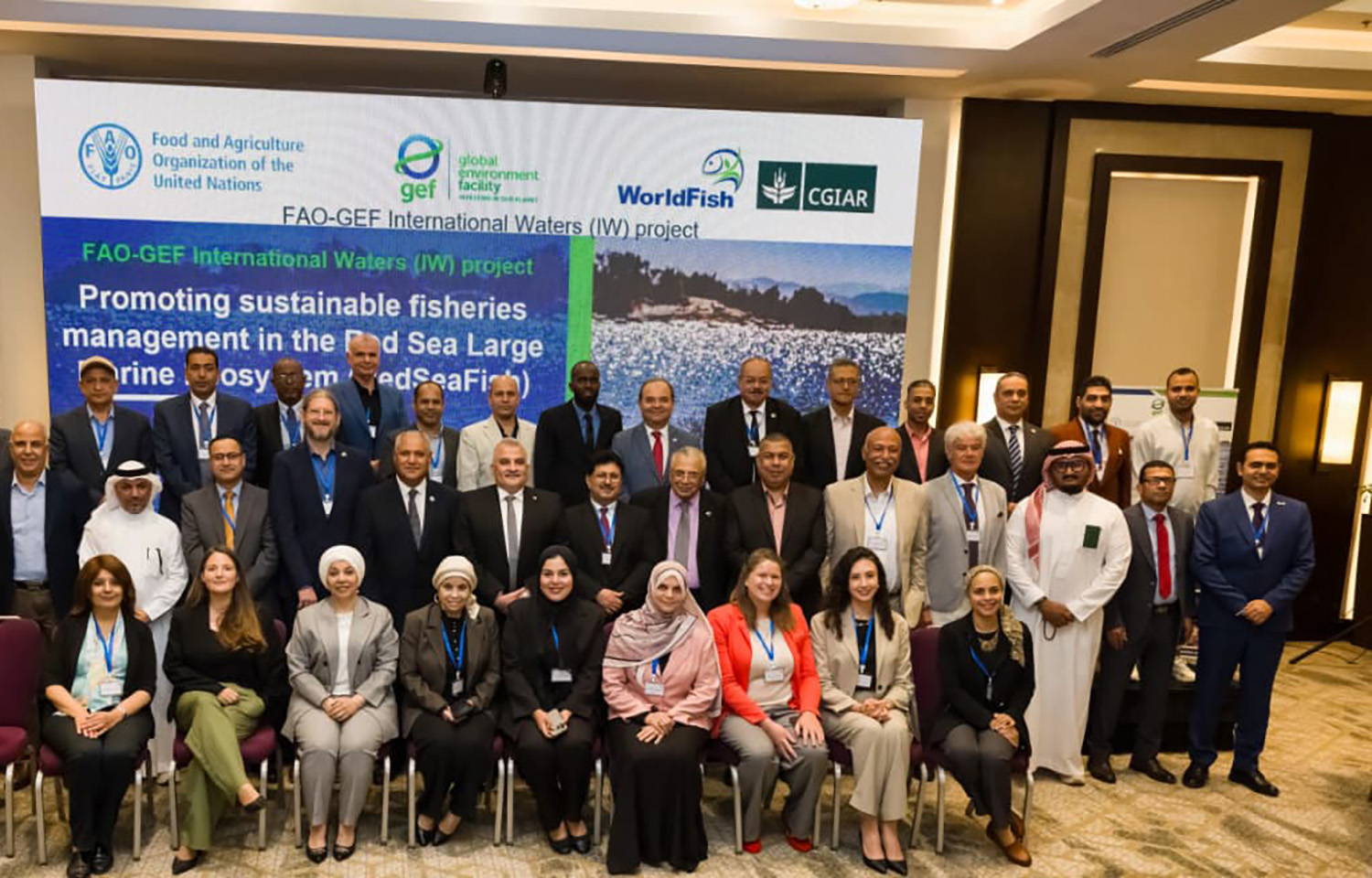
Representatives from Djibouti, Egypt, Eritrea, Yemen, Jordan, Sudan, and Saudi Arabia met in Cairo, Egypt, earlier this year to determine the goals of the project – which is being implemented by FAO, executed by WorldFish, and funded by the Global Environment Facility (GEF) – and how best to implement it, along with what the goals will be after 2030 when the initiative is set to expire.
“The initiative brings together seven Arab and African countries bordering the Red Sea in a regional partnership whose primary objective is to consolidate efforts to address challenges affecting fisheries sustainability through a participatory approach involving countries and implementing partners aiming toward sustainable fisheries resources in the region,” the United Nations’ Food and Agriculture Organization (FAO) said in a statement.
The four main components representatives honed in on include improving fisheries data systems, strengthening regional cooperation to protect ecosystem balance, modernizing regulatory and institutional frameworks, and enhancing knowledge management, monitoring, and evaluation by 2030.
According to Ahmed Nasr-Allah, the Egypt country director at WorldFish, each of these four pillars focuses on shared objectives and includes such action items as integrating socioeconomic data, establishing a multi-stakeholder task force to support fisheries management, developing sustainability indicators at both national and regional levels, and creating an integrated communication and knowledge-sharing strategy.
Nasr-Allah added that the project sets a participatory framework that “brings together partners and stakeholders, including national governments, research institutions, experts, and consultants, offering an integrated governance model for the management of shared marine and regional resources.”
At the meeting, all seven country partners “reaffirmed their commitment to the 1982 United Nations Convention on the Law of the Sea, which calls on states bordering enclosed or semi-enclosed seas to cooperate in exercising their rights and fulfilling their obligations under the convention, including coordinating the management, conservation, exploration, and exploitation of marine living resources,” FAO said in a release.
The project comes as stocks in the Red Sea, which boasts a unique marine environment with a high rate of endemic species, is under increasing pressure.
A study released in April of this year found that between 60 percent and 75 percent of stocks in the Red Sea are fully exploited or overexploited, with a declining catch-per-unit-effort (CPUE) for fishers as a result.
“The Red Sea’s high biodiversity and complex reef habitats support predominantly artisanal, multi-species fisheries, offering some ecological resilience but leaving high-value demersal species vulnerable to targeted exploitation,” the study said. “Weak monitoring and limited compliance in the Red Sea … create reinforcing feedback loops of declining biomass, reduced CPUE, and escalating fishing pressure. The study highlights the urgent need for ecosystem-based, region-specific fisheries management that integrates ecological complexity, socioeconomic dependence, and governance capacity. Strengthening monitoring, surveillance, fleet regulation, data integration, and regional cooperation is essential to break the overfishing cycle and ensure long-term sustainability and resilience.”
