



Multiple NGOs are calling on member countries of the Commission for the Conservation of Antarctic Marine Living Resources (CCAMLR) to enact protections in the Antarctic Ocean at its upcoming meeting in Hobart, Australia, from 19 to 30 October.
The Antarctic and Southern Ocean Coalition (ASOC) and Antarctica 2030 are both pushing for member governments to establish a marine protected area (MPA) in the Antarctic Ocean, adopt precautionary krill fishery management, and develop a roadmap to more MPAs by 2030. CCAMLR governs fishing around Antarctica and is responsible for setting catch limits on a number of different species, including krill.
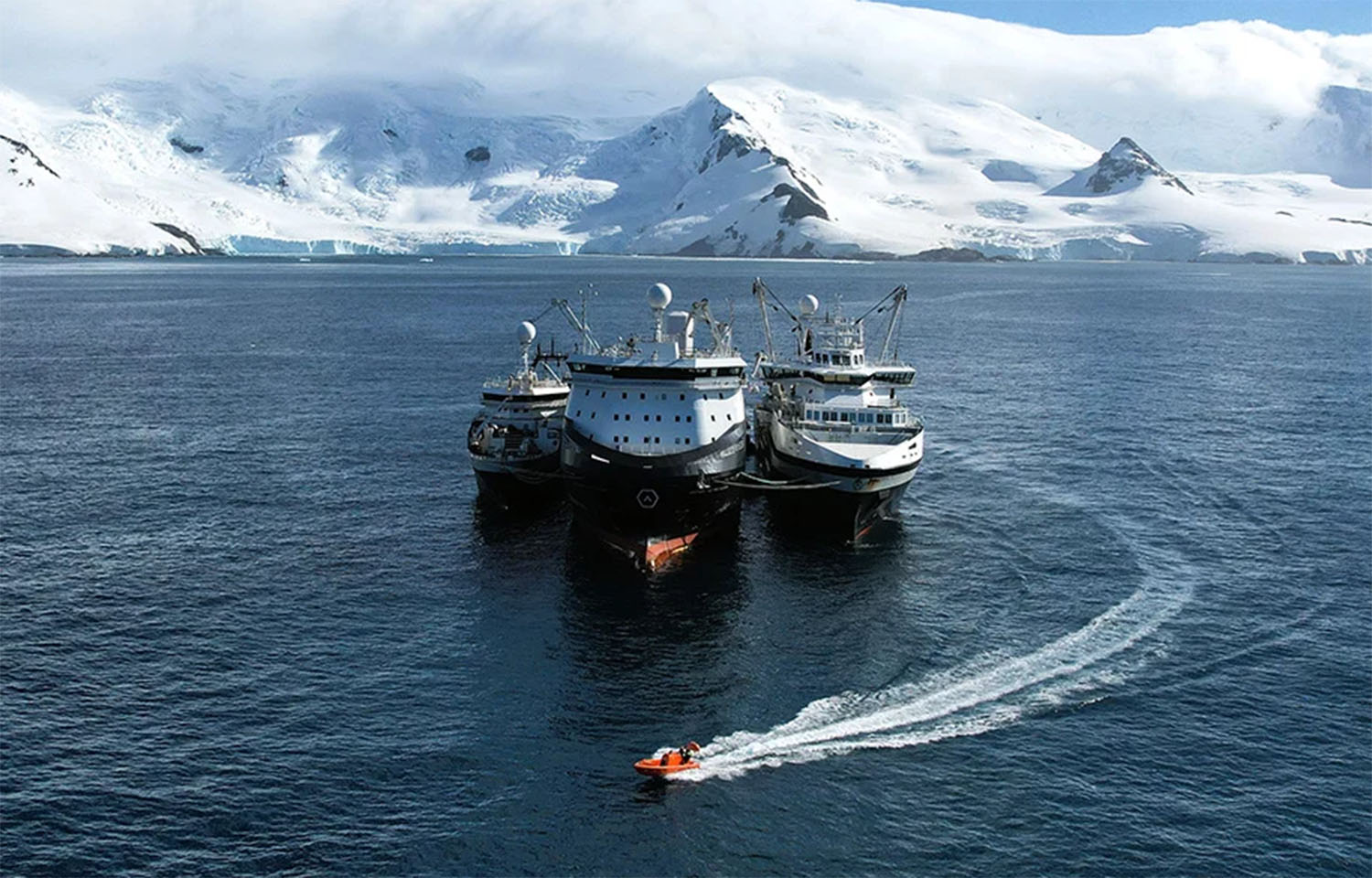
That role has been under greater scrutiny in recent years after fishing companies have started to consistently hit a precautionary 620,000 metric ton (MT) catch limit for krill. Companies hit the limit for the first time ever in 2025 and hit that limit a second time in August 2026.
That limit is in excess of a cap CCAMLR had been working on, and member countries have been unable to come to a consensus on krill-fishing levels or MPAs for multiple years.
“Governments have allowed a decade to pass without extending Southern Ocean protection, despite the commitment they made and the science before them,” ASOC Executive Director Claire Christian said in a release. “The pressures on Antarctic ecosystems are growing. Members must come to Hobart prepared to resolve the outstanding differences and adopt the Antarctic Peninsula MPA this year.”
ASOC said an MPA around the Antarctic Peninsula in an area known as Domain 1 – a measure proposed by Chile and Argentina – would safeguard habitats and protect wildlife in a rapidly warming region of the Southern Hemisphere.
“The opportunity in Hobart is to secure lasting protection for the Antarctic Peninsula and restore progress for conservation across the Southern Ocean,” ASOC MPA Campaign Director Holly Parker Curry said. “That will require sustained diplomacy and direct engagement between governments before negotiations begin. A breakthrough is possible if members do that work and arrive ready to find common ground.”
Antarctica2030 is also calling for an MPA and said CCAMLR promised in 2009 to have a complete representative system of MPAs by 2012 – and hasn’t done so since.
“Antarctica has a long history of successful international cooperation that offers a basis for further progress,” Antarctica2030 Chair José María Figueres said. “Sustained political support can help negotiators work toward consensus. Our discussions suggest there may be hope for an agreement, but much will depend on continued engagement by leaders in the lead-up to Hobart and during the meeting itself.”
Aker BioMarine, one of the world's major krill-fishing companies, also supports the MPA in the area and is pushing for a science-based framework for managing the fishery. Aker BioMarine recently hosted a panel on the subject at Climate Week in New York, and Aker BioMarine CEO Matts Johansen pushed for action.
“We hope both can be agreed,” he said. “The conversations in New York did not settle every disagreement, but they made it clearer where the common ground lies, and that is a good place to start.”
